
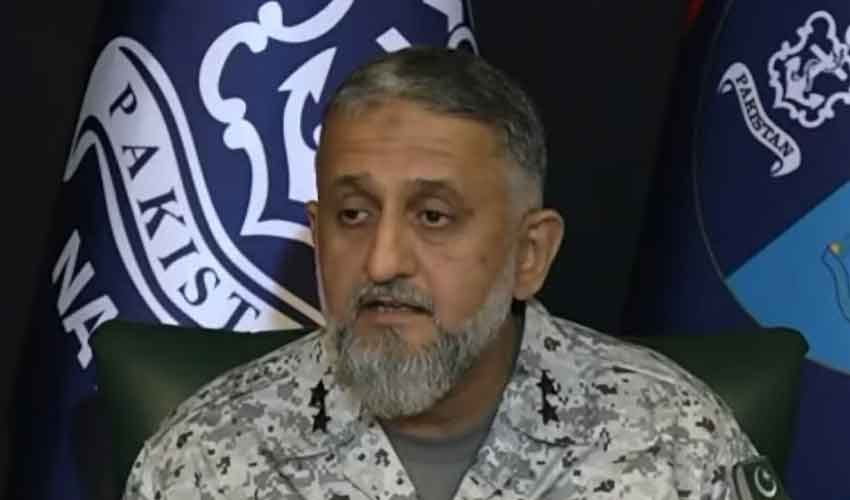

Pakistan’s Deputy Chief of Naval Staff (Operations) has claimed that the Indian Navy avoided approaching Pakistani waters during recent regional tensions. He stated that Pakistan’s maritime defence remained fully secure while commercial shipping and port operations continued without interruption.
The remarks were made during a joint press conference attended by senior officials from Pakistan’s military, including representatives from the navy, air force, and Inter-Services Public Relations (ISPR).
The naval official said Pakistan successfully protected its maritime sovereignty despite Indian naval deployments in the region. He added that the country’s armed forces maintained complete operational readiness throughout the confrontation.
Pakistan Navy Highlights Maritime Preparedness and Joint Military Coordination
The Deputy Chief said India often promotes itself as a major naval power with advanced “blue water” capabilities. However, he claimed the Indian Navy did not directly challenge Pakistan’s maritime boundaries during the recent tensions.
According to the official, Pakistan’s naval forces remained fully prepared for any escalation at sea. He stressed that the navy continuously monitors regional developments and remains ready to defend national interests during both peace and conflict.
The official also discussed the military operation referred to as “Marka-e-Haq.” He described the operation as a successful example of coordination between Pakistan’s army, navy, and air force.
He stated that joint planning and communication between the three services played a major role in maintaining national security. According to him, this cooperation ensured that Pakistan’s coastal installations, ports, and maritime trade routes remained operational throughout the crisis.
The Deputy Chief further claimed that India attempted to display naval strength by deploying warships in nearby waters. However, he said those deployments failed to create pressure on Pakistan’s maritime operations.
Commercial activity at Pakistani ports reportedly continued normally during the entire period of heightened tensions. Officials said the uninterrupted flow of trade demonstrated the effectiveness of Pakistan’s naval preparedness.
Pakistan Says Peace Should Not Be Viewed as Weakness
During the press conference, the naval official emphasised that Pakistan supports peace and regional stability. However, he warned that the country’s peaceful approach should never be misunderstood as weakness.
He stated that Pakistan continues to modernise its naval capabilities and strengthen maritime defence systems. According to him, the navy is improving operational efficiency through updated technology, strategic planning, and continuous training.
The Deputy Chief also criticised what he described as irresponsible public statements made by Indian officials after the tensions eased. He claimed those remarks were intended to cover military hesitation and calm internal concerns regarding Pakistan’s defence preparedness.
Military analysts believe statements from both sides reflect the continuing sensitivity of regional security dynamics between the two nuclear-armed neighbours.
Pakistan Navy Cites Rescue Mission as Example of Professionalism
The naval official also highlighted a recent humanitarian rescue mission involving the vessel Gold Atom. He said the incident demonstrated the professionalism and operational capability of the Pakistan Navy.
According to the briefing, the commercial vessel caught fire while sailing in regional waters. Although an Indian Navy ship was reportedly nearby, a Pakistan Navy vessel carried out the rescue operation.
Pakistani forces successfully controlled the fire and rescued 11 crew members from the ship. The official said the mission reflected Pakistan’s commitment to maritime safety and humanitarian responsibility.
He concluded by urging India to acknowledge regional realities and adopt a more responsible approach in both public statements and naval activities.
The latest comments come amid ongoing tensions between Pakistan and India following recent military confrontations and diplomatic disagreements.

