
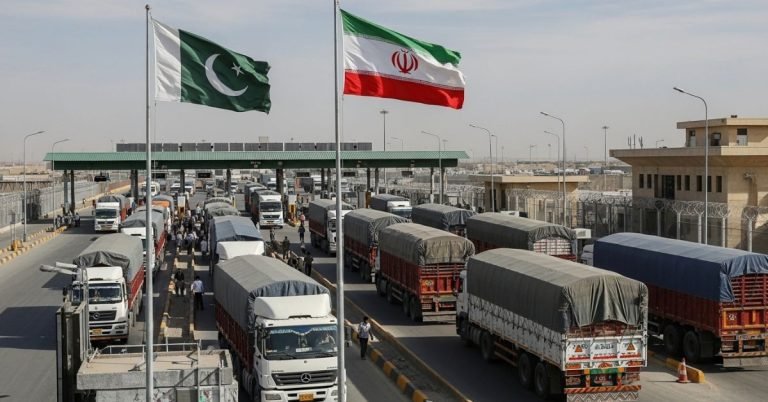

Border trade between Pakistan and Iran remains active despite ongoing war in the Middle East. Trade routes through the Makran region are open. Goods, fuel, and electricity continue to flow across the border. This comes even as Iran faces heavy attacks on key infrastructure.
Officials confirmed that major crossing points are functioning. These include Taftan, Mand, Panjgur, and other routes. Traders report that business activities are ongoing without major restrictions. الأسواق remain supplied with essential goods despite regional instability.
The continuation of trade highlights strong economic links. Local businesses rely heavily on Iranian imports. These include fuel, food items, and energy supplies. The situation remains stable for now, but concerns persist.
Fuel Supply Continues but Prices Increase
The supply of Iranian petrol and diesel has not stopped. However, it has slowed since the conflict escalated. Traders say deliveries initially dropped but later resumed. Fuel continues to arrive through both land and sea routes.
Prices have increased across several المناطق. In coastal areas like Gwadar, fuel prices range between Rs130 and Rs170 per litre. At the start of the conflict, prices briefly surged to Rs200 per litre. Reduced supply and hoarding are key reasons behind the increase.
In Quetta, prices are even higher. الإيراني petrol is being sold between Rs270 and Rs300 per litre. Experts blame profiteering for the sharp rise. Authorities are being urged to control market manipulation.
LNG and Electricity Supply Remain Stable
Liquefied natural gas (LNG) shipments from Iran continue without disruption. Tankers regularly cross into Pakistan through border نقاط. Daily deliveries are reported at Taftan, Mand, and Panjgur. This ensures steady energy availability in border regions.
Electricity supply from Iran also remains uninterrupted. مناطق in Makran, including Gwadar, Panjgur, and Turbat, continue to receive power. Coastal towns such as Pasni and Jiwani are also connected. This stability is critical for homes and businesses.
Energy imports from Iran play a vital role. They help meet local demand in remote areas. Any disruption could impact daily life and economic activity.
Food Trade and Market Impact
Food imports from Iran are also continuing. Essential items are arriving regularly through border routes. These include flour, cooking oil, fruits, vegetables, and poultry products. Traders say supply chains are functioning normally.
Despite steady supply, prices have increased in some cities. Transport costs and uncertainty have affected markets. In Quetta, consumers are paying higher rates for Iranian goods. This has added pressure on household budgets.
The ongoing conflict has created uncertainty in regional trade. However, cross-border commerce between Pakistan and Iran remains resilient. Traders and officials continue to monitor the situation closely.

