

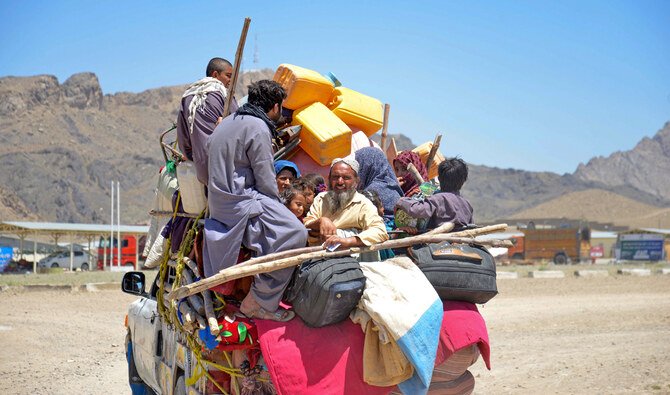

ISLAMABAD: Foreign Office (FO) Spokesperson Shafqat Ali Khan reaffirmed on Wednesday that Afghan refugees in Pakistan are treated with “respect and dignity,” while expressing hope that Kabul will create favorable conditions for their reintegration upon repatriation.
His remarks follow a statement from the Afghan Embassy in Islamabad, which claimed Afghan refugees were being arrested without prior notice and alleged that Pakistan planned to expel all Afghans, including those with valid documents. The embassy further asserted that Afghan nationals in Islamabad and Rawalpindi were subjected to arrests, searches, and police directives to relocate.
Dismissing these allegations as “misplaced,” Khan reiterated Pakistan’s decades-long support for Afghan refugees, providing them with access to resources such as education and healthcare despite limited international assistance. He emphasized that Pakistan’s Illegal Foreigners Repatriation Plan (IFRP) includes safeguards against mistreatment during deportation.
Khan also stressed that Islamabad has engaged extensively with Afghan authorities to ensure a smooth repatriation process. He urged Kabul to facilitate the successful reintegration of returnees, adding that the “real test” for Afghan authorities is to uphold the rights of those returning.
Increase in Afghan Refugee Repatriation
The International Organization for Migration (IOM) reported an uptick in the repatriation of Afghan refugees from the twin cities of Islamabad and Rawalpindi, with over 18,000 Afghans returning in January 2025 alone.
Between January 16 and 31, nearly 10,000 Afghan returnees were recorded at border crossings, including Torkham, Chaman, Ghulam Khan, Badini, and Bahramcha. Since September 2023, at least 824,568 individuals have returned to Afghanistan.
According to the report, 46% of returnees were adults between 18-59 years, while 30% were aged 5-17. Among children under 10, 502 received polio vaccinations at border points.
The data also indicated that 10% of returning households were women-led, with more men (52%) than women (48%) returning during the reporting period.
