
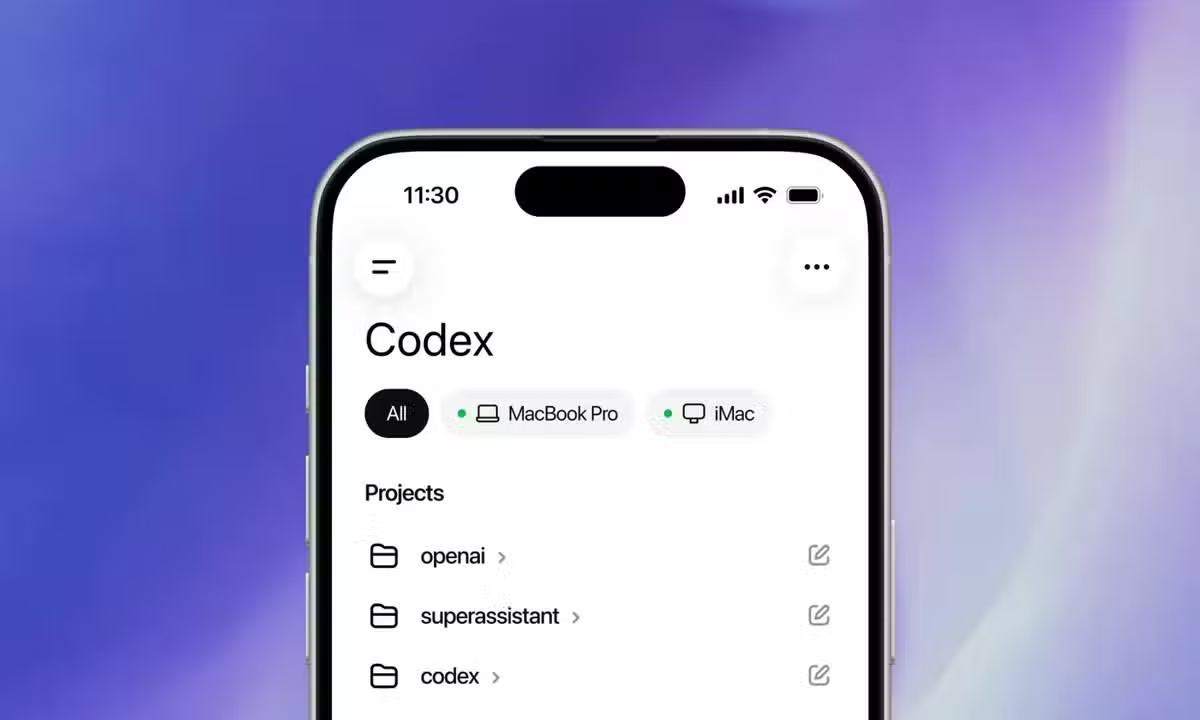

OpenAI says it has fixed several Codex issues that were consuming more usage than intended, with users now expected to receive between 10% and 50% more effective usage depending on their workflows.
The company identified the problems after reviewing thousands of reports involving compaction, memory, automations, subagents and other Codex features.
One compaction bug kept unnecessary old images in context, sometimes making conversations large enough to immediately trigger another compaction. OpenAI said fixing the issue reduced usage by around 10% for heavy image users.
Memory and Automation Bugs Drained Allowances
Meanwhile, a memory bug affecting fewer than 1% of users allowed background workers to continue operating because inherited Stop hooks prevented them from finishing. In one extreme case, a thread reportedly checked whether it could stop 15,000 times.
Goals also caused significant problems. Some tasks continued after reaching their intended stopping points, while others repeatedly retried malfunctioning tools. According to OpenAI, examples consumed between 15% and 70% of weekly allowances.
Additionally, Custom Automations sometimes ran more frequently than users had configured.
Subagents and Background Processes Also Increased Usage
OpenAI found that smaller models such as Luna could call more powerful subagents without users explicitly requesting them. Moreover, standard-speed orchestrating models sometimes instructed subagents to operate in fast mode, increasing consumption.
The older Computer History system also repeatedly summarised overlapping activity, consuming as much as 20% of weekly usage in some cases.
OpenAI has now disabled rolling task summaries responsible for unnecessary background requests and fixed problems involving duplicated MCP tool results and repeatedly fetched tool instructions.
Furthermore, the company has introduced architectural safeguards to detect similar problems automatically.
OpenAI is also developing clearer usage tracking for Codex and ChatGPT Work.
Finally, paid users of both services received a fresh usage reset as the fixes took effect, restoring their allowances while OpenAI implements the improvements.

