
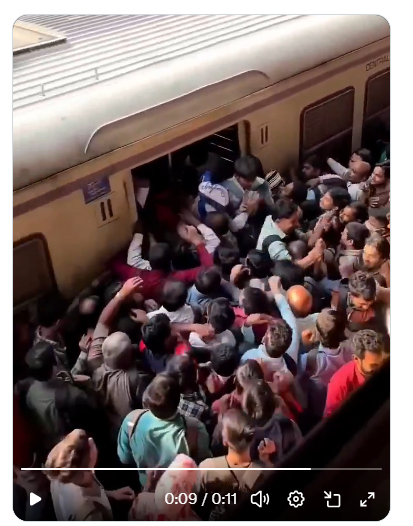

A massive crowd of passengers struggling to board a train in India has sparked intense debate on social media about rising fuel prices, public transport challenges, and the country’s long-standing VIP culture.
Videos circulating online showed hundreds of commuters pushing through packed railway platforms as they attempted to secure space in overcrowded train compartments. The scenes triggered criticism from many users who argued that ordinary citizens continue facing transportation hardships amid increasing living costs. Anuradha Tiwari shared the clip of a massive crowd at an Indian railway station.
Common people are not the ones wasting fuel. They are struggling just to survive.
It’s politicians who waste fuel with hundreds of cars in election rallies & long VIP convoys.
Time to end this entire VIP culture ! pic.twitter.com/XesgTlZa39
— Anuradha Tiwari (@talk2anuradha) May 11, 2026
Public Frustration Grows Over Transport Challenges
Social media users claimed the overwhelming rush reflected deeper issues within the public transport system. Many argued that rising petrol prices have forced more people to rely on trains for routine travel, placing additional pressure on already crowded railway services.
At the same time, critics pointed out that common citizens are not responsible for excessive fuel consumption. Instead, they stressed that ordinary people are struggling daily to manage transportation expenses and basic survival costs.
Several online commentators also questioned whether authorities have invested enough in improving railway infrastructure, passenger capacity, and affordable public transport facilities for millions of daily commuters.
VIP Culture Faces Renewed Criticism
Meanwhile, the viral footage reignited criticism of political VIP culture in India. Many users contrasted the struggles of ordinary passengers with the large vehicle convoys often seen during election rallies and official movements.
Critics argued that politicians and influential figures frequently travel with long lines of luxury vehicles and heavy security escorts, consuming significant fuel resources while ordinary citizens endure overcrowded public transport systems.
Consequently, calls to reduce VIP protocols and limit extravagant political convoys gained traction online. Supporters of reform said governments should prioritize public welfare, affordable transportation, and fuel relief measures instead of maintaining costly displays of power.
The incident continues fueling nationwide debate over economic pressure, transportation accessibility, and the growing public demand for equal treatment and practical governance reforms.

