

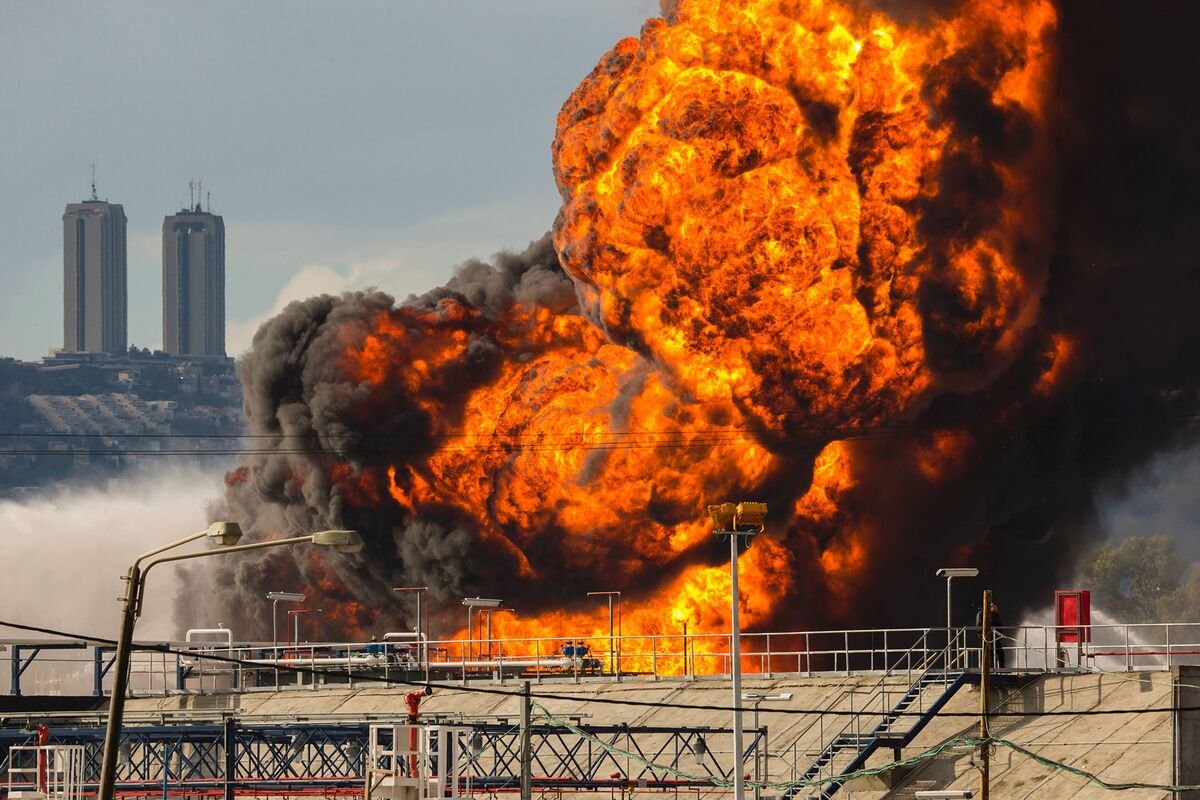

Oil prices climbed at the start of the week after an Iranian missile strike damaged the Haifa oil refinery in northern Israel, prompting a partial shutdown, according to Israeli media reports. Despite the impact, the facility remains operational.
As of early trading, Brent crude was priced at $74.83 per barrel, while West Texas Intermediate (WTI) stood at $73.77 per barrel.
The attack, which reportedly involved around 40 missiles launched at the Haifa area on Saturday night, caused damage to pipelines and transmission lines at the refinery, according to operator Bazan, as cited by The Times of Israel. “The refining units continue to operate, while some downstream systems at the complex have been shut down,” Bazan said in a statement quoted by Argus.
In retaliation, Israel launched strikes on two gas processing facilities in southern Iran and an oil storage site in Tehran, sparking fires in multiple fuel tanks. The continued exchange of missile fire, including further Iranian targeting of Tel Aviv and Haifa, has intensified fears of a broader regional conflict.
Energy analysts warn that the escalation could disrupt crude oil shipments through the Strait of Hormuz, a key maritime chokepoint through which over 20 million barrels of oil pass daily. There is also growing concern about potential Israeli attacks on Iran’s oil infrastructure.
“If Iranian crude exports are interrupted, Chinese refiners — the primary buyers of Iranian oil — would need to shift to other suppliers in the Middle East or to Russian grades,” said Richard Joswick.
He added that such a scenario could drive up freight rates and insurance premiums, compress the Brent-Dubai price spread, and negatively impact refinery margins across Asia.
Amid mounting risks, some shipping firms are beginning to avoid the Persian Gulf altogether. Frontline, the world’s largest tanker operator, confirmed that it is pulling vessels from the region, with CEO Lars Barstad noting: “Trade is going to become more inefficient — and, of course, security has a price.”
