

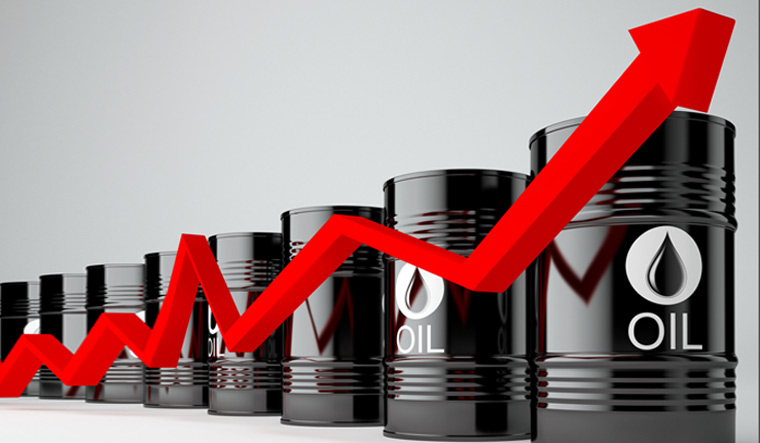

Oil prices climbed further on Monday as missile exchanges between Israel and Iran entered a fourth consecutive day, fueling concerns of a prolonged conflict that could disrupt energy supplies and reignite global inflation.
Gold prices also surged, nearing record highs, as investors sought safe havens amid the escalating tensions. While most equity markets dipped, losses were contained on hopes that the conflict would remain localized and not spiral across the broader Middle East.
Investor focus also shifted toward key central bank decisions this week, particularly from the U.S. Federal Reserve and the Bank of Japan, as well as ongoing negotiations in Washington aimed at averting former President Donald Trump’s proposed steep tariffs.
Oil spiked as much as 13% following Israel’s unexpected strikes on Iranian military and nuclear installations on Friday, which reportedly killed several senior commanders and scientists. The attack raised fears of a wider disruption to oil exports from the region.
Analysts warned that the price surge could push inflation back up globally, potentially reversing progress made by central banks in recent months.
“The ripple effect of higher energy costs is slower economic growth and rising headline inflation,” said Tony Sycamore, a market analyst at IG. “While central banks may initially overlook temporary energy price shocks, prolonged elevation could seep into core inflation as businesses pass on increased transport and production expenses.”
He added that persistent high oil prices could limit the Fed’s flexibility to cut interest rates, especially if Trump’s trade tariffs further weigh on growth.
In early Asian trading, both benchmark oil contracts rose more than one percent.
Markets Await Central Bank Guidance
Despite the geopolitical risks, some analysts believe oil markets remain fundamentally well-supplied. Morningstar’s director of equity research Allen Good noted: “OPEC is increasing output, demand remains weak, and while U.S. production has slowed, it could bounce back if high prices persist.”
He also downplayed the chances of a broader war, citing the Trump administration’s ongoing commitment to dialogue with Iran. “Ultimately, supply-demand fundamentals will drive oil prices. Although the conflict raises the global risk premium, there is little justification for a sharp, sustained price spike.”
Asian markets reacted cautiously. Shares fell in Hong Kong, Sydney, Singapore, Wellington, Taipei, Bangkok, and Jakarta, while Tokyo gained on a weaker yen. Shanghai, Seoul, and Manila posted modest gains.
Gold rose to around $3,450 an ounce, inching close to its all-time high of $3,500, buoyed by global uncertainty.
All eyes are also on the Group of Seven summit, which began Sunday in the Canadian Rockies. Leaders are expected to discuss the Middle East crisis alongside trade tensions, particularly in light of Trump’s aggressive tariff proposals.
Traders are closely watching this week’s policy meetings by the Federal Reserve and Bank of Japan. While neither is expected to change interest rates, the Fed’s updated economic projections and rate forecasts will be scrutinized for clues on future moves.
“The Fed meeting will command the most market attention,” said Chris Weston of Pepperstone. “Though no rate cut is expected, we’ll get fresh projections and insight into the Fed’s policy stance. Given the uncertainty, the Fed is likely to maintain a cautious tone.”
