
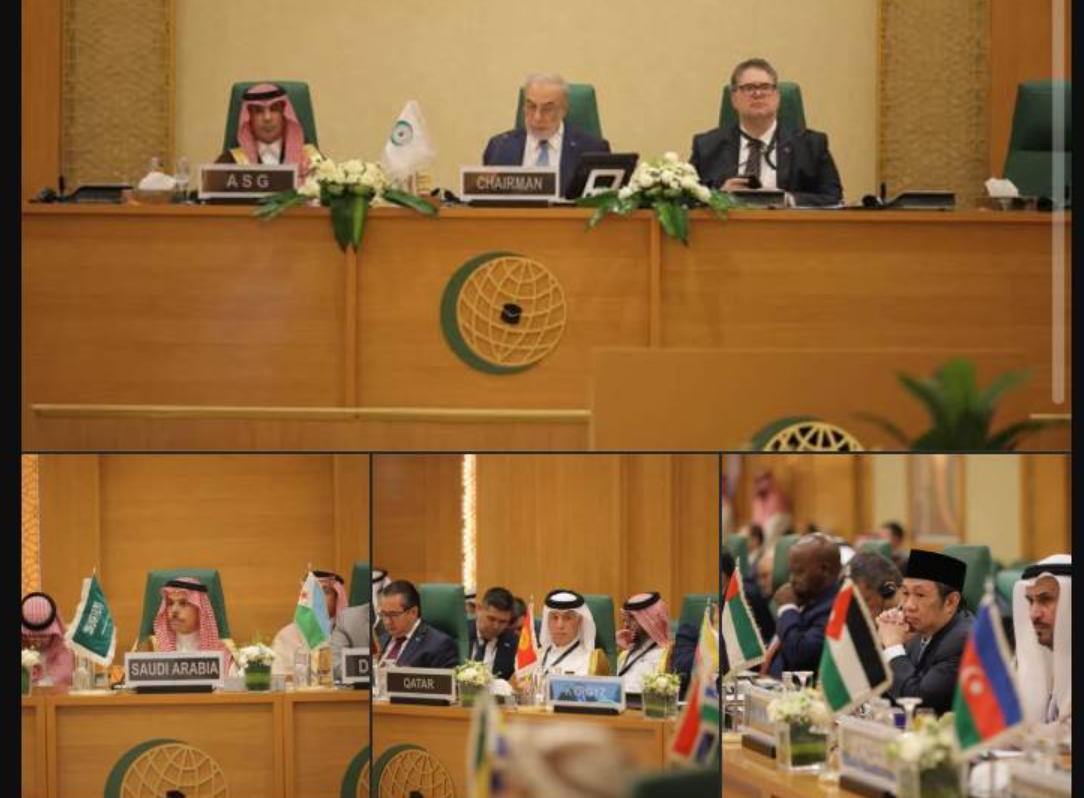

The Organization of Islamic Cooperation (OIC) opened its 23rd Extraordinary Session of the Council of Foreign Ministers in Jeddah on Thursday. The meeting brings together senior diplomats as member states address pressing political issues facing the Muslim world.
The session focuses on two major matters. These include the election of a new OIC Secretary-General and the worsening situation in the occupied Palestinian territories.
The discussions come as the humanitarian and political situation surrounding Gaza remains a major concern for Muslim countries.
Saudi Arabia Calls for Stronger Islamic Cooperation
Saudi Foreign Minister Prince Faisal bin Farhan addressed the opening session and called for greater unity among Islamic countries.
He stressed the “urgent need” for stronger Islamic cooperation and solidarity during a period of growing international challenges.
At the same time, Prince Faisal highlighted the need for serious reforms within the OIC during the coming period.
He also noted that countries cannot tackle today’s interconnected challenges independently. Therefore, he called for stronger collective action and cooperation among member states.
The OIC has 57 member states and describes itself as the collective voice of the Muslim world. It is also the world’s second-largest intergovernmental organisation after the United Nations.
Palestinian Cause Remains Central to Discussions
The situation in the occupied Palestinian territories remains a key focus of the extraordinary session.
Prince Faisal reaffirmed Saudi Arabia’s longstanding position on the Palestinian cause during his address.
Saudi Arabia also strongly condemned Israel’s announcement of plans to establish new settlement units in the occupied Palestinian territories.
Riyadh further rejected attempts to impose a temporal or spatial division of the Al-Aqsa Mosque.
The Saudi foreign minister also stressed the urgent need to ensure humanitarian assistance reaches Gaza without obstruction.
The remarks place humanitarian access and the protection of Palestinian interests among the key issues being raised at the Jeddah meeting.
OIC Faces Leadership and Reform Questions
Alongside discussions on Palestine, the foreign ministers are also expected to address the organisation’s leadership.
The election of a new Secretary-General forms one of the two central issues on the session’s agenda.
Meanwhile, calls for institutional reform could shape discussions about the OIC’s future role.
The organisation represents 57 member states across the Muslim world. Consequently, stronger coordination could help members respond collectively to political and humanitarian challenges.
The Jeddah session therefore brings both immediate regional concerns and broader institutional questions to the table.
As the meeting continues, attention remains focused on the OIC’s response to the Palestinian crisis and its efforts to strengthen cooperation.
The session also provides member states with an opportunity to reaffirm shared positions on regional peace, humanitarian assistance and Islamic solidarity.

