

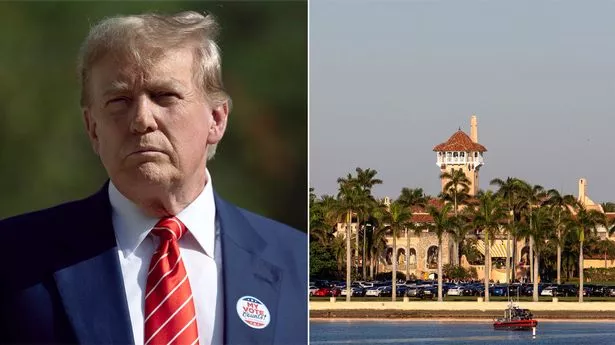

NEW YORK: New York Attorney General Letitia James has initiated the process of seizing former President Donald Trump’s properties in the state, following a groundbreaking $454 million judgment.
Reports indicate that James’ office officially recorded the judgment with the county clerk’s office in Westchester County on March 6. Trump owns two properties in this area: his Seven Springs estate and the Trump National Golf Club, Westchester.
Trump’s legal team recently revealed that he’s encountered challenges in securing a bond while awaiting the outcome of appeals. Despite reaching out to 30 insurance companies, he has faced rejection at every attempt.
In a detailed submission, Trump’s attorneys emphasized the unprecedented nature of the bond requirement, which effectively demands cash reserves nearing $1 billion, a staggering sum for any private entity.
Although Trump amassed significant wealth as a New York-based property developer and businessman prior to his political career, his lawyers assert that raising the $454 million bond, due by Monday, has proven insurmountable.
Typically, such bonds would be facilitated by an insurer or specialized bond company, but Trump’s attempts have been thwarted, leaving him in a precarious position.
The judgment stems from a ruling by Manhattan Supreme Court Judge Arthur Engoron in February, which mandates Trump to pay $454 million in fines and interest.
Failure to secure the bond could result in the state seizing and selling Trump’s properties, unless he pays the judgment in cash from his own resources.
Expressing frustration, Trump criticized Judge Engoron’s stance, arguing that the demand for a bond before the appeals process is both unreasonable and financially burdensome.
In a bid to halt James from collecting the judgment as early as next week, Trump’s legal team has petitioned the New York Supreme Court, citing the potential for “irreparable injury” to Trump and his business interests if the properties are sold hastily.
With only four days remaining before the deadline, Trump faces a critical decision: secure the bond or find alternative means to meet the financial obligation.
