

International students in the United States will face new immigration requirements from September 15 as authorities replace the long-used “duration of status” system.
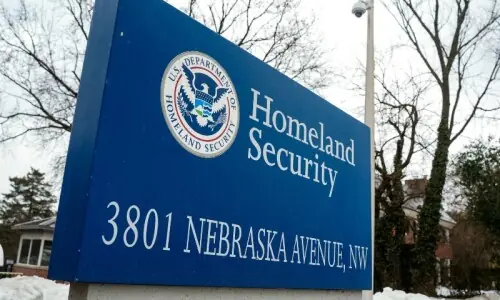
The Department of Homeland Security (DHS) will introduce fixed admission periods for F-1 students instead of allowing them to remain in the country for the duration of their studies.
Under the new system, F-1 students will generally receive admission for the length of their academic programme listed on Form I-20, up to four years.
Students can enter the US up to 30 days before their programme starts. They will also receive a 30-day period to prepare for departure after completing their programme or authorised post-completion training.
However, students who need more time must take additional immigration steps.
Students May Need Extensions
Students who need additional time to finish their current programme, start another programme, or complete post-completion OPT or STEM OPT may apply for an extension of stay.
They can file Form I-539 with US Citizenship and Immigration Services (USCIS). Before filing, students should work with their designated school official and obtain an updated Form I-20 with the required recommendation.
Students may also leave the United States and seek a new admission period from Customs and Border Protection when they return.
What About Students Already in the US?
The September 15 change does not require every current F-1 student to submit a new application immediately.
Students already in F-1 status under the existing duration of status system on September 15 can generally remain under the transition rules.
They can continue until their applicable programme or OPT/STEM OPT end date. The transition period generally runs no later than November 14, 2030.
However, international travel creates an important difference.
Students who leave the US after September 15 may return under the new fixed-period system. Therefore, they should speak with their designated school official before travelling internationally.
New Restrictions on Academic Changes
The new rule also introduces additional restrictions on academic changes.
Undergraduate students generally cannot change their educational level or major during the first year of a programme. Exceptions may apply in cases involving extenuating circumstances.
Graduate students will face additional restrictions involving educational-level changes, major changes and school transfers.
The rule also cuts the post-completion departure period from 60 days to 30 days for students covered by the new system.
USCIS Forms Also Change
The September 15 changes also affect immigration paperwork.
Students filing Form I-539 for an extension or change of nonimmigrant status should use the latest required edition.
Likewise, students submitting Form I-765 for employment authorisation must use the new edition required by USCIS.
USCIS will not provide a grace period for applicants using previous editions. Therefore, students should check the edition date carefully before submitting their applications.
Universities Warn Students About Travel
Several major US universities are urging international students to review their immigration records and travel plans.
Harvard University, Yale University, Columbia University, Cornell University and Stanford University have issued guidance about the changes.
Yale says students already in the US under the old “duration of status” system generally do not need to take immediate action on September 15.
However, students travelling abroad and returning after that date will generally receive a new Form I-94 with a specific “admit until” date.
Yale recommends checking the I-94 after every international trip.
Harvard has also warned that international travel could affect future OPT and extension-of-stay planning. Its international office recommends understanding the potential consequences before travelling.
Columbia and Cornell have published additional guidance about the transition. Stanford has also warned that F-1 and J-1 students will no longer receive the D/S notation after the rule takes effect.
J-1 and I Visa Holders Also Affected
The DHS change also covers J-1 exchange visitors and certain I-visa holders, including foreign media representatives.
They will generally receive admission for a fixed period instead of remaining under the duration of their programme or assignment.
J-1 participants who require additional time will generally need to request an extension of stay. For I representatives, admission will generally correspond with the length of their authorised media assignment.
However, the change does not broadly affect categories such as H-1B, L-1, O-1 or B-1/B-2 visas. These categories already use fixed admission periods.
For international students, September 15 is therefore not a blanket deadline to leave the United States or file a new application. Instead, it marks a major shift in how immigration authorities determine authorised stays.
Students should carefully review their Form I-94, programme end date and OPT plans. They should also consult their university’s international office before making international travel or immigration decisions.
For the latest updates, visit and follow The Truth International website (www.thetruthinternational.com) and subscribe to the YouTube Channel.

