
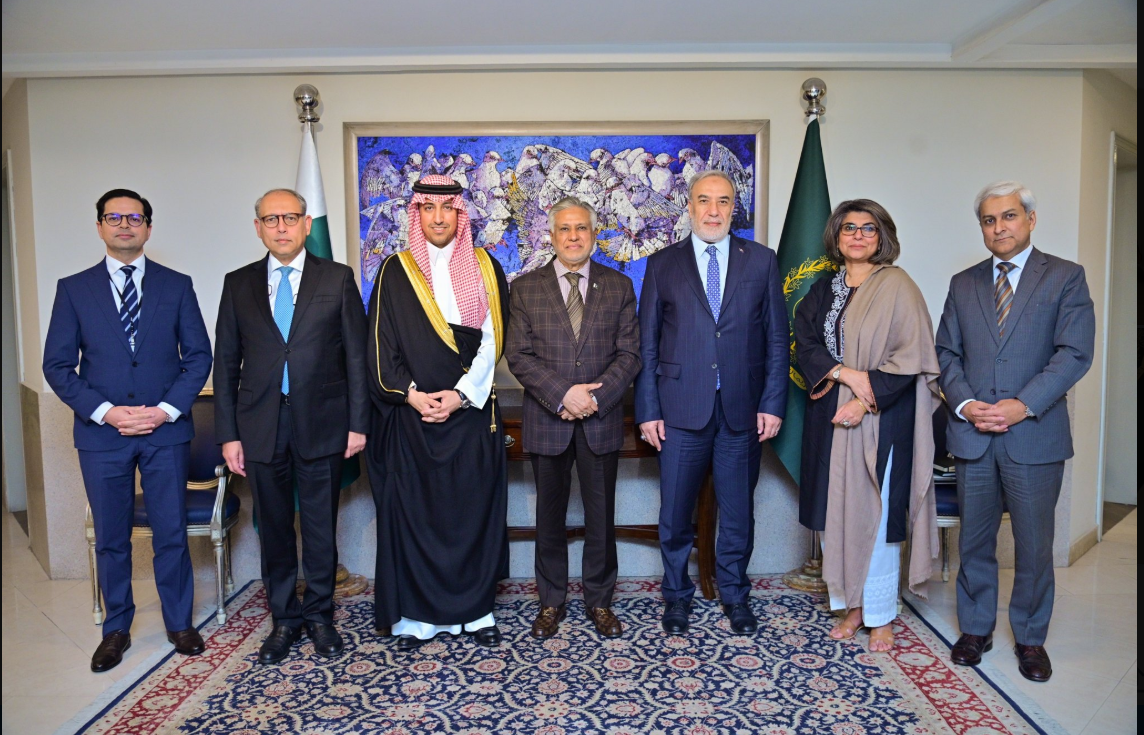

Pakistan, Saudi Arabia, Türkiye, and Egypt have initiated discussions on expanding regional cooperation. The talks were held in Islamabad during the first Senior Officials’ Meeting of the four-country group. The meeting focused on strengthening diplomatic and economic coordination.
Deputy Prime Minister and Foreign Minister Ishaq Dar led Pakistan’s delegation. He engaged with senior representatives from the participating countries to explore future collaboration.
High-Level Diplomatic Engagement
During the meeting, Ishaq Dar met several senior diplomats. These included Türkiye’s Deputy Foreign Minister Musa Kulaklikaya, Egypt’s Assistant Foreign Minister Ambassador Nazih El Naggari, and Saudi Arabia’s Foreign Ministry Director General Prince Dr Abdullah bin Khalid.
The discussions highlighted the importance of close diplomatic engagement. Moreover, participants emphasized the value of regular consultation on regional and global issues.
Shared Vision for Stability and Growth
All four countries expressed interest in building a structured cooperation framework. The goal is to enhance coordination on shared priorities. These include peace, economic development, and regional stability.
Additionally, the discussions reflected convergence on several key international matters. Therefore, the participants saw potential for long-term strategic alignment.
The leaders also noted the importance of strengthening economic ties. As a result, future cooperation may include trade, investment, and development initiatives.
Proposal for Institutional Framework
Ishaq Dar proposed the development of a formal and structured mechanism. This framework would help guide cooperation between the four nations. It would also ensure consistent dialogue on shared concerns.
Furthermore, such a structure could support coordinated responses to regional challenges. It may also promote joint initiatives in areas of mutual interest.
The participating countries acknowledged the proposal positively. However, further consultations are expected before formalizing the framework.
Strengthening Bilateral and Multilateral Relations
The meeting underscored the importance of brotherly relations among the participating states. Pakistan highlighted its strong ties with Saudi Arabia, Türkiye, and Egypt.
Moreover, the dialogue reflected a shared desire to expand cooperation beyond bilateral relations. Therefore, the initiative could mark a shift toward broader multilateral engagement.
Analysts suggest that such groupings may enhance regional influence. In addition, they may support collective responses to economic and geopolitical challenges.
Outlook for Future Cooperation
The four countries are expected to continue discussions in upcoming sessions. These meetings will further refine the proposed cooperation model. Consequently, more concrete outcomes may emerge in the near future.
For now, the initiative signals a growing interest in regional collaboration. It also highlights efforts to build stronger partnerships across the Muslim world and beyond.
Conclusion
The Islamabad meeting marks an important step toward structured multilateral cooperation. Therefore, Pakistan, Saudi Arabia, Türkiye, and Egypt appear to be exploring a shared regional vision. If developed further, the framework could strengthen economic ties and political coordination among the four nations.

