

Israeli Prime Minister Benjamin Netanyahu is increasingly turning his attention toward Turkey as tensions grow across the Middle East. The shift comes as Netanyahu prepares for a difficult re-election campaign ahead of the October 27 election.
On Tuesday, Israeli warplanes struck a military base in northern Syria near the Turkish border.
Netanyahu said Turkey was seeking to establish a military presence in the area. He also claimed Israel had warned Ankara against the move before launching the strike.
After Turkey allegedly ignored those warnings, Netanyahu said, “We made sure they understood it more clearly.”
The development has added another layer of tension between Israel and Turkey.
Netanyahu Campaign Targets Erdogan
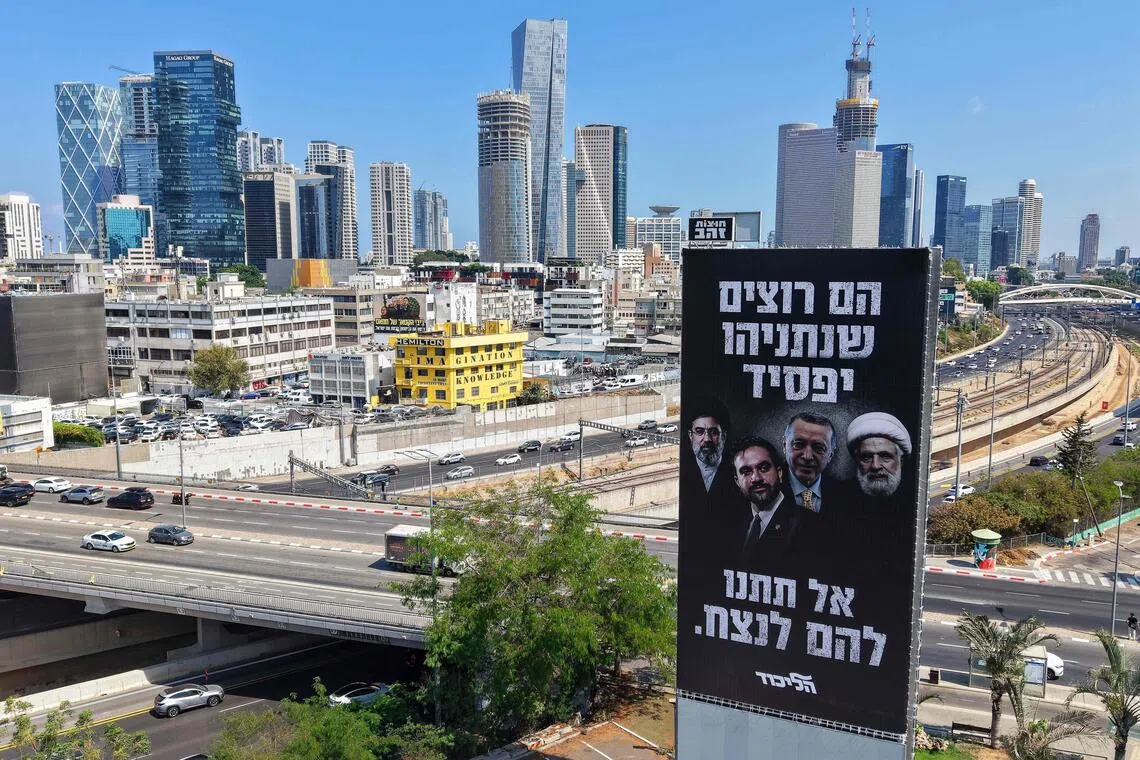
Netanyahu’s election campaign has also highlighted Turkish President Recep Tayyip Erdogan. Billboards featuring Erdogan and other foreign leaders have appeared across Israel.
The campaign message reads: “They want Netanyahu to lose.”
Erdogan has been one of Israel’s strongest critics since Hamas attacked Israel on October 7, 2023.
He has repeatedly condemned Israel’s military campaign in Gaza.
Relations have deteriorated further following Israeli actions against activist flotillas from Turkey seeking to deliver aid to Gaza.
However, Turkey differs significantly from several countries targeted by Israel in recent years.
Turkey is a NATO member and maintains a close relationship with US President Donald Trump.
The US ambassador to Ankara has already criticized Israel over the strikes.
Israel and Turkey Have Complicated Relations
Despite the current tensions, Israel and Turkey have maintained a complex relationship.
Turkey became the first Muslim-majority country to recognise Israel.
The two countries also developed strong trade relations before relations deteriorated during the Gaza war.
Turkey later announced that it would halt business dealings with Israel.
Erdogan has also allowed Hamas leaders to reside in Turkey, increasing concerns among Israeli officials and political figures.
Israeli Opposition Warns Against Escalation
Yair Golan, leader of Israel’s centre-left Democrats, criticised the strike in Syria.
He described the action as “provocative and dangerous” and warned about its wider consequences.
The opposition leader said the move could bring Israel closer to a confrontation with Turkey.
He also warned that it could deepen disagreements with key allies, particularly the United States.
“Once again, military force is being employed for political considerations, and once again Israel pays the price in security,” Golan said.
Meanwhile, former Israeli prime minister Naftali Bennett has also raised concerns about Turkey.
Earlier this year, Bennett accused Netanyahu of overlooking “a new Turkish threat” while concentrating primarily on Iran.
Analysts Warn of Political Calculations
Gallia Lindenstrauss, a senior research fellow at the Institute for National Security Studies, said Erdogan’s rhetoric had increased Israeli concerns.
“There are also worries that, like how Turkey hosts Hamas, it might allow militant groups to operate inside Syria that might present in the future a threat to Israel,” she said.
However, she noted that Israel has generally accepted Turkish interests in northern Syria.
Israel has established what it describes as a security zone in southern Syria.
“You see Netanyahu using the anti-Turkish card. I think he sees it as something that can maybe unify his base around him,” Lindenstrauss said.
Gonul Tol, a senior fellow at the Middle East Institute in Washington, also pointed to Netanyahu’s political challenges.
She said opposition figures argue that Netanyahu has failed to achieve key objectives from Israel’s multiple wars.
Those objectives have included weakening Iran’s government and destroying Hamas.
Tol also warned that stronger action against Turkey could create political problems for Netanyahu in Washington.
She said such a move could make him appear like “a reckless leader who would do anything to cling to power”.
Turkey Avoids Immediate Escalation
Turkey has rejected Israel’s allegations regarding its intentions in Syria.
However, Ankara has not responded with threats of military retaliation.
Tol said Turkey’s response could help prevent the situation from escalating further.
“Erdogan being a populist leader, he could have just jumped on the bandwagon and said, we are going to attack, we will retaliate, and yet he did not do that,” she said.
She believes the response may reflect an effort to contain tensions.
Syria Caught Between Regional Powers
Syria has become a key point of tension between Turkey and Israel. Turkey’s historical concerns in Syria focused heavily on preventing Kurdish fighters from threatening its security.
However, Ankara’s priorities have expanded. Turkey now wants to help revive Syria’s economy, encourage refugees to return and establish a strong regional partner.
The country has also supported Syrian President Ahmed al-Sharaa.
His forces overthrew longtime Syrian ruler Bashar al-Assad in late 2024 after years of civil war.
For Syria, the growing rivalry presents a difficult challenge.
Writer and political researcher Maher Tamran said Damascus must avoid becoming a battlefield for competing regional interests.
“It must capitalise on the Turkish-Israeli rivalry to reclaim Syrian sovereignty,” he said.
Both Turkey and Israel “agree on the stability of Syria, but diverge on the definition of stability itself.”
As tensions continue to develop, Syria’s future could become increasingly important to the relationship between Israel and Turkey.

