
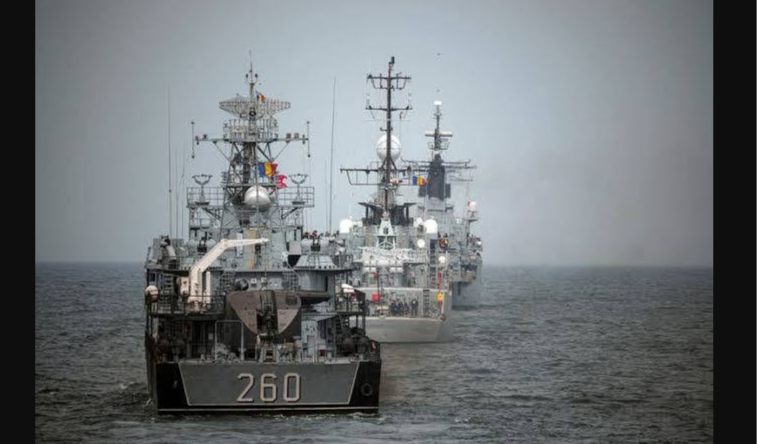

NATO plans to deploy additional surveillance and reconnaissance resources to the Black Sea after a series of drone attacks near Romania and Bulgaria. The incidents have heightened security concerns around the alliance’s southeastern flank amid Russia’s ongoing war against Ukraine.
On Tuesday, NATO spokeswoman Allison Hart announced the planned deployment following a meeting of alliance ambassadors in Brussels.
“NATO will be sending additional assets to the region, including support for surveillance, reconnaissance, and forensics,” Hart posted online.
She also stressed the alliance’s commitment to protecting its members and citizens.
“We will continue to stand united and ensure that we are ready and able to address any threat and to keep our one billion people safe,” she added.
US P-8 Poseidon Begins Black Sea Patrols
The NATO announcement followed a statement from Bulgarian Prime Minister Rumen Radev, who said a US military aircraft had begun patrolling the Black Sea.
According to Radev, Bulgaria requested assistance after recent drone attacks in the region. He confirmed that a US P-8 Poseidon aircraft had started reconnaissance missions to identify potentially dangerous activity.
“An American P-8 Poseidon… has begun patrolling the Black Sea to conduct reconnaissance missions and detect any activity that could pose a risk,” said Radev.
The Bulgarian prime minister said several NATO members responded quickly to his request for support. However, Sofia expects “further assistance” as concerns over maritime security continue.
Drone Strikes Leave Sailors Missing
The recent attacks on ships in waters near Bulgaria and Romania have raised alarm across Europe. Both countries belong to NATO and the European Union, making the incidents particularly significant for regional security.
More than 20 sailors have gone missing following the series of strikes, prompting condemnation from European officials. Meanwhile, the attacks have intensified concerns about the safety of commercial shipping and the movement of Ukrainian agricultural exports.
European Union foreign policy chief Kaja Kallas addressed the incidents on Tuesday, warning about the pace of the suspected drone attacks.
“Six attacks in 10 days by suspected Russian drones marks a dangerous and unacceptable escalation”.
Kallas accused the Kremlin of intensifying efforts to disrupt Ukrainian grain exports through the Black Sea. She said the alleged campaign aimed to deprive Kyiv of revenue from those shipments.
Black Sea Attacks Raise Global Food Security Concerns
Kallas also warned that the strikes could worsen pressure on global food supplies. She described the situation as a “perfect storm”, with droughts affecting multiple regions and conflict continuing in the Middle East.
The Black Sea remains important for Ukraine’s grain exports. Therefore, further disruption could add to existing concerns about international food availability and supply chains.
NATO officials are also increasingly concerned about actions they view as reckless Russian activity while Moscow’s forces remain engaged in Ukraine.
NATO Monitors Suspected Russian Hybrid Campaign
NATO and the European Union have also raised concerns about what they describe as a Russian “hybrid” campaign. They accuse the Kremlin of using sabotage and interference to undermine Western support for Kyiv.
The alliance has sought to signal that Russia should reduce such activities following several high-profile security incidents over the summer.
One incident involved the discovery of a drone carrying explosives at a German airport. The latest Black Sea attacks have added to those concerns, prompting NATO to strengthen surveillance and reconnaissance support in the region.
However, the planned deployment comes as European officials continue assessing the risks to maritime security and regional stability.
For the latest updates, visit and follow The Truth International website (www.thetruthinternational.com) and subscribe to the YouTube Channel.

