

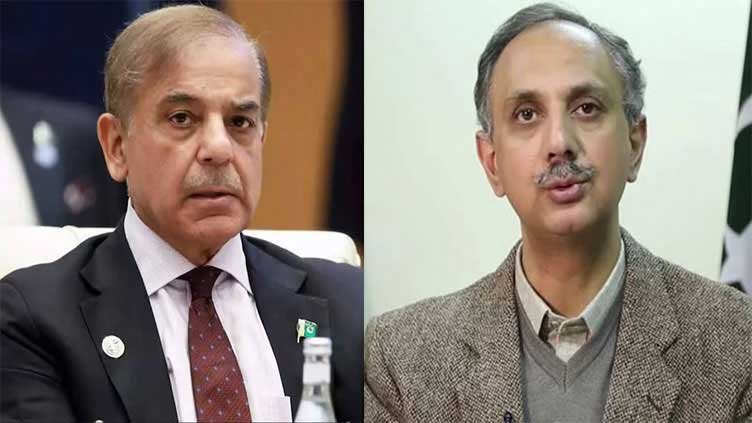

Today, the newly-elected National Assembly of Pakistan is set to choose the country’s next prime minister. The contenders are Omar Ayub Khan from the Sunni Ittehad Council and Shehbaz Sharif, who represents a multi-party alliance.
Nomination papers for both candidates were submitted and accepted after scrutiny by Speaker Ayaz Sadiq. Shehbaz Sharif, the president of the Pakistan Muslim League Nawaz, enjoys the support of the Pakistan Peoples Party, Muttahida Qaumi Movement, Pakistan Muslim League-Quaid, and Istehkam-e-Pakistan Party. His candidacy results from a power-sharing agreement between PMLN and PPP after the elections.
The National Assembly composition includes Independents, the largest group with 101 seats, followed by PMLN with 75 seats and PPP with 54 seats. Many PTI candidates elected to the house have joined the SIC to be recognized as a party in the Assembly, aiming to secure reserved seats.
The prime minister’s election differs from the secret ballot for the speaker or deputy speaker. It involves an open division of members in the house, as outlined in Chapter IV and the Second Schedule of Rules and Procedure for the Conduct of Business in the National Assembly 2007.
The process begins with the speaker ordering bells to ring for five minutes to signal the impending election, allowing absent members to return. Each candidate’s supporters gather in separate lobbies, where tellers record member names and division numbers. The tellers then mark them on their division lists.
Once the speaker announces the completion of voting, the tellers’ lists are collected for final counting. Bells ring again to signal members to return, and the results are subsequently announced.
