
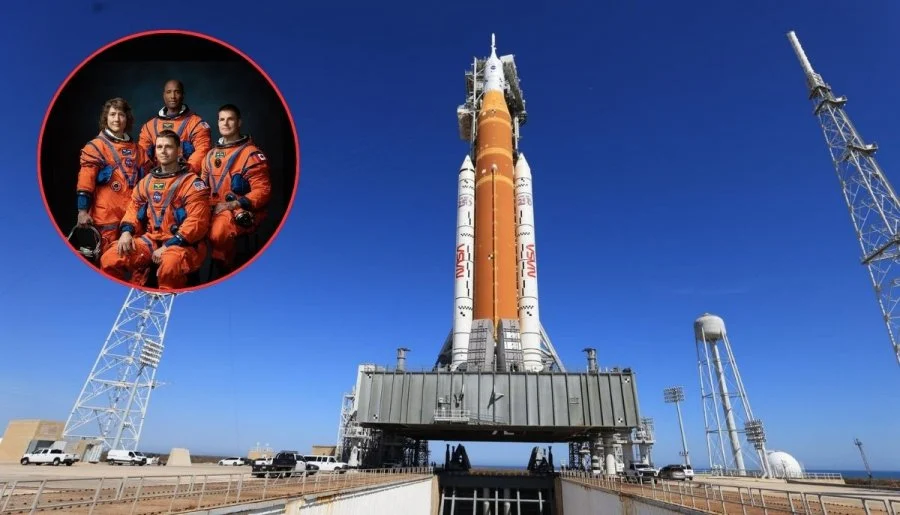

The National Aeronautics and Space Administration (NASA) is getting ready to send its first crewed mission to the Moon in 53 years. The Artemis II mission is a big step forward in space exploration. This is also a new move towards deep space exploration.
The four-person crew is getting ready for its 10-day journey around the Moon. However, the mission also raises questions about the need for NASA to send a mission to the Moon after such a long time. The answer to the question lies in the new and focused space strategy.
A shift in space exploration goals
While the Apollo missions were motivated by the Cold War, Artemis II has a long-term objective. NASA has a plan to develop a sustainable presence in space while expanding scientific research. Furthermore, the agency wants to plan for missions beyond the Moon.
The long pause from going to the Moon was a result of changing politics and budgets. Furthermore, NASA was focused on projects in low-Earth orbit, such as the Space Shuttle and the International Space Station. However, there has been a renewed interest in going to the Moon for a number of reasons.
Science and future missions drive return
This is important for the future as it is expected to be used for drinking, producing oxygen, and even as fuel.
In addition, NASA also believes that the mission is crucial. It is expected to be used as a testing site for missions planned for Mars in the near future.
The crew members of the mission include Commander Reid Wiseman, Pilot Victor Glover, Mission Specialist Christina Koch, and Hansen.

