

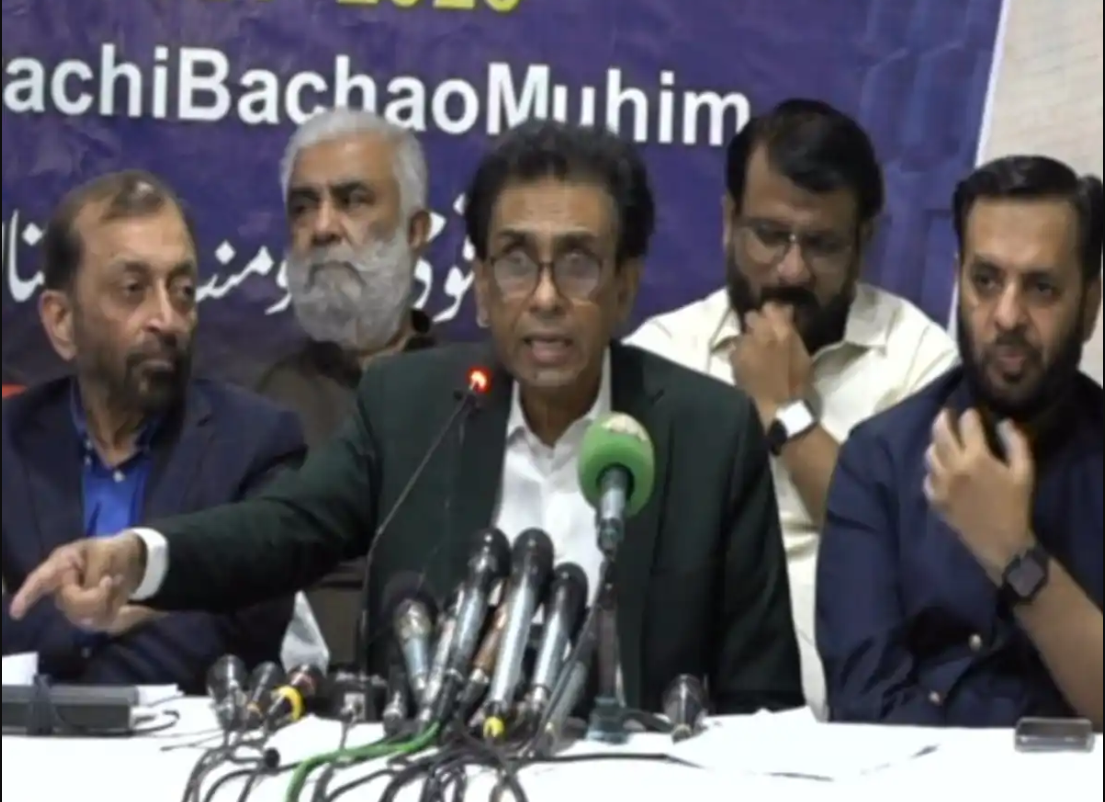

Muttahida Qaumi Movement-Pakistan (MQM-P) Chairman Dr Khalid Maqbool Siddiqui has strongly rejected the Sindh Assembly’s recent resolution declaring Karachi an inseparable part of the province. He described the move as undemocratic and contrary to the Constitution of Pakistan.
Addressing a high-level press conference at the party’s Bahadurabad headquarters, Siddiqui questioned whether a province could pass a resolution that conflicts with constitutional provisions. He argued that the step undermines the legal framework governing administrative reforms.
MQM-P Raises Constitutional Concerns
The Sindh Assembly adopted a resolution reaffirming Karachi as an integral and inseparable part of Sindh. Furthermore, the resolution rejected any proposals regarding the creation of a separate administrative unit for the provincial capital.
However, MQM-P leadership stated that the move reflects a political agenda rather than national interest. Siddiqui maintained that none of his party’s demands fall outside constitutional boundaries. He emphasized that MQM-P seeks lawful reforms within the framework of Pakistan’s Constitution.
Moreover, he pointed out that the Constitution allows the creation of new provinces. Therefore, he questioned why discussing administrative restructuring should be considered controversial. He also criticized what he described as selective interpretations of constitutional principles.
Criticism of Governance and Census Figures
Siddiqui accused the Pakistan Peoples Party (PPP) of poor governance in Sindh over the past 17 years. He claimed that corruption and administrative failures have weakened Karachi’s infrastructure and global standing.
Additionally, he alleged that Karachi’s population has been significantly undercounted. According to him, more than 15 million residents were excluded from official figures. He asserted that the city’s population exceeds 40 million and demanded a transparent census conducted under military supervision.
He argued that an accurate population count would reshape the political map of Sindh. Furthermore, he stressed that census transparency remains crucial for fair representation and resource allocation.
Article 140-A and Local Governance
The MQM-P chairman highlighted the importance of implementing Article 140-A of the Constitution. He stated that strong local governments are essential for effective administration and economic growth. According to him, empowering local bodies ensures accountability and efficient service delivery.
Siddiqui also addressed the prime minister directly. He reminded the federal government of its responsibility to uphold constitutional provisions. In addition, he referenced the constitutional allowance for referendums as a democratic mechanism.
Political Reactions and Future Strategy
During the press conference, MQM-P leaders criticized several political parties for supporting the resolution. They argued that constitutional debates should remain open and democratic.
Siddiqui concluded by declaring the resolution illegal and immoral. However, he stated that the party would respond through constitutional and democratic means. He emphasized that the upcoming period would focus on defending constitutional rights and public interests.
According to MQM-P, the debate over Karachi’s administrative future should prioritize governance reforms, transparency, and constitutional compliance rather than political confrontation.
