


Party Links Proposed 28th Amendment to Strengthening Local Governments
The leadership of the Muttahida Qaumi Movement–Pakistan (MQM-P), a key federal coalition partner, said on Thursday that the Constitution itself calls for the creation of new provinces once specific conditions are met. Their remarks come as political discussions intensify ahead of a possible 28th Constitutional Amendment aimed at empowering local governments.
Earlier this week, MQM-P announced that its proposed amendment — focused on strengthening local bodies, population-based reforms, and improved fiscal rights — would now be pushed forward as the 28th amendment. The party said the initiative was a “national reform effort,” not limited to Karachi, and would take shape in the coming months.
Adviser to the Prime Minister on Political Affairs Rana Sanaullah also indicated that the 28th amendment could be introduced if broad political consensus is achieved. He said the amendment would deal with local governance, the National Finance Commission, population issues, and key public-sector reforms.
MQM-P Highlights Constitutional Basis for More Provinces
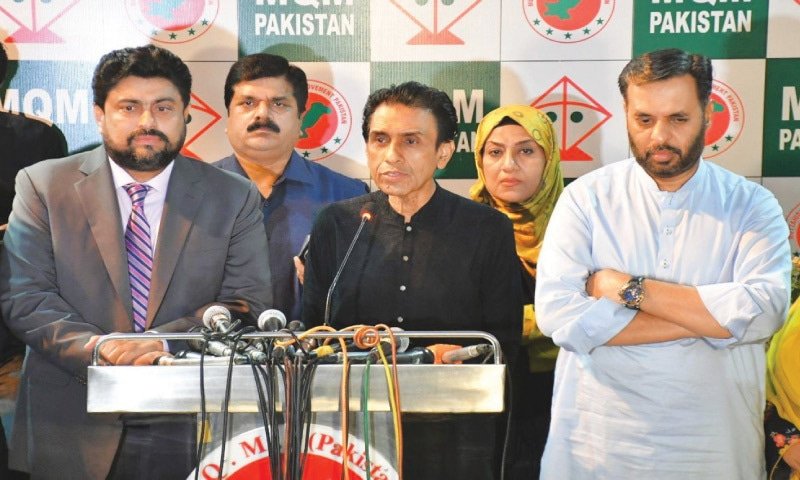
Addressing a press conference in Karachi alongside Sindh Governor Kamran Tessori, MQM-P leaders reiterated their stance on new provinces and empowered local governments. Education Minister Khalid Maqbool Siddiqui said the Constitution “demands” the creation of more provinces when population and administrative needs increase. Citing Article 239, he stressed that the formation of new districts, divisions, and even provinces aligns with constitutional requirements.
Article 239 lays out the legal framework for creating new provinces, requiring a two-thirds majority in both houses of Parliament and an additional two-thirds majority in the provincial assembly concerned.
Siddiqui questioned why acting on a constitutional article would be viewed negatively, arguing that ignoring it would instead be a “betrayal.” He said the constitutional provision for new provinces has existed since the era of Zulfikar Ali Bhutto and accused Pakistan’s ruling elite of selectively implementing constitutional clauses to suit their political interests.
He added that in genuine democracies, elected leaders do not have the luxury of choosing which constitutional provisions to honor. Siddiqui criticised Pakistan’s political system as being dominated by landowners and feudal actors, making true democracy impossible in such conditions.
He stressed that the third tier of government — local bodies — is the strongest in the developed world, whereas in Pakistan, it remains weak and disempowered. He said MQM-P seeks no personal gain and only wants citizens to receive their full constitutional rights.
Siddiqui also reiterated the need for a fully empowered mayor in Karachi, similar to other major global metropolitan cities, arguing that effective urban governance cannot exist without devolved authority.
