
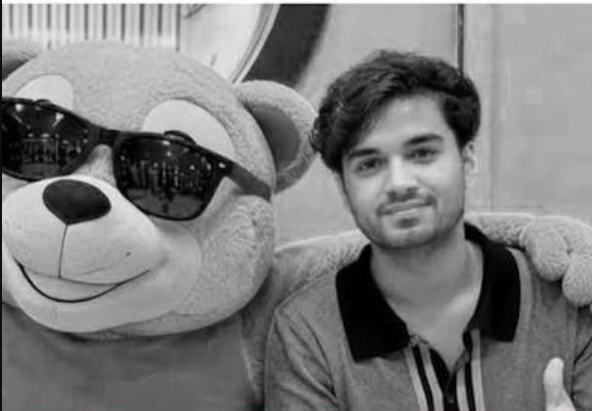

A judicial commission probing the death of Mir Raza Ali on Tuesday questioned the doctor who conducted his initial post-mortem examination over major discrepancies in the report.
The commission, headed by Sindh High Court Justice Omar Sial, grilled Medico-Legal Officer Dr Usama Sheikh about his findings and the circumstances surrounding Raza’s death.
Justice Sial strongly criticised the initial post-mortem report during the hearing. He said the discrepancies could not simply be treated as an ordinary mistake and described them as potentially amounting to criminal negligence.
The commission was formed to investigate Raza’s death after he allegedly went missing from the PECHS area. His body was later recovered from bushes near a wedding hall in Gulistan-e-Johar on July 29.
The case initially raised questions over whether Raza had been murdered or had died by suicide. Discrepancies in the first post-mortem report prompted further investigation.
Commission Questions Doctor Over Post-Mortem Findings
During the hearing, Dr Usama Sheikh told the commission that he completed his MBBS in 2016 and joined Jinnah Hospital in 2021. He said he had been performing medico-legal duties and working as a police surgeon.
Justice Sial asked whether Sheikh had received training at a major government hospital. The doctor said he had not. He said he had instead completed a two-year course required for working as a police surgeon.
The commission examined photographs of Raza’s body and reviewed the initial post-mortem report.
Justice Sial questioned the doctor about the condition of the body and his estimate of the time since death.
Sheikh said both of Raza’s hands were open when he examined the body in the morgue.
The judge then questioned how the report had estimated that the body was between two and three days old. Raza had reportedly gone missing on July 27, while his body was recovered on July 29.
Justice Sial questioned the evidence supporting the estimate and said there appeared to be no basis for determining the age of the body in that manner.
Sheikh told the commission that he had collected samples from the victim’s shirt, liver, lungs, stomach contents and blood. He said the samples were handed over to Sub-Inspector Nadeem Mughal.
According to the doctor, the blood samples indicated the presence of an intoxicating substance.
Sheikh maintained that Raza died from a gunshot wound. He said he found no other marks on the body and observed no broken bones or fractures.
Doctor Denies Pressure to Alter Report
The commission also questioned Sheikh about whether anyone had asked him to change or alter his post-mortem findings.
Justice Sial directly asked whether any person had instructed him to modify the report.
Sheikh denied receiving such instructions. He told the commission that the report was entirely his own.
The hearing also examined communications between the doctor and senior police officials.
Sheikh said DIG East Farrukh Lanjhar had contacted him and asked him to come to the Chief Minister’s House. Sheikh said he declined and requested an official letter instead.
He said the official was seeking information about the timeline of the investigation.
Sheikh later told the commission that Additional Inspector General Azad Khan called him to the Chief Minister’s House. He said he went there accompanied by his father.
However, Sheikh denied facing any pressure regarding the post-mortem examination.
“I had no pressure on me,” he told the commission.
He also said he completed the post-mortem work within 24 hours.
The proceedings became tense when the doctor repeatedly provided information in stages.
Justice Sial remarked that Sheikh was giving information “in instalments, like the post-mortem report”.
The judge directed him to disclose all relevant information clearly and completely.
Sheikh also said he had been summoned by DS Siraj Lashari. He told the commission that he had written to the health secretary on August 21, seeking an end to what he described as a media trial.
Raza’s Family Raises Questions Over Police Investigation
Raza’s parents also recorded their statements before the judicial commission.
His mother said she learned that her son was missing at around 4:40am. According to her testimony, Raza’s friend Haisam informed her that Raza’s social media accounts had been deleted.
She said she checked the house and found that Raza’s belongings were still there. Family members and employees subsequently arrived at the house.
Raza’s father then contacted the police emergency helpline to report his disappearance.
His father told the commission that he approached the police between 5:40am and 5:45am. He later went to Ferozabad police station.
According to his testimony, police initially refused to register an FIR. He claimed officers asked the family to bring a photograph and suggested that Raza might have left home after an argument.
He said the FIR was eventually registered later in the day after other people contacted the police station and requested the registration of the case.
The family later received information about CCTV footage allegedly showing Raza taking a gun from a security guard.
Raza’s mother told the commission that two videos were sent to her. One reportedly showed a car being parked, while the other showed someone taking out a gun.
The family also contacted a ride-hailing company to obtain information about Raza’s last trip. After receiving the driver’s number, they learned that Raza had reportedly been dropped near a guesthouse.
The family then went to the guesthouse and began asking questions about Raza.
According to his mother’s testimony, several men arrived on motorcycles and claimed that three people had escaped by jumping over a wall.
The family later learned from police that an unidentified body had been recovered near a nursery.
Edhi Foundation volunteers Javed and Mohsin also appeared before the commission. They said they helped move the body to Jinnah Hospital but claimed police did not subsequently contact them.
One volunteer said the body had suffered a gunshot wound and that the face was severely decomposed. He also said the location where the body was found was not a place where people normally visited without a specific reason.
Advocate Jibran Nasir, representing Raza’s family, pointed out that the Crime Scene Unit had allegedly not visited the location before the body was shifted to Jinnah Hospital.
Jibran Nasir Claims Probe Concerns Vindicated
Speaking outside the Sindh High Court, lawyer Jibran Nasir said the commission proceedings had strengthened his earlier concerns about the investigation.
Nasir said developments in the case were supporting the questions he had raised from the beginning.
He also called for further clarification from Police Surgeon Dr Summaiya regarding several aspects of the case.
Nasir said he had previously questioned the direction from which the bullet was fired. According to his claim, the nature of the wound suggested that the shot had been fired from the front.
He also questioned why the medico-legal officer had been called to the Chief Minister’s office and sought clarification about the circumstances surrounding the meeting with senior officials.
The judicial commission’s proceedings are expected to provide further clarity on the circumstances surrounding Mir Raza’s death, the accuracy of the initial post-mortem report and the handling of the investigation.

