
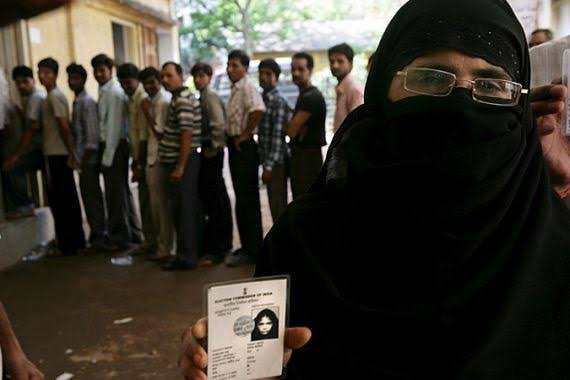

India is facing fresh international scrutiny after a United States religious freedom commission accused the government of targeting Muslim citizens during a nationwide revision of electoral rolls. The allegations have raised serious concerns about voting rights, religious discrimination and citizenship protections.
The US Commission on International Religious Freedom (USCIRF) issued the warning on Thursday, November 19, 2026. It claimed that India’s voter registration exercise had disproportionately affected religious minorities, particularly Muslims.
According to the commission, approximately 130 million names have been removed from India’s electoral rolls. The exercise represents the largest reported removal of voters in the country’s history.
USCIRF Chairman Asif Mahmood accused Indian authorities of removing Muslim citizens from voter lists, identifying some as foreigners and unlawfully deporting them.
The commission expressed concern that electoral registration procedures were becoming connected to separate government efforts to identify and remove suspected undocumented immigrants.
However, removal from an electoral roll does not automatically establish that an individual is a foreign national.
The allegations have intensified debate over whether legitimate Indian citizens could lose their voting rights or face immigration action because of errors in official records.
India’s Election Commission has defended the revision process. It maintains that the exercise aims to remove duplicate registrations, deceased individuals, people who have relocated and other ineligible voters.
The commission also says citizens whose names were removed incorrectly can challenge the decision through established appeal procedures.
However, religious freedom advocates argue that these safeguards may not adequately protect vulnerable communities.
USCIRF Commissioner Gene Mills criticized the reported treatment of Muslim citizens and urged the US State Department to designate India as a Country of Particular Concern over alleged religious freedom violations.
Such a designation would reflect serious concerns about religious freedom conditions. However, USCIRF’s recommendations are not binding on the American government.
Washington has not adopted the commission’s recent recommendations concerning India.
The Indian government has repeatedly rejected accusations of religious discrimination. Its foreign ministry has previously described USCIRF as biased and characterized its criticism as interference in India’s internal affairs.
New Delhi maintains that government policies and public welfare programmes benefit citizens across religious communities.
The controversy has also triggered demonstrations in India.
Opposition parties and student groups have protested the voter list revisions. They allege that the changes disproportionately affect communities unlikely to support Prime Minister Narendra Modi’s Bharatiya Janata Party.
Human rights organizations have also questioned the government’s response to recent protests.
The wider dispute comes amid continuing international criticism of India’s treatment of religious minorities.
United Nations experts and rights organizations have raised concerns about religiously differentiated citizenship rules, anti-conversion legislation and the demolition of Muslim-owned properties.
They have also criticized the removal of the former special constitutional status of Muslim-majority Jammu and Kashmir.
The Indian government denies that its policies systematically discriminate against religious minorities.
US Secretary of State Marco Rubio previously described the voter registration controversy as an internal Indian political matter. He indicated that Washington would not comment on the dispute.
The latest criticism from USCIRF has nevertheless brought renewed international attention to India’s electoral procedures.
The allegations have not been established by an independent judicial finding. Questions also remain about how many deleted registrations represent eligible voters and whether affected individuals can successfully restore their names.
For millions of Indian citizens, the issue goes beyond administrative changes to electoral records. It concerns access to voting, protection against discrimination and the legal distinction between voter eligibility and citizenship.

