
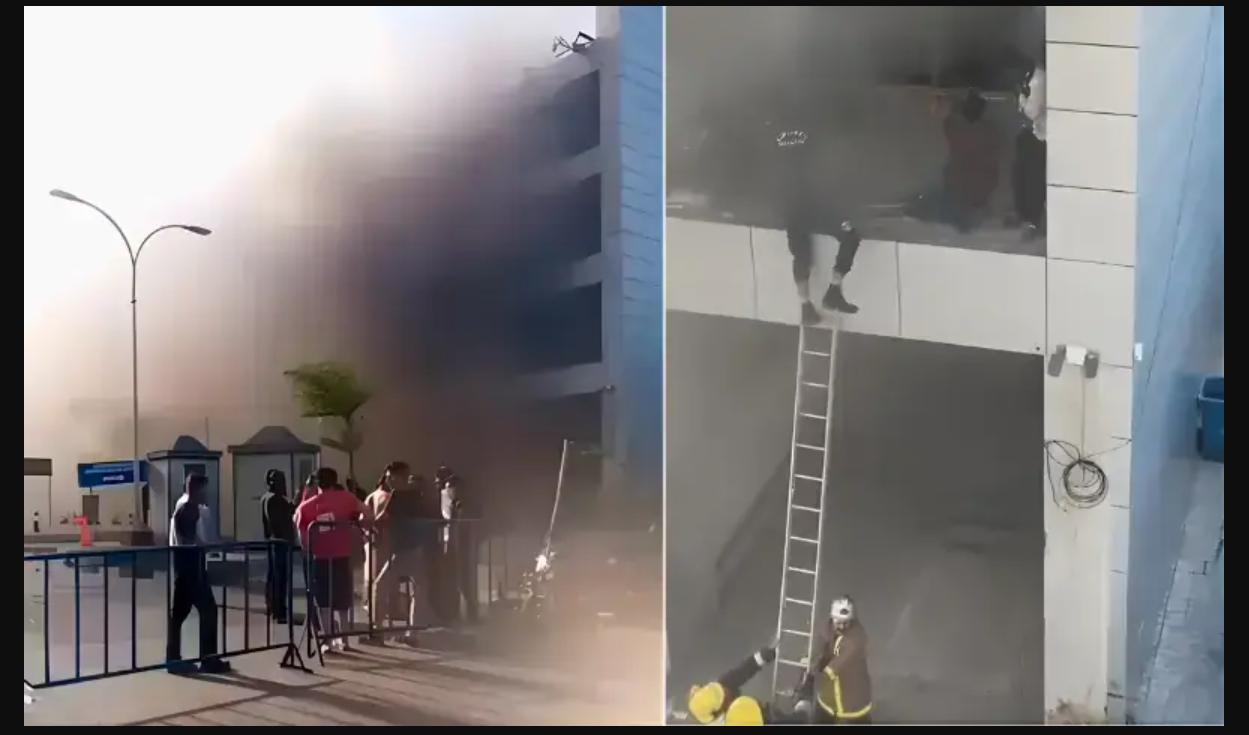

A massive fire at a departmental store in Karachi’s upscale Clifton area burned for more than twelve hours. Authorities struggled to fully control the blaze despite continuous firefighting efforts.
The incident quickly turned into a major emergency operation. Firefighters, rescue teams, and municipal authorities worked together throughout the day. Meanwhile, officials focused on preventing the fire from spreading to nearby structures.
The prolonged duration of the blaze raised fresh concerns about commercial building safety and emergency preparedness in Karachi.
Fire Erupts in Basement During Early Morning Hours
Officials said the fire began early Monday morning in the basement of a store located in the Zamzama commercial area. Emergency services received an alert around 6:00 a.m.
Fire tenders were immediately dispatched from nearby stations. However, flames intensified rapidly due to structural conditions inside the building.
Initially confined to the basement, the fire later spread toward sections of the ground floor. As a result, firefighters had to adjust their strategy multiple times during the operation.
Because basement fires trap heat and smoke, controlling them often becomes extremely difficult. Therefore, rescue teams prioritized ventilation and safe access before aggressive firefighting.
Structural Challenges Complicate Firefighting Operation
Authorities explained that the building’s false ceiling allowed flames and smoke to spread quickly. Poor ventilation further worsened the situation by trapping thick smoke inside enclosed spaces.
Consequently, firefighters faced limited visibility and rising temperatures while attempting to reach affected areas. To manage the heat, rescue teams began breaking portions of the building’s walls.
This step helped release accumulated smoke and reduced internal pressure. Moreover, it allowed firefighters to enter sections that remained inaccessible earlier.
Officials acknowledged that the fire’s scale required a prolonged response. Multiple agencies coordinated closely to maintain operational safety.
Emergency Response Prevents Casualties
Despite the intensity of the blaze, authorities confirmed that no casualties occurred. All individuals present inside the building were safely evacuated soon after the fire started.
Rescue teams conducted repeated inspections to ensure no one remained trapped. Officials reassured the public that evacuation procedures worked effectively during the emergency.
City authorities continued monitoring the situation throughout the operation. Fire crews remained on-site to prevent possible flare-ups even after flames weakened.
Officials Monitor Situation as Firefighting Continues
Municipal leadership stated that emergency teams maintained constant coordination during the incident. Authorities monitored firefighting progress while ensuring surrounding areas remained secure.
Although the fire persisted for several hours, officials emphasized that containment efforts gradually improved conditions. However, cooling operations required additional time to eliminate hidden hotspots.
Experts often warn that fires involving enclosed commercial spaces can reignite if cooling remains incomplete. Therefore, firefighters adopted a cautious approach instead of rushing final containment.
Separate Clifton Fire Adds to Safety Concerns
Earlier, another fire incident occurred at a nearby store in Clifton. Emergency responders controlled that blaze quickly, and no injuries were reported.
Although unrelated, the two incidents highlighted broader concerns about fire safety standards in commercial buildings. Observers noted that crowded retail areas require strict compliance with safety measures.
Regular inspections, functioning ventilation systems, and proper emergency exits play a crucial role in reducing risks. Consequently, authorities may review safety enforcement following repeated incidents.
Growing Need for Improved Commercial Fire Safety
The Zamzama fire underscores the importance of preparedness in densely populated commercial districts. Fires in basement areas often spread unnoticed until conditions worsen.
Urban experts stress that prevention remains more effective than response. Therefore, building owners must prioritize maintenance, electrical safety, and emergency planning.
At the same time, coordinated emergency response helped prevent loss of life during this incident. The safe evacuation demonstrated improved awareness among both staff and rescue agencies.
A Long Battle Nears Containment
As firefighting operations continued into extended hours, crews focused on complete extinguishment and structural safety checks. Authorities expected operations to continue until every hotspot cooled fully.
While the fire caused disruption and damage, the absence of casualties remained the most significant outcome. Nevertheless, the incident serves as a reminder of the risks posed by large commercial fires in major cities.
The Karachi Zamzama blaze may eventually fade from headlines. Yet its lessons about preparedness, safety enforcement, and rapid coordination will likely shape future responses.

