
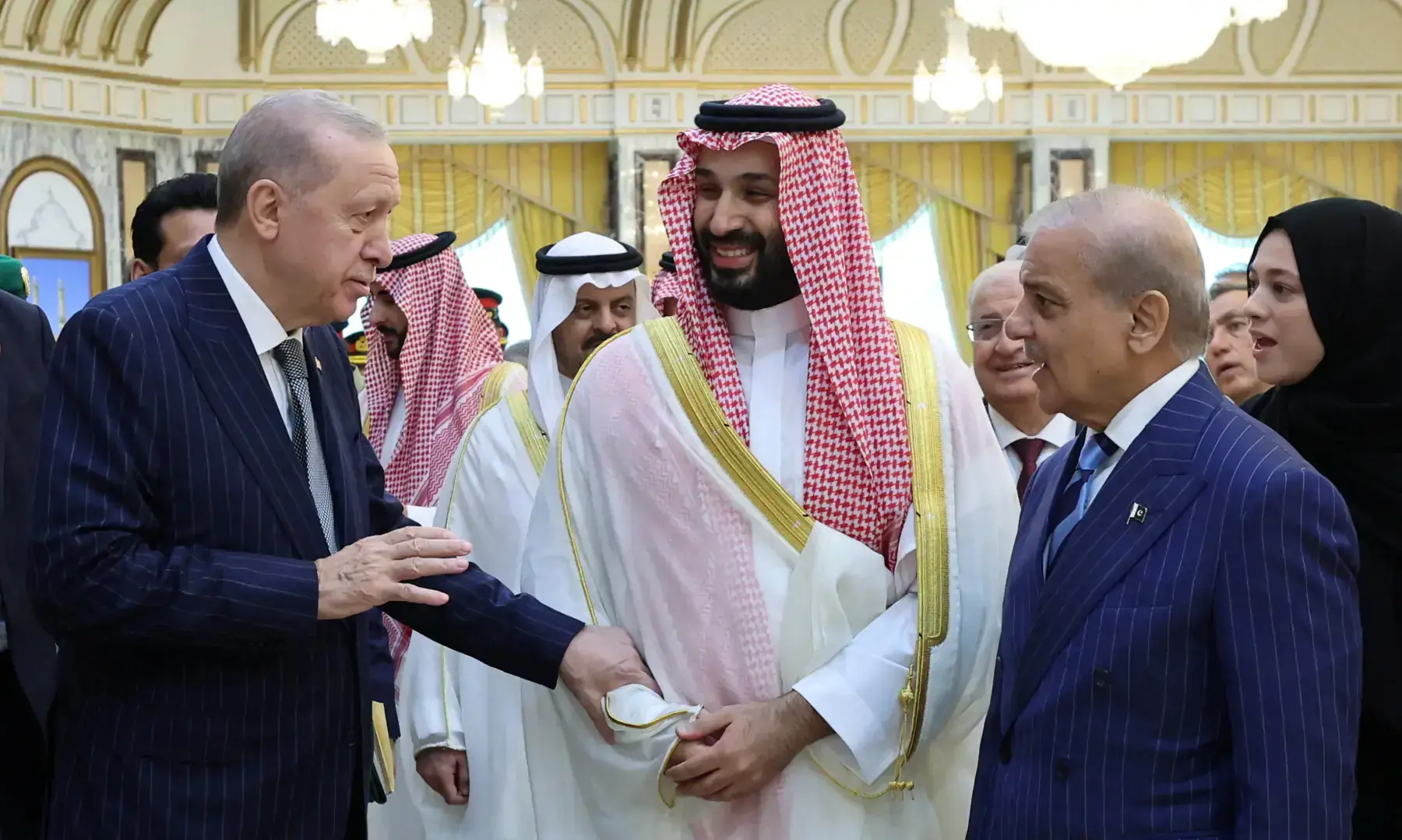

ISLAMABAD: Saudi Arabia, Türkiye and Pakistan signed the Makkah Joint Defence Agreement last week, taking a significant step toward strengthening regional security. Saudi Crown Prince Mohammed bin Salman, Turkish President Recep Tayyip Erdoğan and Prime Minister Shehbaz Sharif signed the agreement in Makkah.
The pact’s central provision states that an armed attack against one signatory will be treated as an attack against all three. It also promotes deeper defence cooperation, including counter-terrorism, training, interoperability and possible joint defence-industrial projects.
Officials have repeatedly described the agreement as defensive and not directed against any particular country. They have also stressed that it does not create a sectarian bloc or replace existing alliances and bilateral agreements.
Three Powers, Complementary Strengths
The agreement brings together three countries with different but complementary strategic capabilities.
Saudi Arabia offers significant financial resources, energy influence and a strategically important position near major maritime routes. Türkiye contributes one of NATO’s largest conventional militaries and a growing defence industry, particularly in drones and advanced military systems.
Pakistan brings substantial military manpower, operational experience and decades of defence cooperation with Gulf states. It is also the only nuclear-armed Muslim-majority country.
Together, these capabilities could strengthen intelligence sharing, joint exercises and defence preparedness. The agreement could also encourage technology transfers and local defence production.
For Saudi Arabia, the pact provides another layer of deterrence and expands its security partnerships without ending cooperation with Western powers.
For Türkiye, it strengthens its regional influence, expands defence markets and deepens relations with wealthy Gulf partners.
For Pakistan, the agreement builds on its 2025 defence arrangement with Saudi Arabia. It could also increase Islamabad’s diplomatic importance while supporting potential economic and defence cooperation.
Regional Implications and Future Challenges
The agreement comes amid severe regional instability following the US-Israel confrontation with Iran, attacks on Gulf infrastructure and disruptions to regional shipping routes.
Therefore, the pact reflects growing interest among regional powers in developing additional security mechanisms. It does not replace the United States, but it signals that regional countries want greater strategic autonomy.
However, significant questions remain. The full text has not been publicly released, leaving uncertainty about operational commitments, consultation procedures and the circumstances that would trigger a collective response.
Moreover, the three countries have different foreign-policy priorities and threat perceptions. Their ability to coordinate during a major crisis will ultimately determine the agreement’s credibility.
The pact also should not be portrayed as an “Islamic NATO.” Officials have rejected such descriptions and emphasised its defensive and inclusive character.
Economic cooperation could prove equally important. Joint defence projects require investment, technology transfers and long-term political commitment. Saudi financial resources, Turkish defence expertise and Pakistani manpower could create useful synergies.
Finally, speculation about extending Pakistan’s nuclear deterrence to the Gulf should be treated cautiously. Pakistan’s nuclear capability remains focused on its South Asian security environment.
Overall, the Makkah Joint Defence Agreement represents a pragmatic effort to strengthen cooperation among three influential states. Its long-term significance will depend on practical military cooperation, industrial projects and political unity during future regional crises.

