
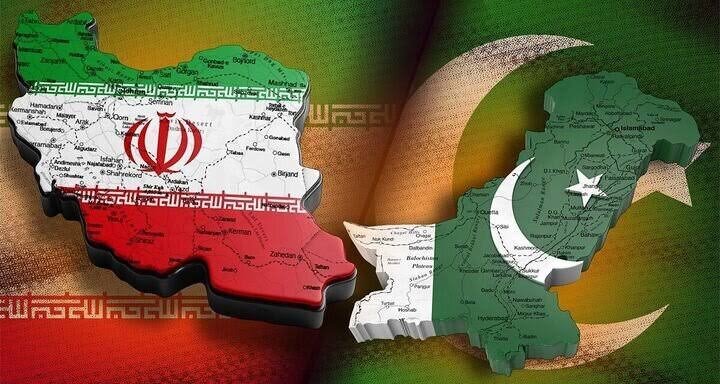

Iran has played down concerns over the new defence agreement between Pakistan, Turkiye and Saudi Arabia, saying Tehran does not view the pact as a direct threat. Iranian Foreign Ministry spokesman Esmaeil Baghaei made the remarks on Monday as Pakistan also moved to reassure Tehran about the agreement.
The comments came after Foreign Minister Ishaq Dar spoke by phone with his Iranian counterpart, Abbas Araghchi.
Iran Gives Cautious Response to Makkah Defence Pact
The Makkah Joint Defence Agreement was signed by Pakistan, Turkiye and Saudi Arabia on August 7. Speaking at a weekly news conference, Baghaei said Tehran viewed the agreement within the broader changes taking place in regional security.
“Countries have reached the conclusion that they cannot rely on America’s claim of providing security,” he said.
According to Baghaei, regional countries are increasingly considering their own security capabilities instead of relying heavily on outside powers.
He also said Tehran would welcome security plans that reflect regional realities and include relevant countries.
“Any plan that is based on the geopolitical and historical realities of the region, is comprehensive and inclusive, and correctly identifies the enemy and the threat, has a chance of helping to strengthen security and prevent instability and abuses by the Zionist enemy [Israel] and its allies,” he added.
Ishaq Dar Briefs Iranian Counterpart
Meanwhile, Ishaq Dar discussed the agreement with Abbas Araghchi during a telephone conversation. The two foreign ministers reviewed regional and international developments. They also discussed efforts aimed at promoting peace amid rising tensions.
According to Pakistan’s Foreign Ministry, Dar explained the objectives of the Makkah agreement to his Iranian counterpart. He said the arrangement seeks to strengthen strategic cooperation and support regional peace and security.
Araghchi thanked Dar for sharing details of the agreement. Both ministers also agreed to maintain close contact on matters of mutual interest.
The conversation signalled Islamabad’s effort to prevent the new security partnership from creating additional tensions with neighbouring Iran.
Shehbaz Sharif Calls Agreement Defensive
Prime Minister Shehbaz Sharif also sought to address concerns about the agreement during a federal cabinet meeting.
He said the pact was not designed to threaten another country.
“The purpose is absolutely not aggression,” he said, describing the arrangement as “completely defensive” and aimed at ensuring peace, stability and progress in the region.
Shehbaz explained that Pakistan had discussed the arrangement with its partners for several years.
“This was not something that came about today,” he said. “Efforts on this agreement had been continuing for the past several years and, by the grace of God, they reached completion this Friday.”
Under the agreement’s central security principle, an armed attack against one signatory would be treated as an attack against all three.
The countries have presented the pact as a framework for closer strategic and defence cooperation.
Pakistani officials have also indicated that the arrangement is not necessarily exclusive. Other Muslim-majority countries could potentially join in the future.
Pakistan Seeks to Preserve Ties With Iran
The agreement has attracted attention in Tehran because Iran has traditionally viewed regional security arrangements involving Saudi Arabia with caution. Saudi Arabia remains a major regional rival of Iran. Tehran has also frequently criticised dependence on the United States for Gulf security.
However, Iran’s initial response to the Makkah agreement has remained relatively restrained.
Pakistan faces a delicate diplomatic challenge because it maintains close relations with Saudi Arabia and Turkiye while sharing a border with Iran.The situation has become more complicated amid tensions involving Iran, Israel and the United States.
The continuing dispute over the Strait of Hormuz has added another layer to the regional crisis.
Strait of Hormuz Remains a Major Concern
Baghaei said Iran was currently focused on discussions with Oman regarding arrangements for the Strait of Hormuz. He maintained that Tehran was not negotiating directly with Washington. However, messages continue to pass between the sides through intermediaries.
“The exchange of messages is a natural matter,” he said, describing the communications as routine and related to day-to-day issues.
Baghaei also warned that Iran could not guarantee the Strait of Hormuz would remain secure under what Tehran considers continuing violations of relevant arrangements.
His remarks followed Araghchi’s statement that negotiations with Washington could not resume while Iran believes its commitments are being violated.
New Pact Creates Diplomatic Test for Pakistan
The Makkah agreement gives Pakistan an opportunity to strengthen its strategic role among Muslim-majority countries. At the same time, it presents Islamabad with a delicate diplomatic balancing act. Saudi Arabia gains a stronger defence partnership through the agreement. Turkiye also deepens strategic cooperation with two important regional partners.
For Pakistan, the pact could strengthen its position as both a security partner and diplomatic player.
However, Islamabad clearly wants to avoid the agreement being viewed as an anti-Iran alliance.
The parallel statements from Islamabad and Tehran suggest both sides are trying to preserve their relationship despite changing regional alliances.
Pakistan has emphasised that the pact promotes “peace, development and prosperity.” Meanwhile, Iran has said it sees no immediate reason to interpret the agreement as a move against Tehran.
That cautious approach could prove important as regional tensions continue.
For now, Pakistan appears determined to deepen its defence cooperation with Saudi Arabia and Turkiye without closing its diplomatic door to Iran.
Meanwhile, US President Donald Trump said Monday that he would seek compensation from Iran during any future peace negotiations.
Iran is “asking for compensation for the damage done to them during the last five month Military Conflict… I am likewise demanding compensation from Iran, for all of the people that they have killed and gravely wounded with their roadside bombs and many conflicts,” Trump posted.

