
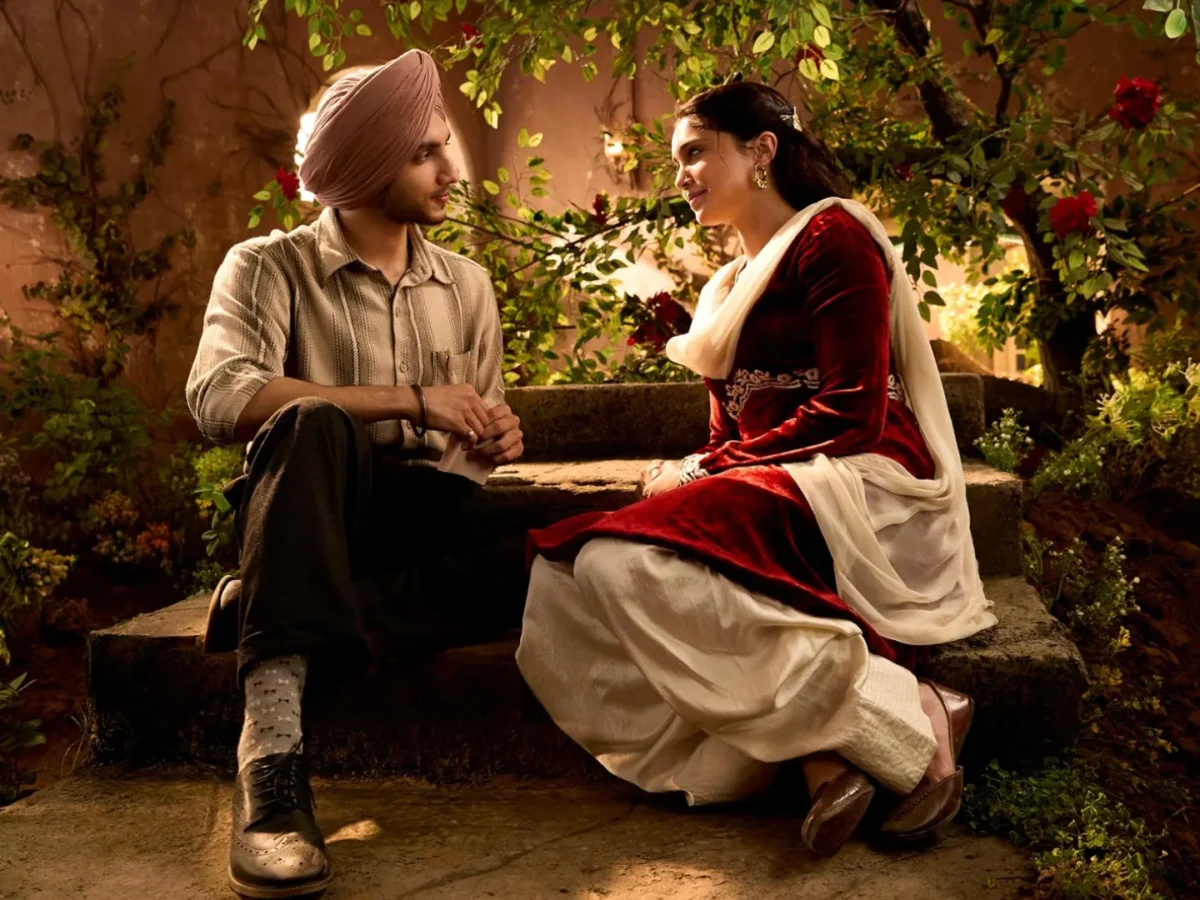

Imtiaz Ali’s latest film Main Vaapas Aaunga is not only a love story set against the backdrop of Partition — it is a deeply emotional reflection on migration, memories, lost homes and the people who carried their past with them for an entire lifetime.
Released in theatres on June 12, 2026, Main Vaapas Aaunga arrived with expectations because of its unusual combination of Imtiaz Ali’s storytelling style, a Partition-era narrative and the emotional weight of a lost love connected to Sargodha.
Before watching the film, many viewers expected a story about romance and separation. But after experiencing it, the film reveals itself as something much larger — a story about how historical events do not simply end when borders are drawn. They continue living inside the memories of those who experienced them.
At the centre of the story is Ishar Singh Grewal, known as Keenu, a man whose life remains connected to a love he lost during the traumatic days of Partition.
The elderly Ishar is played by veteran actor Naseeruddin Shah, while his younger version is portrayed by Vedang Raina. Sharvari Wagh plays Afsana, also known as Jiya, the woman Ishar loved but lost during the chaos of 1947. Diljit Dosanjh plays Nirvair, Ishar’s grandson, who slowly begins to understand the memories and emotions his grandfather has carried for decades.
Directed by Imtiaz Ali and written by Ali along with Nayanika Mahtani, the film moves between different generations to explore love, separation, identity and the meaning of home.
Partition Through the Eyes of Ordinary People
One of the strongest aspects of Main Vaapas Aaunga is that it does not present Partition only as a political event.
Instead, it focuses on ordinary people whose lives were suddenly changed forever.
The film shows how millions of people were forced to leave behind their homes, neighbourhoods, schools, friendships and family connections. Behind the creation of two countries were countless personal tragedies — people who lost everything except their memories.
The scenes depicting Partition violence are difficult to watch. The chaos surrounding trains, the bloodshed and the fear experienced by families highlight the devastating human cost of the division.
The film does not treat Partition as just a historical moment where people moved from one side of a border to another.
It presents it as a human tragedy.
For many survivors, the biggest loss was not only their property or land. It was the loss of a familiar world — the streets where they grew up, the people they knew and the places that shaped their identity.
A Personal Connection With Sargodha and Partition Memories
The emotional impact of Main Vaapas Aaunga becomes even stronger for people who have personal connections with the places affected by Partition.
The film’s connection with Sargodha makes it especially meaningful because the city itself carries a deep historical connection with the era before and after Partition.
For many families across Pakistan and India, cities like Sargodha are not just locations on a map. They represent memories of childhood, family stories and generations that came before them.
The film reminds viewers that for those who experienced Partition, these places were never simply abandoned.
They remained alive through memories.
Many survivors spent their entire lives remembering the homes they left behind, even after building new lives elsewhere.
The Pain Carried by Partition Survivors
For younger generations, Partition often feels like something distant — something studied in textbooks or seen in documentaries.
But for those who lived through it, Partition was not history.
It was personal.
Millions of people carried emotional scars throughout their lives. Some rarely spoke about their experiences, while others struggled to describe the pain of leaving behind everything familiar.
The film captures this silent suffering through Ishar’s character.
His memories are not just stories from the past. They are a part of who he is.
Even decades later, the places and people he lost remain present in his thoughts.
Naseeruddin Shah’s Powerful Performance
Naseeruddin Shah delivers one of the film’s most memorable performances.
Without relying on dramatic dialogue, he uses his expressions, silence and body language to show the emotional weight carried by an elderly man who has spent decades living with memories of the past.
His eyes often communicate what words cannot.
Through his performance, audiences understand that Ishar’s journey is not simply about remembering a lost romance.
It is about remembering an entire life that disappeared.
Even in old age, Ishar’s mind continues returning to Sargodha, to his younger days and to the woman whose memory remained with him.
Young Cast Adds Emotional Depth
Vedang Raina successfully portrays the younger Ishar, capturing the innocence, hope and emotional vulnerability of a man caught in the middle of historic events beyond his control.
Sharvari brings warmth and emotional depth to Jiya, making the love story feel genuine rather than simply a fictional romance.
Diljit Dosanjh adds another layer to the film as Nirvair, a grandson trying to understand a past he never personally experienced.
Through his character, the film explores an important question:
How do younger generations connect with histories they did not witness?
Imtiaz Ali’s Signature Emotional Storytelling
Fans of Imtiaz Ali’s earlier films will recognise his familiar style of exploring emotions, relationships and personal journeys.
From Jab We Met and Rockstar to Tamasha and Amar Singh Chamkila, Ali has repeatedly focused on characters searching for meaning, love and identity.
With Main Vaapas Aaunga, he brings that emotional storytelling style into one of South Asia’s most painful historical chapters.
Instead of focusing only on politics or conflict, he focuses on human emotions.
The film asks viewers to remember that history is ultimately made of individual lives.
Music That Strengthens the Emotions
The music of Main Vaapas Aaunga adds another emotional dimension to the story.
The collaboration between Imtiaz Ali and A. R. Rahman once again creates an atmosphere filled with longing and nostalgia.
The songs capture the feeling of separation, memories and unfinished emotions.
Mohit Chauhan’s voice adds depth to the emotional moments, while Diljit Dosanjh’s contribution brings another personal touch to the album.
Songs that may sound beautiful on their own become even more meaningful when experienced within the story.
A Film That Deserves to Be Seen Across Borders
One of the strongest messages of Main Vaapas Aaunga is that Partition stories belong to everyone who shares that history.
The film is not about blaming one side or another.
It is about remembering people.
A special screening in Pakistan would allow many elderly citizens — especially those who witnessed Partition themselves — to experience the film and share their own memories with younger generations.
There are countless families in Pakistan whose ancestors migrated from areas that are now part of India.
Similarly, many families in India still remember homes, villages, schools and friendships that were left behind in Pakistan.
These shared memories show that before borders separated people, there were generations who lived together.
Final Thoughts
Main Vaapas Aaunga is ultimately a story about the things people lose but never truly leave behind.
It is about homes that exist only in memories, relationships separated by history and emotions that survive across generations.
The film reminds audiences that Partition happened decades ago, but for survivors and their families, its impact never completely disappeared.
The story begins with a lost love but expands into something much bigger — a reflection on identity, belonging and the memories that define us.
For many viewers, Main Vaapas Aaunga will not simply feel like a film.
It will feel like a conversation with the past.
A reminder that behind every border, every migration and every historical event were real people with real dreams, real homes and real memories that stayed with them forever.

