
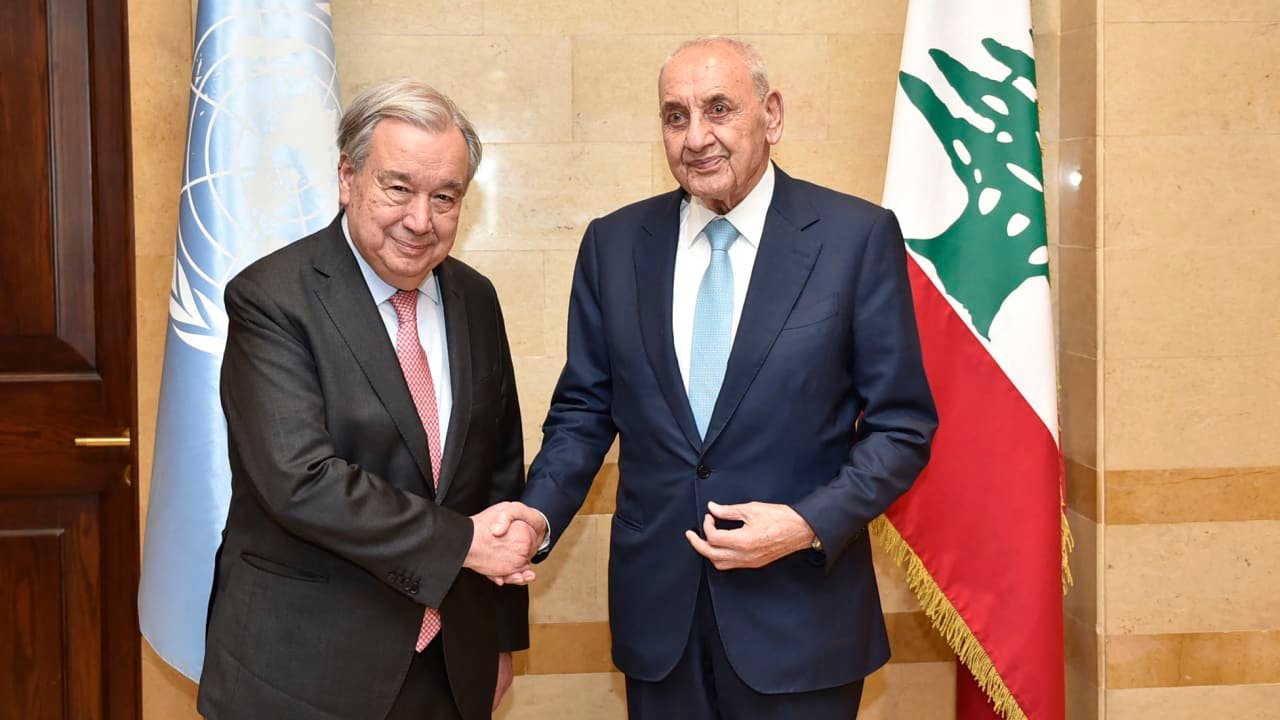

Parliament speaker insists Israeli withdrawal depends on wider Iran-US diplomacy as political divisions deepen in Beirut
Lebanese Parliament Speaker Nabih Berri has strongly rejected the recently signed US-brokered agreement between Lebanon and Israel, describing it as an imposed arrangement that could deepen domestic divisions and warning that it would not be implemented.
Speaking to Lebanon’s Al-Akhbar newspaper, Berri said the ongoing negotiations between Iran and the United States remain the only realistic path toward securing a complete Israeli withdrawal from southern Lebanon. He argued that separating Lebanon’s future from the broader US-Iran diplomatic track would only prolong Israel’s military presence in the country.
The agreement, signed by the Lebanese and Israeli ambassadors to Washington on Friday, outlines a phased security framework under which the Lebanese Armed Forces would gradually assume control of designated areas following the verified disarmament of non-state armed groups, including Hezbollah. In return, Israeli forces would progressively redeploy from southern Lebanon.
Political divisions intensify over ceasefire framework
Meanwhile, Berri, who also leads the Amal Movement and remains a key Hezbollah ally, criticized the agreement as a set of “dictates” rather than a negotiated settlement. He warned that its implementation could trigger internal political confrontation by placing Lebanese factions against one another.
Israel has welcomed the agreement, with Prime Minister Benjamin Netanyahu stating that Israeli forces would retain the right to remain in southern Lebanon if Hezbollah failed to disarm. However, Hezbollah has rejected the accord, calling it unacceptable and urging the Lebanese government to abandon direct negotiations with Israel.
Diplomatic efforts continue despite military tensions
President Joseph Aoun has urged US President Donald Trump to pressure Israel to withdraw from southern Lebanon, while the Lebanese government continues pursuing a policy aimed at strengthening state authority and reducing the role of armed groups.
At the same time, the Israeli military said it destroyed a Hezbollah tunnel and struck several command centers in southern Lebanon following alleged ceasefire violations. Hezbollah, however, maintained that it has respected the ceasefire so far while reserving what it described as its right to defend Lebanon if necessary.

