



Leaked Report
A leaked medical report has reignited an intense global debate over gender eligibility in women’s sports, centering once again on Algerian Olympic boxing champion Imane Khelif. The controversy flared after the publication of a purported diagnostic report alleging that Khelif, who won gold in women’s boxing at the 2024 Paris Olympics, is biologically male.
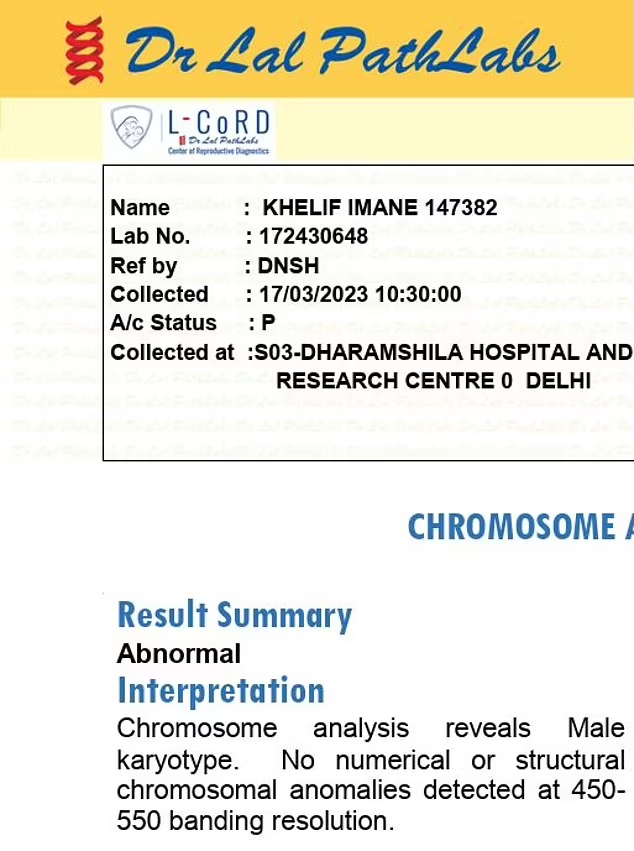
The medical document, dated March 2023, is reportedly from India’s renowned Dr Lal PathLabs and has been circulated widely by American journalist Alan Abrahamson of 3 Wire Sports.
The report claims that Khelif carries the SRY gene—typically present on the Y chromosome—suggesting a male karyotype. While the authenticity of the report remains under scrutiny, its circulation has triggered renewed public discourse about sex-based classification in elite sports.
Khelif, 25, is no stranger to controversy. In 2023, she was disqualified from a major international event by the now-disbanded International Boxing Association (IBA) over similar concerns, a decision that was sharply criticized by several sports officials, including former International Olympic Committee (IOC) President Thomas Bach.
Despite this setback, Khelif bounced back with a stunning victory at the 2024 Olympics in Paris, becoming Algeria’s first female Olympic boxing champion—an achievement celebrated widely across the country.
The latest allegations surfaced just as World Boxing introduced a sweeping new eligibility policy in May 2025. The “Sex, Age and Weight” framework mandates genetic testing for all athletes aged 18 and above, including PCR tests to determine the presence or absence of the SRY gene.
The policy aims to uphold safety and fairness in high-contact sports like boxing. Until she complies with the testing requirements, Khelif has been suspended from competing in sanctioned events, including the upcoming Eindhoven Box Cup.
In a statement, World Boxing defended the policy, saying, “These new eligibility rules were developed with the express purpose of safeguarding athletes in combat sports.” The organization emphasized the need for clear, science-based regulations, especially in light of growing public and professional concerns.
The Algerian Olympic Committee, however, has rejected the leaked report, describing it as “politically motivated” and lacking in credibility. The committee accused critics of attempting to defame an athlete who brought “immense pride to Algeria.” Khelif herself has consistently denied all claims related to her gender identity and has maintained her focus on preparing for the 2028 Los Angeles Olympics.
Public reaction to the renewed controversy has been deeply polarized. British media personality Piers Morgan called for apologies from those who previously dismissed concerns about gender fairness in sport.
Meanwhile, former Olympian Sharron Davies and American activist Riley Gaines have voiced strong opinions, with Davies warning of the “erosion of women’s sport” and Gaines controversially referring to Khelif using male pronouns.
The debate surrounding Khelif’s eligibility is part of a broader, complex conversation about transgender and intersex athletes in competitive women’s sports. Sports like boxing, swimming, and track and field have become focal points in this discussion, with critics citing biological differences as safety and fairness concerns, while advocates call for compassion, dignity, and the right to self-identification.
Notably, Khelif isn’t the only athlete under such scrutiny. Taiwanese boxer Lin Yu-ting, who also competed in Paris, faced previous disqualifications over similar issues and has been caught in the same regulatory web.
World Boxing has made it clear that no athlete with unresolved gender verification matters will be allowed to compete. “Our aim is to ensure a safe and competitive playing field,” a spokesperson said, reinforcing the organization’s commitment to consistent policy enforcement.
As the sporting world looks on, the path forward for Imane Khelif remains uncertain. Her case underscores the ongoing challenges facing sports federations, athletes, and fans alike as they confront questions that lie at the intersection of biology, identity, and competitive integrity. The resolution, when it comes, will likely set a precedent for how such sensitive and consequential issues are addressed in the future.
