

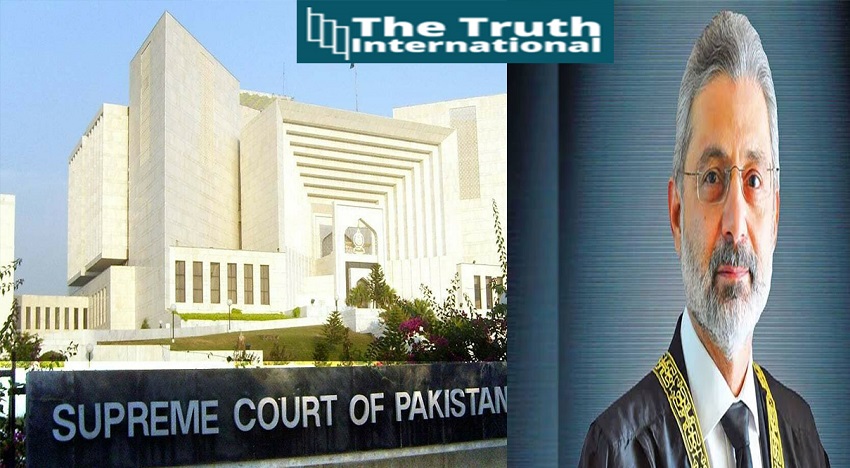

ISLAMABAD: The Supreme Court resumed its hearings on Thursday regarding a crucial issue: determining whether the disqualification period for a lawmaker should be five years or result in a lifetime ban. This pertains to a set of petitions in contention.
The seven-member larger bench, presided over by Chief Justice of Pakistan Qazi Faez Isa and including Justices Syed Mansoor Ali Shah, Yahya Afridi, Aminuddin Khan, Jamal Khan Mandokhail, Muhammad Ali Mazhar, and Musarrat Hilali, is overseeing the case.
As the general elections of February 8 draw near, the apex court aims to conclusively settle the ongoing debate.
This debate revolves around whether individuals disqualified under Article 62(1)(f) of the Constitution can participate in elections following amendments in the Elections Act 2017.
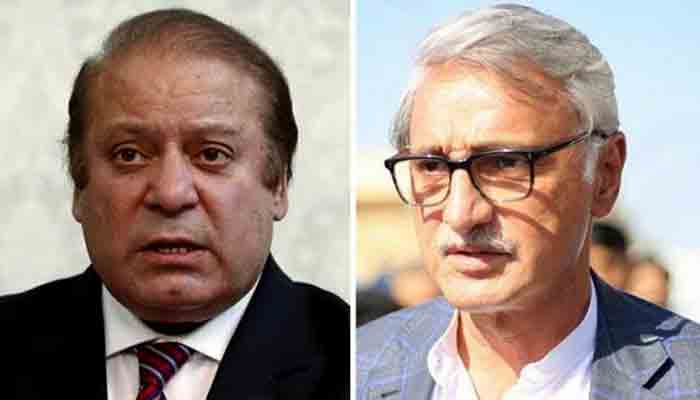
Article 62(1)(f) demands that a member of parliament be “sadiq and ameen” (honest and righteous) and has previously led to the disqualification of former prime ministers Nawaz Sharif and Imran Khan.
The legal complexity stems from a 2018 Supreme Court ruling in the Samiullah Baloch case, where it was decreed that disqualification under Article 62(1)(f) was to be considered “permanent.”
However, an amendment in June 2023 to the Elections Act 2017 altered this by specifying a five-year disqualification period instead of a lifelong ban.
This dilemma surfaced again in the recent dispute brought to the top court by Sardar Mir Badshah Khan Qaisarani, whose candidacy in past elections was revoked due to a fake graduation degree. His appeal remains pending before the Lahore High Court.
During the previous hearing, Chief Justice Qazi Faez Isa delved into the disparity between Article 62(1)(f) and Article 63(1)(g), questioning why these similarly phrased provisions of the Constitution impose different penalties for the same offense. While the former mandates a lifetime ban, the latter prescribes a five-year exclusion from parliament.
The court also appointed senior counsels Faisal Siddiqui, Uzair Karamat Bhandari, and legal adviser Reema Omar as amici to aid in the proceedings, emphasizing its intent to conclude the case by January 11 to prevent “confusion” for returning officers.
