

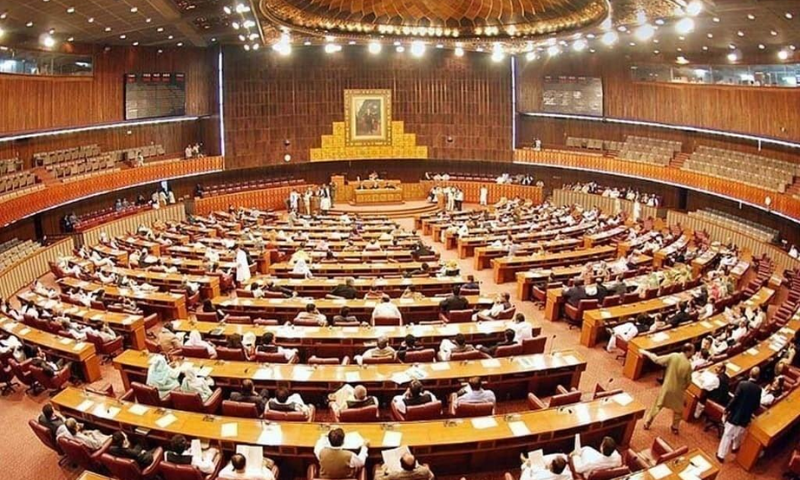

Senators expressed discontent on Friday over the revelation that several State Bank of Pakistan (SBP) officers receive monthly salaries exceeding the two-year emoluments of a lawmaker, raising concerns about the financial strain on the national exchequer.
During the Senate’s Question Hour, Caretaker Finance Minister Shamshad Akhtar disclosed that officers in the SBP’s highest grade, OG-8, earn monthly salaries ranging from Rs1.7 million to Rs3.9 million. The total number of SBP employees is 1,078, with a allocated budget of Rs6.8 billion for their salaries and benefits for FY2022-23.
Senator Danesh Kumar expressed dissatisfaction, emphasizing that being an autonomous organization doesn’t justify such high monthly salaries, adding, “I thought it is their annual salary.” He also highlighted the absence of information on the salaries and perks of the governor and deputy governor, prompting the minister to assure the Senate that this information would be provided as well.
Caretaker Finance Minister Shamshad Akhtar addressed concerns raised by Senator Palwasha Khan regarding the high salaries of State Bank of Pakistan (SBP) officers. Minister Akhtar clarified that the independence granted to the SBP, approved by the previous government through parliamentary consent, holds the SBP management accountable to a board of directors.
Senator Palwasha Khan questioned the justification for such substantial salaries amid economic challenges faced by the common people and the country’s reliance on IMF assistance. Minister Akhtar acknowledged the concerns but highlighted that the gradual increase in the pay structure occurred under the oversight of various governments. She emphasized the SBP’s role in managing monetary policy, regulating the banking sector, and collaborating with the finance ministry on economic matters.
In a separate matter, PPP leader Mian Raza Rabbani drew attention to the salary disparities in the public sector. He criticized the increasing expenditures of the government, contrasting it with rising utility rates and the economic burden placed on the public. Rabbani expressed concern about pension payments to retired military and civil officers abroad in foreign currency.
He also compared the minimum wage of an unskilled worker to the salaries of civil servants and parliamentarians, highlighting what he perceived as inequities. Minister Akhtar responded by explaining that the recently introduced MP scales aim to bring professionals from the private sector into the public sector, and their packages have been revised by the government to address technical challenges in energy and finance.
