


Swat Bodies
Punjab Information Minister Azma Bukhari launched a harsh criticism against the Khyber Pakhtunkhwa (KP) government on Saturday, accusing it of gross negligence and disrespect in the aftermath of the Swat River tragedy that claimed the lives of multiple tourists from Punjab.
Speaking during a session of the Punjab Assembly, Bukhari decried what she termed an “utterly inhumane” response to the incident, alleging that the bodies of the victims were transported in garbage-carrying dumpers.
The victims, a family of tourists from Sialkot, were swept away by a sudden and powerful surge in the Swat River while picnicking near the water on June 27, 2025.
The surge took them by surprise, and while rescue efforts were eventually launched, Punjab’s minister said the authorities not only failed to save the lives of the victims but also denied them dignity in death.
“The most shameful part is not just the delay in rescue, but the fact that when the bodies were finally recovered, they were loaded into a dumper — the kind used to transport waste — and sent back to Punjab,” Bukhari stated emotionally. “If the KP authorities couldn’t save them, the least they could have done was to return them with respect. What was their fault?”
She also took a pointed jab at KP Chief Minister Ali Amin Gandapur, questioning his absence during the crisis. “Where was the chief minister when his people needed him?” she asked. “He was standing outside Adiala Jail, serving a king, not his own province.”
Bukhari reminded the assembly that this was not the first time such a tragedy had struck in Swat, but the authorities had failed to implement any meaningful reforms or preventive measures. “This is not about politics — this is about basic humanity. You don’t need a government to act like a human being,” she asserted.
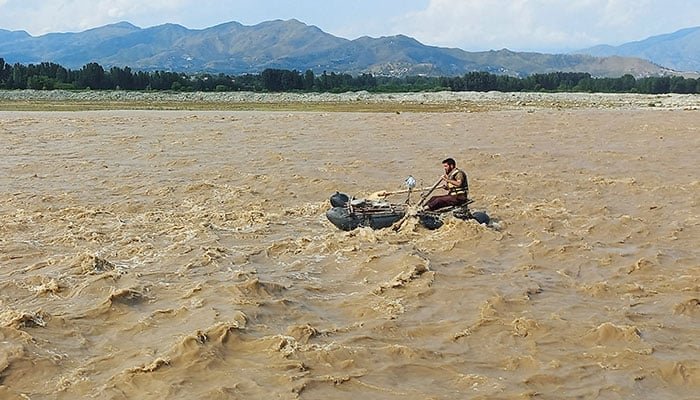
Meanwhile, search and rescue operations continue in Swat, where the death toll rose to 11 on Saturday after another child’s body was retrieved from the river, according to Rescue 1122. Two people are still missing, while four were rescued earlier.
Over 120 rescue personnel from Swat, Malakand, and Shangla are actively involved in the extensive search operation. Equipped with boats and specialized gear, teams are combing areas across Khwazakhela, Kabal Bypass, and Barikot in hopes of locating the remaining victims.
Despite the ongoing efforts, the incident has triggered public outrage, especially over the reported mishandling of the deceased. The criticism underscores a deepening rift between Punjab and KP administrations, with calls growing louder for accountability, compassion, and systemic reforms in disaster management practices.
