

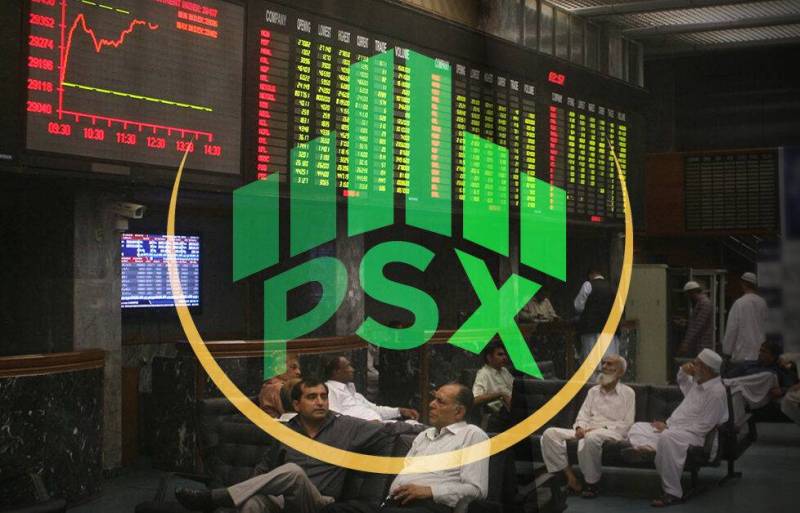

The Pakistan Stock Exchange (PSX) soared to an all-time high on Thursday as regional tensions eased, economic indicators improved, and investor sentiment strengthened across key sectors.
The benchmark KSE-100 Index closed at a historic 119,961.91 points, rising 1,425.39 points, or 1.20%, from the previous close of 118,536.52. During intraday trading, the index touched a high of 119,990.30 points, posting a gain of 1,453.78 points, or 1.22%, buoyed by strong institutional buying and sector-specific rallies.
“Refinery stocks saw significant gains following reports of a Rs34 billion compensation package for the sector,” said Sana Tawfik, Head of Research at Arif Habib Limited. “We’ve been observing consistent momentum, especially with the expected IMF disbursement and the recent ceasefire between India and Pakistan.”
She also noted speculation around increased margins for Oil Marketing Companies (OMCs), which contributed to further sectoral gains. “Add to that a bullish international outlook—Barron’s even called Pakistan a ‘macroeconomic miracle’—and it’s a perfect storm for investor confidence,” Tawfik added.
On Wednesday evening, the State Bank of Pakistan (SBP) confirmed the receipt of a $1.023 billion tranche from the International Monetary Fund under its Extended Fund Facility (EFF), a key development that will bolster the country’s foreign reserves in the week ending May 16.
Global financial media has taken note of Pakistan’s economic turnaround. In a recent article, U.S.-based publication Barron’s highlighted a sharp decline in inflation—from nearly 40% to near zero—a doubling in Eurobond prices, and a tripling of the KSE-100 Index over two years, despite regional instability.
Adding to investor optimism, U.S. President Donald Trump earlier this week credited the United States with brokering the ceasefire between India and Pakistan. He stated that Washington had “stopped a nuclear war,” and signaled intentions to enhance trade ties with both countries while offering to support a lasting resolution on Kashmir.
Domestically, the SBP surprised markets earlier this month by cutting the policy rate by 100 basis points to 11%, citing substantial declines in electricity tariffs and food prices as primary drivers behind the disinflationary trend.
The surge comes after a relatively flat session on Wednesday, when the KSE-100 edged down by 39.36 points, or 0.03%, to close at 118,536.52, following three days of strong upward momentum. That session saw the index range between a high of 119,460.54 and a low of 118,148.65.
