

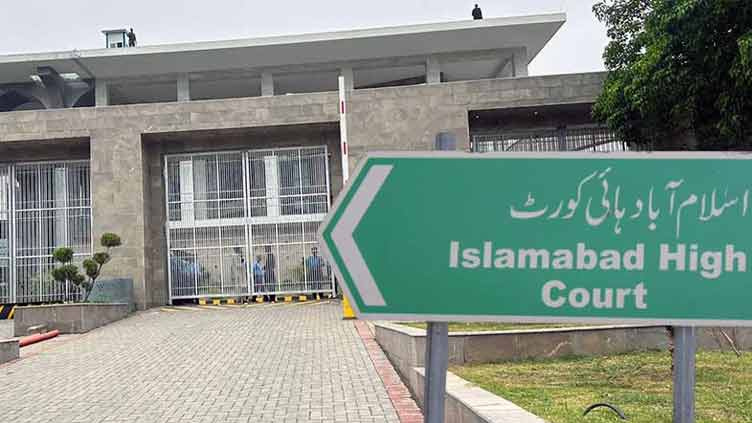

A former judge of the Islamabad High Court (IHC) will be chosen to vote in the upcoming selection of the court’s new chief justice, as part of the Judicial Commission of Pakistan’s (JCP) decision-making process.
The JCP is scheduled to meet on April 11 to select one among three former IHC judges to serve as a commission member responsible for voting in the appointment of chief justices across various high courts.
Nominations for chief justices of the IHC, Sindh High Court (SHC), Peshawar High Court (PHC), and Balochistan High Court (BHC) are expected to be taken up in a subsequent meeting of the JCP, likely to be held on April 18.
While there are multiple candidates for the provincial high courts, the options for IHC are limited to three retired judges: former Chief Justice Mohammad Anwar Khan Kasi, Justice (retd) Shaukat Aziz Siddiqui, and Justice (retd) Noorul Haq N. Qureshi. Other IHC alumni are either currently serving — including Chief Justice Aamer Farooq, Justice Athar Minallah, and Justice Iqbal Hameedur Rehman — or have passed away, such as retired Justice Riaz Ahmed Khan, who died in August 2021.
The commission will choose one of these three—Kasi, Siddiqui, or Qureshi—as its voting member on April 11.
Justice Qureshi joined a political party after his retirement, while Justice Kasi, who faced several references before the Supreme Judicial Council, is currently not active. Justice Siddiqui, who was removed from office over criticism of intelligence agencies’ interference in judicial matters, was later reinstated by the Supreme Court in that specific case.
Observers have noted that while many judges criticized interference in judicial matters last year, few stood by Justice Siddiqui when he raised similar concerns back in 2018 involving retired Lt Gen Faiz Hameed.
According to insiders, Justice Kasi and Justice Siddiqui are seen as the primary contenders, with Justice Qureshi likely to face resistance due to his political alignment, especially from government representatives.
The JCP is chaired by the Chief Justice of Pakistan and includes the three most senior Supreme Court judges, the federal law minister, the attorney general, a representative of the Pakistan Bar Council, two senators (one from the opposition and one from the treasury benches), two members of the National Assembly (also one from each side), and a woman or non-Muslim member nominated by the Speaker of the National Assembly for a two-year term.
Clause 5 of Article 175-A outlines that for appointments to a high court, the JCP must include the high court’s chief justice, the head of the constitutional bench, the provincial law minister, and a senior advocate nominated by the respective bar council. If the chief justice is unavailable, the JCP appoints a former judge or former chief justice of that high court.
For IHC appointments, the process varies slightly by including a federal minister, nominated by the prime minister, instead of a provincial one.
As of February 13, the law ministry had appointed acting chief justices to the four high courts: Justice Sardar Mohammad Sarfraz Dogar (IHC), Justice Ejaz Swati (BHC), Justice Junaid Ghaffar (SHC), and Justice S.M. Attique Shah (PHC).
The nominees for permanent appointments include Justice Dogar, Justice Mohsin Akhtar Kayani, and Justice Miangul Hassan Aurangzeb for the IHC; Justice Swati, Justice Mohammad Kamran Khan Mulakhail, and Rozi Khan Barrech for the BHC; Justice Ghaffar, Justice Zafar Ahmed Rajput, and Justice Mohammad Iqbal Kalhoro for the SHC; and Justice Shah, Justice Ijaz Anwar, and Justice Arshad Ali for the PHC.
