

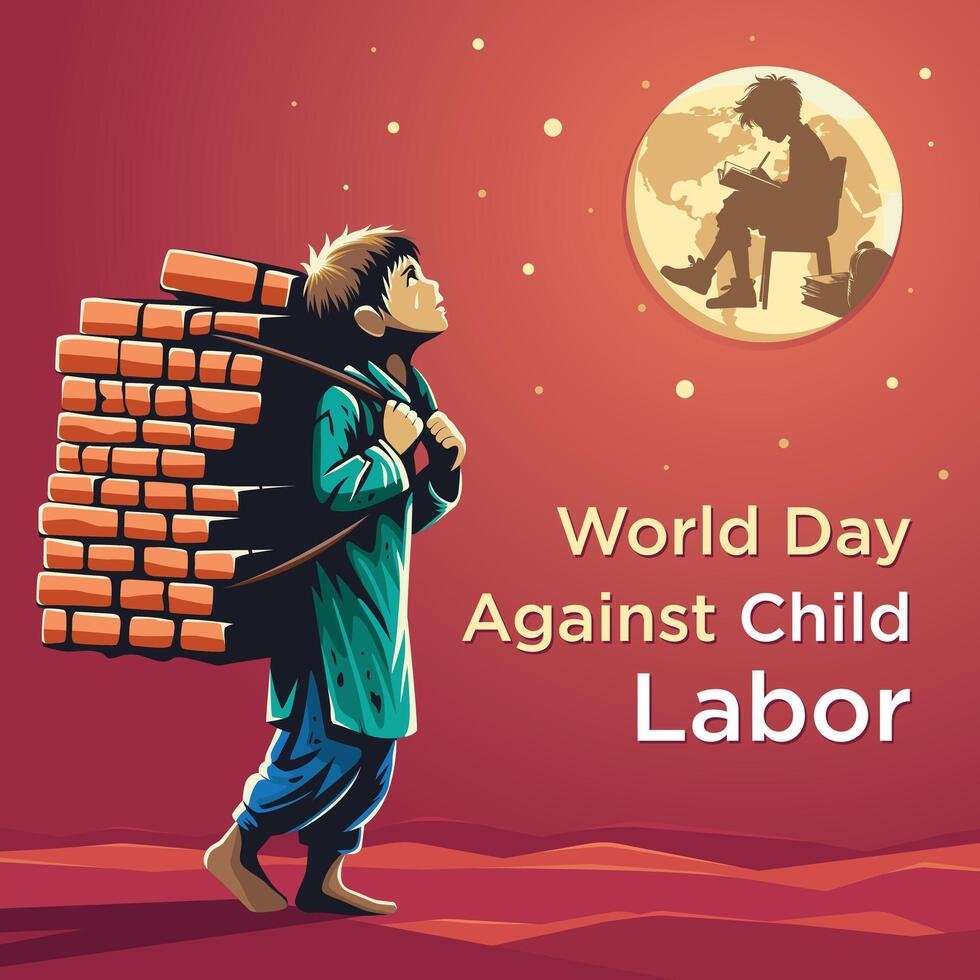

ISLAMABAD: Federal Minister for Poverty Alleviation and Social Safety, Syed Imran Ahmed Shah, has called on employers across Pakistan to strictly comply with child labour laws to ensure the protection of children’s rights.
In a statement marking the World Day Against Child Labour on Thursday, the minister highlighted the urgent need to end child exploitation and urged parents to prioritise their children’s education. He also encouraged communities to remain vigilant against all forms of abuse.
“It is our collective responsibility to protect children from exploitation and ensure their right to education, safety, and dignity,” the minister stated.
Referencing Article 11(3) of Pakistan’s Constitution—which prohibits the employment of children under the age of 14 in hazardous environments such as factories and mines—Shah reiterated the government’s commitment to ending child labour and aligning with the Sustainable Development Goals.
He emphasized that while government action is critical, combating child labour requires a united effort involving the media, civil society, and religious leaders to raise awareness and advocate for children’s rights.
The minister also outlined ongoing initiatives under the Ministry of Poverty Alleviation, such as the Benazir Income Support Programme (BISP) and Pakistan Baitul Mal (PBM). Through the Waseela-e-Taleem initiative, BISP provides conditional cash transfers to encourage school attendance among children from low-income families. PBM operates Child Labour Schools that offer free education, stipends, and skills training to working children and their families.
“Child labour is both a cause and a consequence of poverty,” said Shah. “Tackling it is essential for building a fair and equitable society.”
Human Rights Minister Reaffirms Commitment During Visit to Child Protection Institute
Meanwhile, Federal Minister for Human Rights, Senator Azam Nazeer Tarar, paid a visit to the Child Protection Institute (CPI) in Islamabad. He met with children residing at the institute—many of whom have faced domestic abuse, underage marriage, and forced labour.
During his visit, the minister interacted with the children, listened to their stories, and distributed gifts. The Ministry described the engagement as an effort to restore dignity and offer comfort to vulnerable children in a safe environment.
“Child labour robs children of their right to education, safety, and a dignified future,” said Senator Tarar.
He pointed to poverty, marginalization, and lack of access to quality education as major contributors to the child labour crisis in Pakistan.
Tarar also highlighted the recent passage of the Employment of Children (Amendment) Act, which raised the minimum working age to 14 in the Islamabad Capital Territory and classified child domestic labour as hazardous employment.
While acknowledging progress through legal reforms, the minister called for a more holistic strategy, including stronger public awareness, corporate accountability, family support systems, and expanded social protection programmes.
He urged citizens to report incidents of child exploitation via the 1121 Child Protection Helpline, stressing the importance of community participation in combating child rights violations.
Concluding the visit, Senator Tarar emphasized the need for coordinated action among federal and provincial authorities to protect children nationwide.
“We must work together—governments, civil society, and citizens—to build a Pakistan where every child is safe, educated, and empowered,” he said.
