



Death Sentence
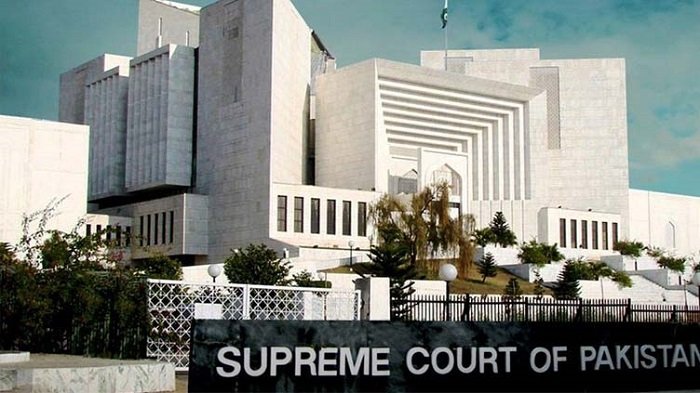
ISLAMABAD: The Supreme Court of Pakistan received an assurance from the federal government that convictions related to the May 9 violence would not result in the death sentence.
However, the government requested some time to consider granting a substantive right of appeal against military court decisions.
Attorney General for Pakistan, Mansoor Usman Awan, informed the SC bench that this matter required careful consideration due to its serious implications.
He emphasized that the decision about the death sentence could directly affect cases involving individuals like Indian spy Kulbhushan Jadhav or those charged with espionage and declared enemies of the state.
The AGP suggested a month to thoroughly assess the issue, taking into account international consequences and other factors.
Justice Munib Akhtar pointed out that the National Assembly’s mandate would end in a month, leading to a caretaker arrangement. In response, the AGP clarified that a legal provision could be made through an ordinance and assured the court that the trial of 102 suspects in military custody would not begin without prior intimation to the Supreme Court.
During the hearing, the Chief Justice said, “You are stating that the government is inclined to consider the appeal aspect for civilians being tried under the Pakistan Army Act (PAA) since this involves legislation.”
Chief justice links civilians’ trial in army courts with SC’s permission
Meanwhile, Chief Justice said that the court would make a note of the government’s assurance in the court order, ensuring that no trial would commence without proper notification to the court.
The decisions of the trial court would be accompanied by reasons, evidence, and hearings conducted in an open court.
CJP Bandial, heading a six-member bench that includes Justice Ijazul Ahsan, Justice Munib Akhtar, Justice Yahya Afridi, Justice Sayyed Mazahar Ali Akbar Naqvi, and Justice Ayesha A. Malik, resumed hearing a series of pleas challenging the military trials of civilians.
During the hearing, Latif Khosa, the lawyer representing petitioner Aitzaz Ahsan, pointed out that the current situation in the country resembled events that occurred during the tenure of former military dictator Ziaul Haq.
CJP Bandial responded, “You cannot equate the present era with the era of Ziaul Haq. This is not Ziaul Haq’s era, nor is martial law imposed in the country. Even if a martial law-like situation arises, we will intervene.”
In today’s hearing, it appeared that Chief Justice Umar Ata Bandial will not allow the trial of PTI’s leaders and supporters involved in the May 9 attacks, in the military courts.
