


ISLAMABAD: The Supreme Court has reinstated corruption cases against prominent political figures following its significant verdict on the petition filed by Pakistan Tehreek-e-Insaf (PTI) Chairman Imran Khan, which challenged the amendments made to the country’s accountability laws.
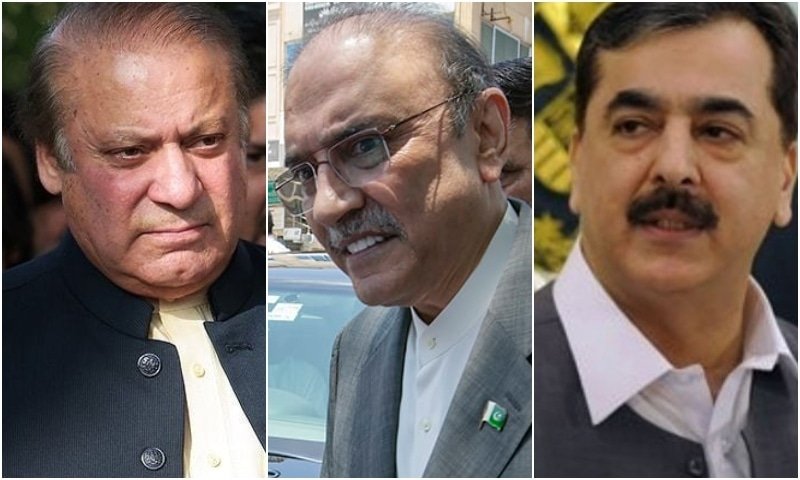
The Supreme Court, in a 2-1 majority ruling, has nullified several amendments made to the accountability laws, potentially subjecting former Prime Minister Nawaz Sharif, former President Asif Ali Zardari, and former Prime Minister Yousuf Raza Gillani to investigations.
The apex court has reinstated corruption cases against public officeholders. The court had previously closed these cases as a result of these amendments during the Pakistan Democratic Movement (PDM)-led government.
The three-member bench, headed by CJP Umar Ata Bandial and consisting of Justice Mansoor Ali Shah and Justice Ijazul Ahsan, found PTI chief’s petition admissible. The Supreme Court declared nine out of ten amendments null and void, with Justice Shah dissenting in the case.
The apex court has ordered the reopening of all graft cases valued at less than Rs500 million against political leaders from various parties and public officeholders, declaring the amendments to be invalid. The verdict also emphasized that the questioned NAB amendments infringed upon the constitutional rights of the public.
This ruling carries significant implications, as it reinstates the possibility of bringing references against several prominent political figures in the country before accountability courts once again.
The verdict has instructed the anti-corruption watchdog to reopen Toshakhana cases against Nawaz, Zardari, and Gillani, as well as the LNG terminal case against former Premier Shahid Khaqan Abbasi and the rental power reference against Raja Pervez Ashraf, in light of the decision.
According to sources, cases against former Premier Shaukat Aziz and former Finance Minister Ishaq Dar will also be reopened, with all these cases to be heard by the NAB.
NAB amendments
The NAB amendments reduced the NAB chairman and prosecutor general’s terms from four to three years and excluded regulatory bodies from NAB’s jurisdiction. They also mandated three-year terms for accountability court judges, with a one-year case resolution requirement.
Khan filed a petition in the apex court challenging these amendments, arguing their unconstitutionality, especially in sections 2, 4, 5, 6, 25, and 26, as well as changes to sections 14, 15, 21, and 23. He claimed these changes violated fundamental rights per Articles 9, 14, 19, 24, and 25 of the Constitution.
Khan sought nullification of these amendments. Khawaja Haris, Khan’s lawyer, submitted application 184/3, prompting the formation of a special three-member bench on July 15, 2022. On July 19 of the same year, the federal government and NAB attended the first hearing as respondents in the petition
