

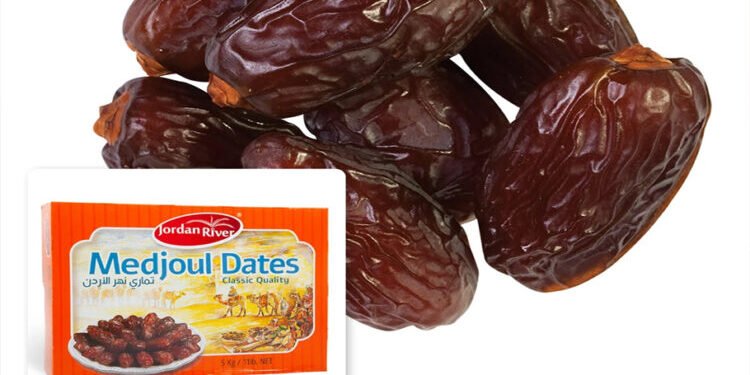

Israeli Dates
As the sacred month of Ramadan commences, Muslims across the globe are engaging in fasting from dawn to dusk, with dates serving as a traditional and essential item for Iftar.
However, this year, heightened concerns have surfaced regarding the presence of Israeli Medjool dates in Karachi’s markets, prompting renewed calls for a boycott of Israeli products amid the ongoing war in Gaza.
Social activist Zulfikar Ali Bhutto Jr. recently took to social media to highlight the issue, alerting the public that Israeli-produced dates have been spotted in various supermarkets across the city.
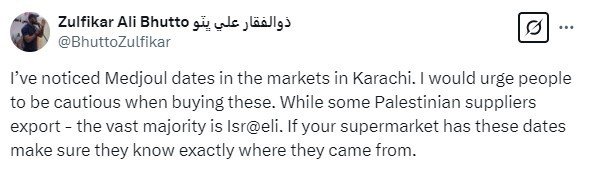
This revelation has sparked criticism, with activists urging consumers to exercise vigilance when purchasing dates to ensure they do not unknowingly support Israeli businesses.
Medjool dates, a highly sought-after variety originally cultivated in Morocco, are also grown in several Middle Eastern countries, including Palestine, Jordan, Iran, and Saudi Arabia. However, Israel remains the world’s largest exporter of Medjool dates, many of which are cultivated in illegal settlements on occupied Palestinian land.
The increasing availability of these dates in Pakistan has drawn condemnation, with many emphasizing the importance of ethical consumer choices, particularly in light of Israel’s military actions in Gaza, which have resulted in the deaths and displacement of thousands of Palestinians.
How to Identify Israeli Dates
To help consumers avoid inadvertently purchasing Israeli dates, activists recommend checking product barcodes. Items manufactured in Israel typically carry a barcode that starts with “729,” which signifies registration under the Israeli branch of GS1, the global standard organization for barcodes.
However, concerns persist that some Israeli products may be repackaged under different branding to obscure their origin. In such cases, buyers are advised to thoroughly inspect labels, research brands online, and prioritize purchasing dates from Palestinian or other Middle Eastern sources.
Growing Momentum for the Boycott
The call for a boycott of Israeli goods has gained significant traction worldwide, particularly in Muslim-majority nations where governments and citizens alike are actively discouraging trade with Israeli firms.
In Pakistan, public sentiment overwhelmingly supports the Palestinian cause, and many citizens have expressed a strong commitment to ensuring their purchases do not contribute to Israel’s economy, especially during Ramadan.
Zulfikar Ali Bhutto Jr. reinforced this stance, stating, “It is our moral and religious duty to ensure that our purchases do not, in any way, contribute to the suffering of Palestinians.” He further urged local supermarkets and retailers to remove Israeli dates from their shelves, calling upon businesses to align with public sentiment and support ethical consumerism.
As Ramadan continues, awareness campaigns and social media discussions around ethical buying choices are expected to grow, with activists and religious scholars alike advocating for consumers to make informed decisions that align with their values.
