

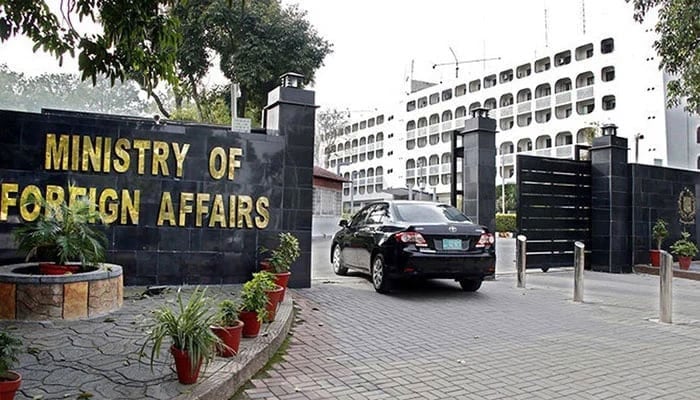

During a weekly media briefing in Islamabad, Foreign Office spokesperson Shafqat Ali Khan accused India of orchestrating terrorist attacks inside Pakistan, particularly by using proxies in Balochistan. He said Pakistan possesses “clear evidence” of Indian interference and continues to highlight these activities at global forums.
Khan noted that terrorism remains a major challenge, especially given the existence of safe havens in Afghanistan. He said Pakistan is in contact with Afghan authorities and expressed hope that Kabul will cooperate in countering these threats.
Reflecting on Pakistan’s history, Khan remarked that decisions made during the 1980s should be explained by the leaders of that era, emphasizing the need to look ahead rather than dwell on the past.
The spokesperson also strongly condemned ongoing human rights abuses in Indian-occupied Kashmir, criticizing the humiliation of Kashmiri youth by Indian forces. He described the suffering in the region as deeply regrettable.
Responding to questions about Bilawal Bhutto’s recent statement, Khan clarified that only PPP representatives could explain his remarks but stressed Bilawal did not mention any specific person as being handed over to India. He accused India’s national security adviser of twisting facts, calling it evidence of New Delhi’s hostile posture.
Looking ahead, Khan confirmed that Deputy Prime Minister and Foreign Minister Ishaq Dar has no scheduled meetings with Indian officials during the upcoming SCO summit, though discussions with other leaders are planned. He reiterated that the Indus Waters Treaty is vital for Pakistan’s 250 million citizens.
Khan reaffirmed Pakistan’s strategic partnership with China and confirmed there has been no shift in its stance on Taiwan. He added that Pakistan remains interested in joining BRICS but, as it is not yet a member, cannot comment on developments related to membership.
On environmental issues, Khan highlighted Pakistan’s vulnerability to climate change despite its minimal contribution to global carbon emissions. He also recalled that Pakistan Steel Mills was originally established with Soviet assistance and noted that Islamabad is now exploring options to revive it, including potential trade discussions with senior US officials.
