

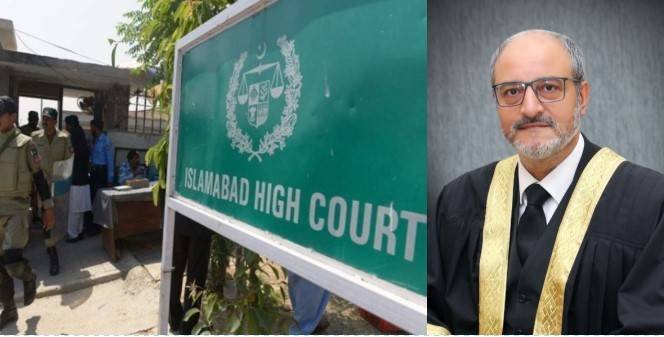

The Islamabad High Court (IHC) has formally directed the federal government to establish a fact-finding commission on blasphemy cases within the next 30 days, responding to growing public concern over alleged misuse of blasphemy laws in Pakistan.
Justice Sardar Ejaz Ishaq Khan, who announced the court’s order on Tuesday, emphasised that the commission must complete its investigation in four months and submit a comprehensive final report. The proceedings of this newly formed fact-finding body will also be broadcast live to ensure full transparency, according to the court’s directive.
The decision to form a fact-finding commission on blasphemy cases came after more than 100 petitioners approached the Islamabad High Court. They highlighted that many of their relatives had been charged under blasphemy laws based solely on social media activity, and several had already been convicted by trial courts. Appeals against these convictions remain pending in different high courts across the country.
During the hearings, the court noted significant concerns regarding potential collusion between the Federal Investigation Agency (FIA) and private individuals in initiating blasphemy cases. As part of its mandate, the new commission is expected to investigate these allegations and identify any lapses in due process.
The IHC further instructed the federal government to define additional terms of reference (ToRs) for the commission if necessary. Justice Khan observed that although the government had earlier agreed in principle to form such a body—and even invited the court to outline the ToRs—legal objections from respondents delayed the process. It took 42 hearings to reach this final decision, despite the court’s earlier directive issued in January 2025.
Under Pakistan’s Inquiries Act, the government has the authority to create a fact-finding commission made up of retired judges, former government officers, and experts. The commission may also engage officials from various investigative agencies to assist in reviewing blasphemy cases.
According to the petitioners, the existing legal framework has enabled widespread misuse, often leading to wrongful convictions and lengthy legal battles. The petitioners argue that a comprehensive inquiry could help restore trust in the justice system by highlighting flaws, potential abuse, and systemic issues in how blasphemy allegations are handled.
Legal analysts view the IHC’s order as a major step toward accountability and transparency in sensitive cases involving blasphemy accusations. Human rights groups have long warned about the grave consequences of false accusations and the risks they pose to freedom of expression and personal safety.
By demanding a fact-based review and insisting on public proceedings, the Islamabad High Court aims to set a new precedent in dealing with controversial blasphemy charges, an issue that has deeply affected Pakistan’s legal and social landscape.
The Additional Attorney General has been asked to communicate with the federal government regarding the commission’s formation and provide updates to the court. Meanwhile, families of those convicted and awaiting appeal hope the fact-finding process will shed light on possible injustices and bring overdue relief.
