

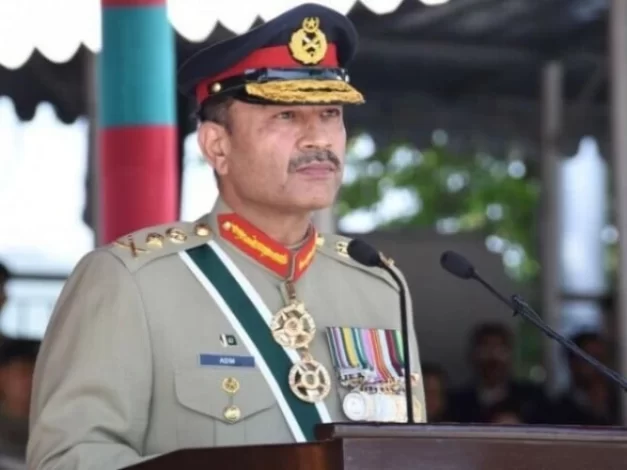

Field Marshal Syed Asim Munir, Chief of Army Staff (COAS), has accused India of being the leading state sponsor of terrorism in South Asia. He urged neighboring countries, especially Afghanistan, to remain cautious of Indian-backed militant outfits.
Speaking to participants of the 52nd Common Training Programme (CTP) at the Civil Services Academy, COAS Munir emphasized Pakistan’s wish for peaceful relations with Afghanistan. However, he cautioned that the country must not allow its territory to be used by India’s terror proxies, including the groups he referred to as Fitna al-Hindustan and Fitna al-Khawarij.
“India is the biggest sponsor of terrorism in the region,” the army chief asserted. “Pakistan has never accepted Indian dominance and never will.”
He linked terrorism in India to its internal issues, particularly the marginalization and persecution of minorities, especially Muslims.
Pakistan Ready for Modern Warfare
Addressing national defense, Field Marshal Munir assured that the Pakistan Army is fully equipped and trained to respond to the evolving challenges of modern warfare.
He referred to Pakistan’s robust defense during the recent Ma’rakah-e-Haq as evidence of its readiness. The conflict, which spanned from the Line of Control to Pakistan’s coastal areas, was described as a powerful response to Indian aggression.
The recent military escalation was triggered by an April 22 attack in Indian-Occupied Jammu and Kashmir that resulted in 26 deaths. India blamed Pakistan for the incident, a claim strongly rejected by Islamabad.
India’s retaliatory strikes killed over 50 people in Pakistan, including security personnel. In response, Pakistan downed several Indian jets and struck military targets, demonstrating its resolve. The United States later stepped in to mediate and successfully halted the confrontation.
Unity, Character, and Patriotism
Field Marshal Munir attributed Pakistan’s resilience to divine support, saying the nation prevailed because it stood for truth.
He also emphasized the importance of institutional unity, particularly the role of civil servants in promoting national harmony. “The administration and bureaucracy are key pillars of unity,” he said.
Urging civil officers to embrace national identity over ethnic or regional affiliations, he stated, “Nations that abandon their history lose their direction.”
He further stressed the need for courage, competence, and character, declaring that character should always be prioritized above all.
“Every system has its flaws,” Munir acknowledged, “but your responsibility is to ensure those flaws do not define the system.”
He concluded by highlighting the importance of strong ties between the people, the state, and the military, asserting that patriotism and loyalty must remain the guiding principles of national service.
