


‘Soft State’ Approach
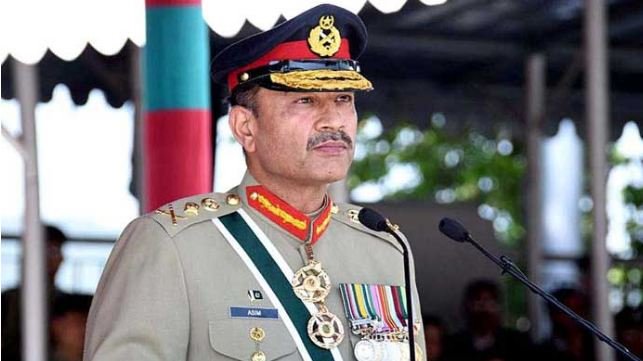
Amid a surge in terrorist attacks across Pakistan, particularly in Khyber Pakhtunkhwa and Balochistan, Chief of Army Staff (COAS) General Asim Munir on Tuesday criticized the “soft state” approach, holding it responsible for the loss of innocent lives. He questioned how long the armed forces would continue to fill the “gaps of governance” with the blood of their martyrs.
“We need better governance… we should make Pakistan a hard state,” General Munir asserted while addressing a high-level in-camera meeting of the Parliamentary Committee on National Security. The session, held in response to escalating terrorism, was notably boycotted by major opposition parties, including Pakistan Tehreek-e-Insaf (PTI).
The meeting was convened in the wake of the tragic terrorist attack on the Jaffar Express in Balochistan’s Mushqaf area, where militants from the Balochistan Liberation Army (BLA) targeted the train, carrying over 440 passengers. The terrorists blew up a railway track and took passengers hostage.
Following an intense security operation, 33 attackers were neutralized, and hostages were rescued. However, the assault claimed the lives of 26 passengers, including 18 security personnel from the Pakistan Army and Frontier Corps (FC), three railway and government officials, and five civilians.
A High-Level National Security Meeting
The crucial security meeting was attended by Prime Minister Shehbaz Sharif, COAS General Asim Munir, Director General Inter-Services Intelligence (DG ISI) Lieutenant General Asim Malik, chief ministers of all four provinces, and other top officials. However, key political figures, including Interior Minister Mohsin Naqvi, National Assembly Opposition Leader Omar Ayub, and PTI representatives, were absent from the session.
Addressing the gathering, General Munir underscored that no political agenda, movement, or individual interest could take precedence over national security. “If this country exists, so do we; therefore, nothing is more important than its security,” he declared.
He emphasized that all elements of national power must work in coordination to establish long-term stability. “This is a fight for our nation’s survival and the future of our generations,” he stated, stressing the importance of a unified narrative that prioritizes national interests over political and personal gains.
“Those who believe they can weaken Pakistan through acts of terrorism must know that today’s meeting sends them a clear message,” he said. “We will not only defeat them but also dismantle their entire network, including their facilitators.”
National Security Resolution
The Parliamentary Committee on National Security issued a declaration condemning the recent terrorist incidents in Khyber Pakhtunkhwa and Balochistan while expressing solidarity with the affected families. The meeting underscored the necessity of political consensus and a united commitment to eradicating terrorism.
Recognizing the sacrifices and professionalism of security forces, the committee reaffirmed Pakistan’s unwavering resolve to eliminate terrorism in all its manifestations. The statement called for a comprehensive and strategic counterterrorism approach, ensuring that the full might of the state is deployed against terror threats.
Additionally, the committee emphasized the immediate implementation of the National Action Plan (NAP) and the strategy of Operation Azm-e-Istehkam to dismantle terrorist networks, disrupt their logistical support, and eliminate the nexus between terrorism and organized crime.
Another major concern raised during the meeting was the use of social media platforms by terrorist groups to spread anti-state propaganda and recruit followers. The participants stressed the need for a well-structured mechanism to counter the digital networks of these extremist groups.
Reiterating support for the armed forces and law enforcement agencies, the committee acknowledged their sacrifices in defending national security. The declaration further stated that the entire nation stands united with the armed forces, police, Frontier Constabulary (FC), and intelligence agencies in the fight against terrorism.
The meeting concluded with a firm resolve that no institution, individual, or group acting in collaboration with hostile forces would be allowed to compromise Pakistan’s peace and stability.
