

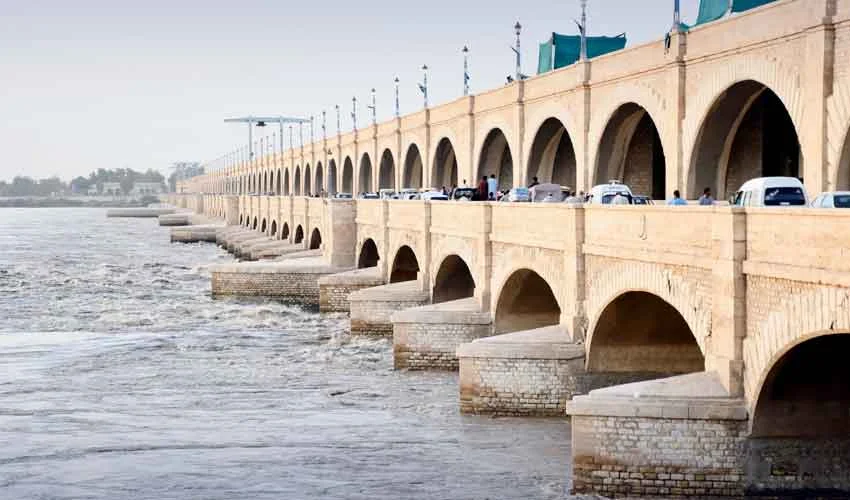

The Council of Common Interests (CCI) on Monday turned down the federal government’s proposal to construct new canals on the Indus River, overturning an earlier decision made by the Executive Committee of the National Economic Council (ECNEC) on February 7.
“No new canals will be built without mutual consensus among all provinces,” read a statement issued by the Prime Minister’s Office following the crucial CCI meeting. It emphasized that no further steps would be taken until a comprehensive agreement is achieved between all stakeholders.
The session, chaired by Prime Minister Shehbaz Sharif, was initially planned for May 2 but was brought forward at the request of the Sindh government due to widespread protests across the province.
The eight-member council, which includes the chief ministers of all four provinces, also saw participation from Deputy Prime Minister and Foreign Minister Ishaq Dar, Defence Minister Khawaja Asif, and Federal Minister Ameer Muqam. A total of 25 individuals were specially invited to the session, which discussed a six-point agenda.
During the meeting, the CCI reviewed Sindh’s concerns regarding the proposed new canal projects. The statement clarified that the Centre is working with provinces to develop a unified agricultural and water management policy, respecting the Water Apportionment Accord of 1991 and the National Water Policy of 2018.
A committee comprising representatives from the federal and provincial governments will be formed to propose solutions consistent with these consensus documents, aiming to safeguard Pakistan’s long-term agricultural and water needs.
The government reiterated its commitment to managing water resources collaboratively and resolving disputes amicably, with the protection of provincial rights at the core of its policy.
As a result of the deliberations, the CCI decided to revoke the provisional approval granted by ECNEC on February 7, 2024, and the water availability certification issued by IRSA on January 17, 2024. Both the Planning Division and IRSA have been directed to hold further consultations with all stakeholders to achieve national unity on the matter.
Commitment to Equal Water Rights
Following the meeting, Khyber Pakhtunkhwa Chief Minister Ali Amin Gandapur told reporters that there was a renewed commitment to ensuring equal water rights for all provinces. He confirmed that the decision to build new canals had been withdrawn and that future resolutions would be reached through mutual understanding.
Gandapur also shared that three of KP’s demands were approved for inclusion in the next CCI session’s agenda, including a review of the National Finance Commission (NFC) Award and the recognition of tobacco as a formal crop, which he hailed as major achievements for the province.
Background on the Canal Controversy and Protests
The proposal to construct six canals on the Indus River to irrigate the Cholistan desert had sparked fierce opposition, particularly from the Pakistan Peoples Party (PPP)-led Sindh government and various nationalist groups.
The federal project, valued at Rs211.4 billion, aimed to convert thousands of acres of barren land into fertile agricultural fields, but was met with intense backlash from political, religious, and civil society groups across Sindh.
The protests have paralyzed major routes, with ongoing sit-ins in places like Khairpur Baberlo bypass and Mangrio Pump near Daharki, severely disrupting transportation between Sindh and Punjab. Essential supplies, including fuel and food items, have been delayed, causing significant hardship for transporters and commuters.
Truck drivers affected by the blockade reported vehicle damage and deteriorating conditions due to prolonged immobility, highlighting the deepening crisis stemming from the unresolved canal dispute.
