



ISLAMABAD: Army Chief General Asim Munir arrived in Tehran, Iran for an official visit lasting two days. During his time there, he will engage in meetings with both Iranian military and civilian leaders.
The discussions will primarily focus on bilateral matters concerning defense and security cooperation.
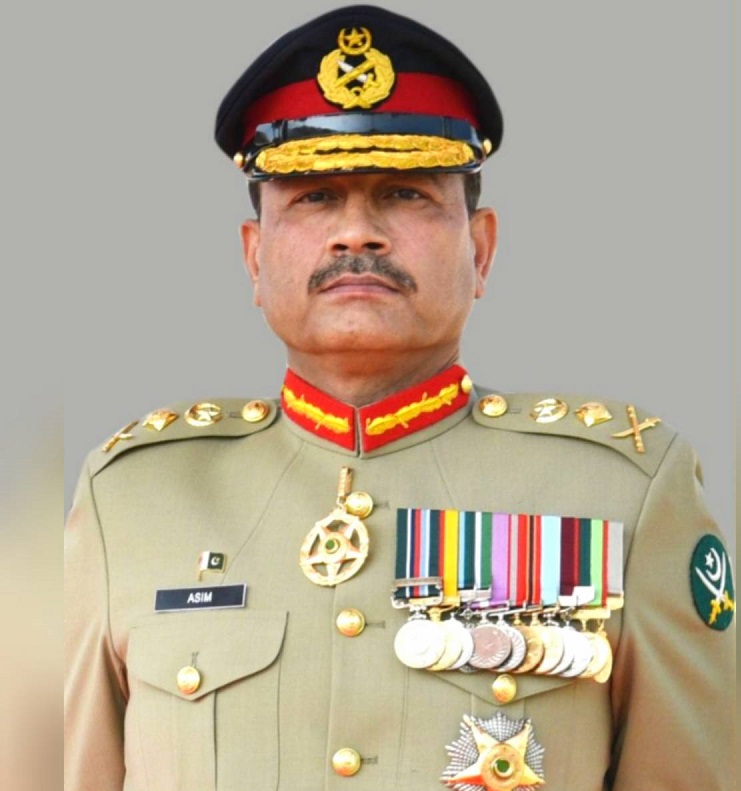
Pakistan and Iran share strong diplomatic, political, and military relations, and both nations are committed to resolving issues and safeguarding common interests.
Pakistan Army resents TTP’s Liberty and safe havens in Afghanistan
The Pakistan Army has expressed serious concerns about safe havens and liberty of action available to the banned Tehreek-e-Taliban Pakistan (TTP) in Afghanistan, the Inter-Services Public Relations (ISPR) said in a statement on Friday.
The military’s media wing statement came as Chief of Army Staff (COAS) General Syed Asim Munir visited Quetta Garrison, where he was briefed on the recent terrorist attack in Zhob in which nine soldiers embraced martyrdom.
“The COAS paid rich tribute to the Shuhada, visited the injured soldiers at CMH, Quetta, lauded their services to the nation, and appreciated their resolve,” the statement added.
Commander of IRGC’s message to foes of Iran
In a message directed towards its adversaries, the chief commander of the Islamic Revolution Guards Corps (IRGC), Major General Hossein Salami, issued a stern warning.
He emphasized that any attempt to challenge Iran’s defensive capabilities would result in nothing but a catastrophic outcome akin to “major suicide.” Speaking at a gathering of IRGC Ground Force commanders, Salami praised the Iranian armed forces’ success in developing a deterrent force against potential adversaries. He highlighted that Iran’s defense system was the culmination of arduous experiences faced against both sophisticated and less advanced opponents in the modern era.
The top commander acknowledged the various challenges Iran has encountered in recent decades. He asserted that Iran’s development of an “endless power” had confounded its adversaries. Salami emphasized that Iran’s deterrent capability extended beyond its missile and drone capabilities. He further argued that Iran’s smaller enemies were mere pawns in the strategies of more significant adversaries, who utilize proxies against Iran due to its intrinsic capacities. Salami cautioned that any direct conflict with the Iranian military would inevitably result in a disastrous outcome for the opposing forces.
Making a veiled reference to a terrorist attack on a police station in Zahedan, the capital of Sistan-Baluchestan province, Major General Salami asserted that the perpetrators of the destructive act received explicit instructions from the United States. In the attack, four armed terrorists were killed, and two police officers lost their lives. Sistan-Baluchestan Police Chief Doustali Jalilian disclosed that the terrorists had attempted to infiltrate Zahedan Police Station Number 16 disguised as clients.
