

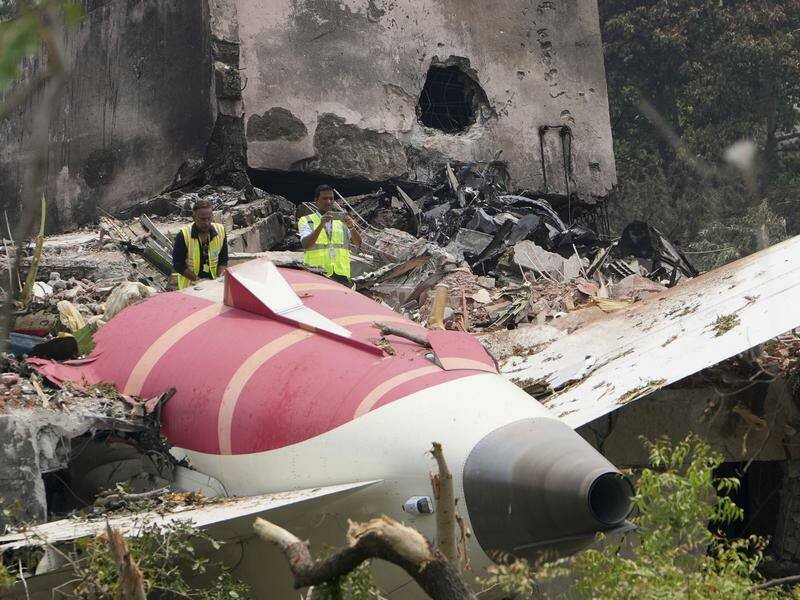

Authorities in Gujarat, India, have identified 259 of the 260 individuals who lost their lives in the tragic Air India plane crash earlier this month. The identification process, which included DNA testing and facial recognition, has enabled officials to return the remains of 256 victims to their families.
The incident involved a Boeing 787-8 Dreamliner that was en route from Ahmedabad to London’s Gatwick Airport. On June 12, shortly after takeoff, the aircraft abruptly lost altitude and crashed into a medical college hostel, igniting into a massive fireball. Of the 242 people on board, only one survived. An additional 19 fatalities occurred on the ground, bringing the total death toll to 260—lower than the initial estimate of 270.
Rakesh Joshi, Superintendent of Ahmedabad Civil Hospital, confirmed on Tuesday that identification had been completed for 240 passengers and 19 ground victims. However, the DNA results for one passenger remain pending. “The crash site is still under clearance. We cannot rule out the discovery of further remains, so the official death toll is yet to be finalized,” he stated.
According to local authorities, DNA testing facilitated the identification of 253 individuals, while facial recognition was used for six others. This meticulous process has brought some closure to grieving families.
The tragedy has reignited scrutiny over Air India’s operational standards. Just days prior to the latest update, the Directorate General of Civil Aviation (DGCA) issued a warning to the airline for serious violations in pilot scheduling protocols. The DGCA criticized Air India for allowing flight durations to exceed the regulated 10-hour limit on two London-bound flights from Bengaluru in May.
As a disciplinary measure, the aviation authority ordered the removal of three key executives involved in crew scheduling—a divisional vice president, a chief scheduling manager, and a planning executive. The June 20 directive cited “systemic failures” and highlighted insufficient oversight and enforcement of existing regulations.
Air India, which was acquired by the Tata Group in 2022, has faced ongoing challenges in its efforts to revamp its operations and restore public trust. The airline has been widely criticized in recent years for declining service quality, even before the Tata Group’s takeover.
The crash and subsequent revelations about operational lapses have underscored the urgency for stronger regulatory enforcement and systemic reforms in India’s aviation sector.
