

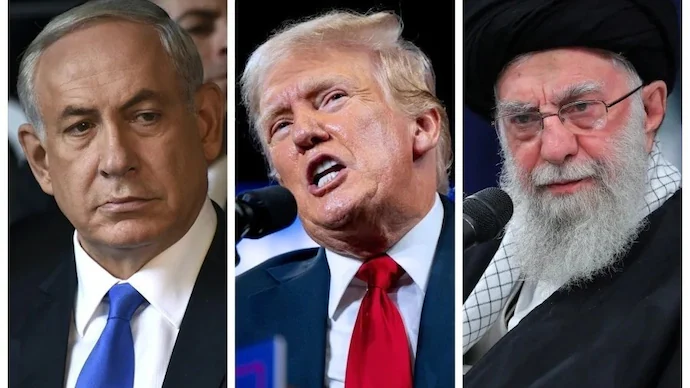

Ceasefire
U.S. President Donald Trump declared on Tuesday that a ceasefire between Israel and Iran had officially come into effect, urging both sides to uphold the agreement and avoid any further escalation. His announcement came just hours after Iran launched a series of missile attacks that resulted in the deaths of four Israeli civilians, according to Israel’s national ambulance service, Magen David Adom.
“THE CEASEFIRE IS NOW IN EFFECT. PLEASE DO NOT VIOLATE IT!” Trump posted emphatically on his social media platform, Truth Social.
The White House later provided a detailed account of how the ceasefire was brokered behind the scenes. According to sources cited by Al Jazeera, the process began when President Trump contacted Israeli Prime Minister Benjamin Netanyahu to secure Israel’s agreement to halt hostilities. Once Israel was on board, Trump reached out to the Emir of Qatar, requesting his assistance in bringing Iran into the fold.
Qatar, maintaining open channels with Tehran, played a key mediating role. The Emir and Prime Minister of Qatar then held discussions with Iranian officials and succeeded in persuading them to consider a ceasefire.
Simultaneously, U.S. Vice President JD Vance, Secretary of State Marco Rubio, and Middle East envoy Steve Witkoff were involved in a mix of direct and indirect talks with Iranian representatives, working to finalize the logistics of the truce.
As momentum built, JD Vance and the Qatari Prime Minister helped coordinate the final steps needed to bring both parties to agreement. Trump’s original announcement late Monday indicated that the ceasefire would take effect in stages, allowing each side to conclude ongoing military operations before a full cessation of hostilities.
Despite the declaration, violence persisted in the hours immediately following. Witnesses in Israel reported hearing explosions near Tel Aviv and Beersheba before Trump’s post.
The Israeli military confirmed that Iran had launched six waves of missiles during this period, and Beersheba was struck particularly hard, resulting in four deaths—the first Israeli fatalities since the ceasefire was publicly announced.
Iran’s semi-official SNN news agency later reported that the missile barrage represented Tehran’s final salvo before the ceasefire deadline, suggesting that Iran had sought to make its military intentions clear before fully committing to the truce.
Though the ceasefire is now technically in effect, its fragility is evident. The region remains tense, with both sides cautiously monitoring for violations. Trump, having taken credit for what he dubbed a “complete ceasefire” to end the 12-day conflict, continues to frame the agreement as a diplomatic win, even as the reality on the ground underscores the complexities of enforcing peace between long-time adversaries.
