

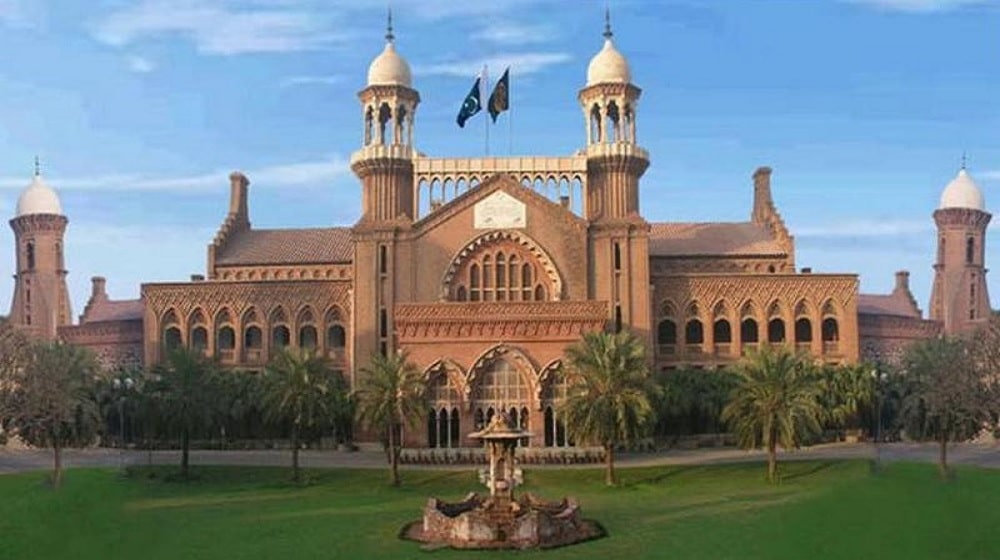

The Lahore High Court (LHC) on Tuesday rejected the post-arrest bail applications of former prime minister and Pakistan Tehreek-e-Insaf (PTI) founder Imran Khan in eight cases linked to the May 9 unrest.
The verdict was delivered by a division bench headed by Justice Syed Shahbaz Ali Rizvi.
The bail petitions were related to several high-profile incidents, including the attacks on Jinnah House, Askari Tower, and the arson attack on Shadman Police Station. These appeals followed an earlier decision by an anti-terrorism court (ATC), which had denied bail in all the cases, prompting Khan’s legal team to approach the high court.
During the hearings, the state prosecutor alleged that Imran Khan had incited his supporters to target military installations and other sensitive sites following his removal from office. The prosecutor further claimed that Khan had refused to cooperate with investigations, including polygraph and photogrammetric tests, and had repeatedly ignored court summons.
In response, Khan’s counsel, Barrister Salman Safdar, argued that his client had already been in custody on May 9 and was falsely implicated in these cases afterward. He maintained that the allegations were politically motivated and unsupported by evidence.
The prosecution asserted that the violent protests resulted in significant damage to public property. The estimated losses to police equipment alone were valued at Rs 40 million, while the attack on Jinnah House reportedly caused damages exceeding Rs 520 million.
In a related development, an anti-terrorism court in Islamabad recently sentenced 11 individuals, including PTI Member of National Assembly Abdul Latif, to a total of 15 years and 4 months in prison in connection with the attack on Ramna Police Station during the same May 9 events.
That particular case involved a large crowd of PTI supporters who had gathered outside the Judicial Complex on March 18, 2023, when Imran Khan was appearing in court. Protesters allegedly removed security barriers, stormed the premises, damaged property, and disrupted court proceedings.
These legal developments reflect the growing number of judicial decisions in connection with the widespread protests and unrest that followed Khan’s ouster, a period that continues to shape Pakistan’s legal and political landscape.
