
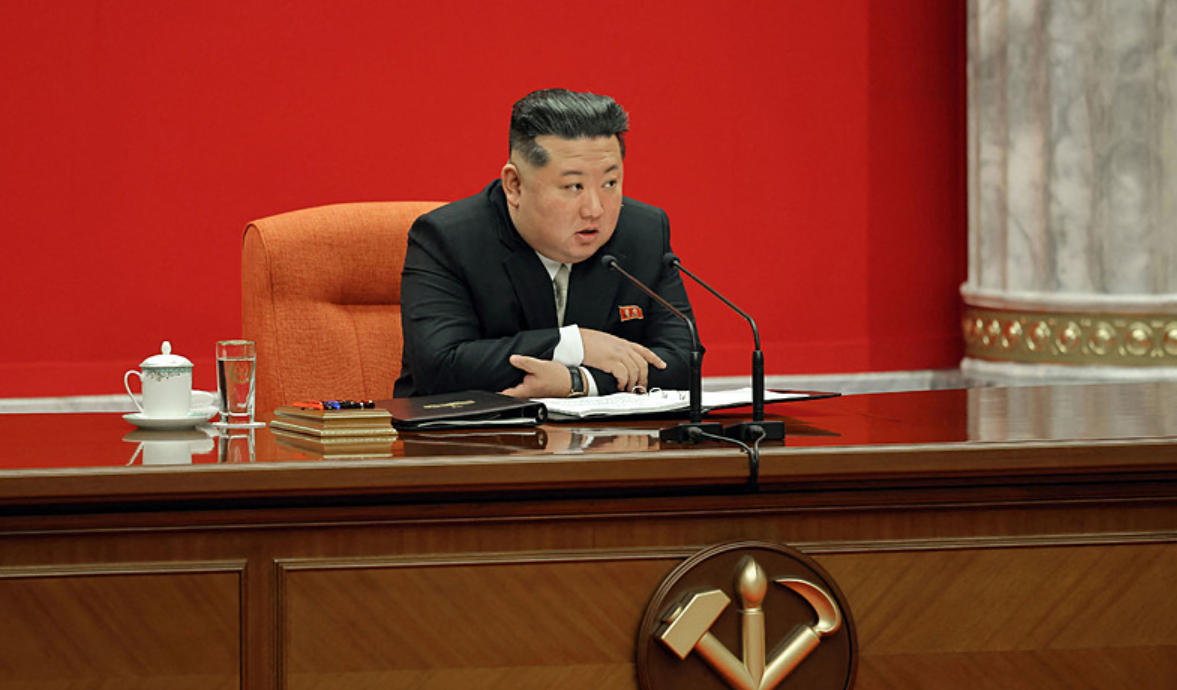

North Korean leader Kim Jong Un has reaffirmed his country’s commitment to nuclear weapons, signaling a hardened national security stance. His latest policy speech outlined a future shaped by military strength, strategic deterrence, and rising tensions with South Korea and the United States.
The announcement highlights growing geopolitical uncertainty across Northeast Asia. Moreover, it reflects Pyongyang’s belief that nuclear capability remains essential for national survival.
North Korea Reinforces Permanent Nuclear Policy
Kim Jong Un declared that North Korea will never abandon its nuclear weapons program. He described the country’s nuclear status as permanent and irreversible.
According to his policy address, nuclear deterrence forms the foundation of national defense strategy. He emphasized expanding and modernizing self-defensive nuclear capabilities in response to external threats.
Officials framed the policy as a constitutional mission tied directly to state security. Therefore, nuclear development will continue despite international sanctions and diplomatic pressure.
The leadership believes strong deterrence prevents foreign intervention. Consequently, military advancement remains a central priority for national planning.
Strong Warning Issued Toward South Korea
Kim also delivered harsh remarks regarding South Korea. He announced plans to designate Seoul as the “most hostile state.”
This declaration marks a significant escalation in rhetoric between the two neighbors. Furthermore, it comes despite repeated dialogue proposals from South Korea’s leadership.
Pyongyang has largely ignored diplomatic outreach efforts. Instead, the North signaled it would respond forcefully to any action viewed as a threat.
Kim warned that violations against his country would face a merciless response. Such statements reinforce the widening political divide on the Korean Peninsula.
Criticism of United States Military Actions
During the speech, Kim criticized United States military operations abroad. He accused Washington of carrying out aggressive policies that destabilize global security.
He argued that foreign military deployments near North Korea increase regional tension. In particular, he referenced the presence of strategic military assets around the peninsula.
North Korean officials often view these deployments as preparation for confrontation. As a result, Pyongyang continues strengthening its deterrence posture.
Analysts suggest global conflicts influence North Korea’s strategic calculations. Leadership officials appear convinced that nuclear weapons guarantee sovereignty in a volatile world.
Advancing Missile Technology and Deterrence Capabilities
Despite years of economic sanctions, North Korea has expanded its weapons technology. The country has introduced advanced delivery systems, including solid-fuel intercontinental ballistic missiles.
These systems allow faster launch preparation and reduced detection time. Consequently, they enhance the credibility of the nation’s deterrence strategy.
Estimates suggest North Korea possesses multiple nuclear warheads alongside growing fissile material reserves. Military modernization efforts therefore remain ongoing.
The government portrays technological progress as proof that economic pressure cannot halt strategic development.
Defence Spending and Internal Security Changes
Kim outlined future economic and administrative priorities alongside military goals. Defence spending will account for 15.8 percent of the national budget in 2026.
This figure represents a slight increase compared to the previous year. The allocation demonstrates continued focus on military readiness.
Additionally, authorities plan to establish a formal police system. Officials believe this structure will strengthen legal enforcement and public order.
Leaders argue improved internal security supports national stability. They also view institutional reforms as necessary for cooperation with international policing bodies.
Economic Targets Presented Alongside Military Vision
Alongside security announcements, Kim introduced economic objectives aimed at boosting industrial production. The government seeks to increase output by one and a half times.
Officials claim economic progress disproves arguments linking prosperity to nuclear disarmament. Instead, leadership promotes simultaneous economic and military development.
This dual approach reflects long-standing policy priorities. Economic growth and defense expansion continue advancing together.
A Region Watching Closely
Kim Jong Un’s remarks signal a continued hardline direction in North Korean policy. The emphasis on irreversible nuclear status reduces prospects for near-term denuclearization talks.
Meanwhile, tensions with South Korea remain unresolved. Regional powers now face increasing uncertainty as military rhetoric intensifies.
The speech underscores a broader shift toward deterrence-driven diplomacy. As global conflicts reshape security perceptions, Northeast Asia may enter a more confrontational phase.

