

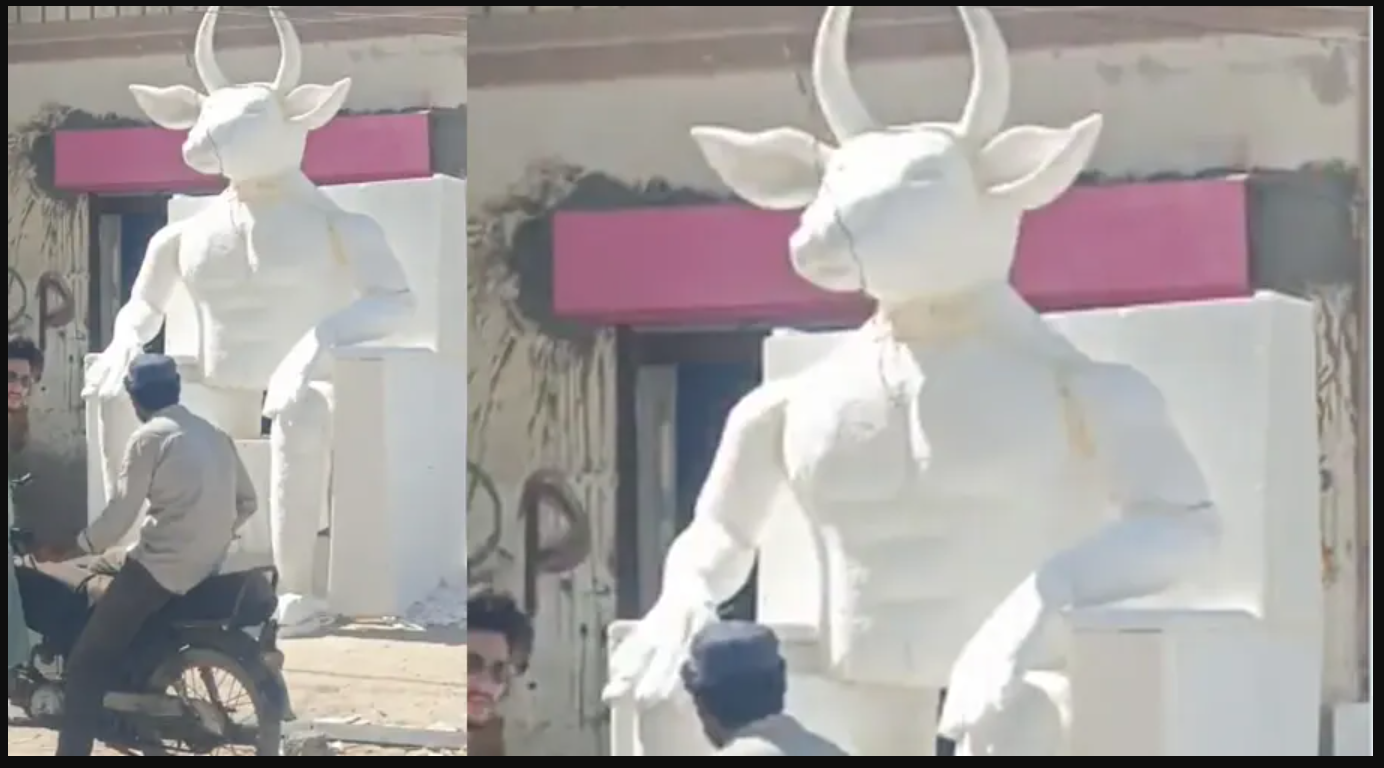

A mysterious statue displayed outside a shop in Karachi recently captured widespread attention online. Videos circulating on social media quickly turned the unusual object into a viral topic.
Many users expressed concern after seeing what appeared to be a “devil” statue placed publicly. As a result, calls for an investigation began spreading across digital platforms.
Authorities soon intervened to examine the situation and understand the purpose behind the statue. The incident occurred in Karachi’s Korangi area, where the object attracted crowds and online debate.
Police Launch Investigation After Online Reaction
Police initiated an inquiry shortly after videos of the statue gained traction online. Officials aimed to determine why the statue had been installed and who created it.
Meanwhile, authorities removed the statue from the location to prevent misunderstandings. This step helped reduce tension while investigators gathered information.
During the probe, officers examined the structure and recorded statements from individuals connected to its creation.
Investigators confirmed that the statue did not pose any security threat.
What Was the Statue Actually Made Of?
According to officials, the statue was constructed using Thermopol material. A local sculptor designed and assembled the structure based on a specific commission.
The sculptor, identified as Imran, provided details during questioning. He explained that he had been hired to produce the statue for a planned event.
Authorities verified his statement after reviewing additional information gathered during the investigation.
Symbolic Protest Linked to Youm-e-Quds
Police later revealed that the statue was created as part of a symbolic protest connected to Youm-e-Quds. The individual who commissioned the artwork, Allama Shabbir Zaidi, clarified its intended purpose.
According to his statement, organizers planned to burn the statue during a Youm-e-Quds gathering. The act was meant to serve as symbolic expression during the event.
However, the plan changed unexpectedly when videos of the statue surfaced online before the scheduled demonstration. Consequently, public curiosity grew long before the intended protest could take place.
Social Media Amplifies Confusion
Social media played a central role in amplifying the situation. Short video clips circulated rapidly without context, which led to confusion among viewers.
Many users interpreted the statue differently due to the lack of explanation. Therefore, speculation spread faster than verified information.
Authorities noted that viral content often creates misunderstandings when details remain unclear. In this case, early reactions prompted official intervention earlier than organizers anticipated.
Police Clarify Situation to Prevent Misunderstanding
After completing initial inquiries, police publicly clarified the purpose behind the statue. Officials confirmed that it formed part of a symbolic protest rather than any unlawful activity.
They emphasized that the investigation aimed to maintain public order and address concerns responsibly. By explaining the background, authorities sought to calm public anxiety surrounding the viral incident.
A Reminder of How Quickly Online Narratives Spread
The Korangi statue episode highlights how quickly online narratives can shape public perception. Digital platforms allow information to travel instantly, yet context often arrives later.
As seen in this case, curiosity turned into controversy before facts emerged. Eventually, clarification helped resolve confusion and restore perspective.
The incident serves as a reminder that viral moments may not always reflect the full story. Understanding context remains essential before drawing conclusions about rapidly spreading online content.
