
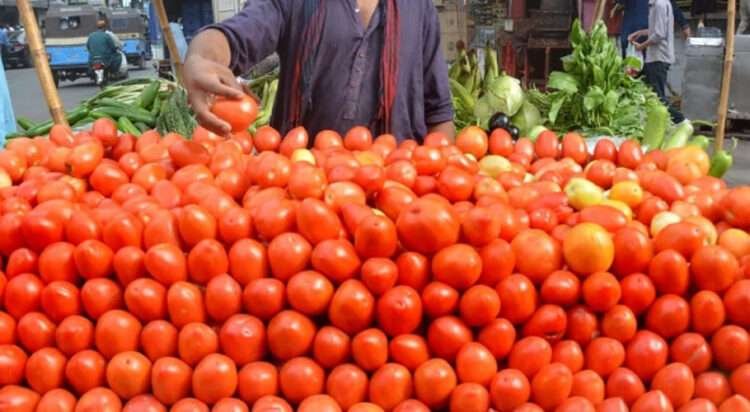

Tomato prices have reached a new high in Karachi, creating further difficulties for consumers already facing rising household expenses. The vegetable is currently selling for up to Rs500 per kilogram due to supply issues and increasing market pressures.
The sharp increase has affected daily buyers, especially those managing limited household budgets. Meanwhile, traders have linked the price rise to reduced supplies and higher transportation costs.
Iranian and Quetta Tomatoes Become More Expensive
According to market reports, several vendors in Karachi are selling Iranian and Quetta-grown tomatoes between Rs450 and Rs500 per kilogram.
Customers are also purchasing smaller quantities as prices continue to rise. Many sellers are offering 250 grams of tomatoes for around Rs110 to Rs125.
Additionally, some traders are selling smaller-sized and unripe tomatoes at comparatively lower rates. These tomatoes are available at around Rs400 per kilogram.
However, consumers remain concerned as even lower-quality produce has become expensive. The rising prices have increased pressure on families who depend on vegetables as a regular part of their meals.
Rawalpindi Markets Also Witness Price Increase
The price hike is not limited to Karachi. In Rawalpindi, tomatoes and onions have also become significantly more expensive.
Retail markets are selling tomatoes at around Rs300 per kilogram, while onion prices have reached approximately Rs120 per kilogram.
The increase reflects wider challenges affecting essential food items across Pakistan. Supply chain disruptions, higher transportation charges, and rising inflation have contributed to the growing costs of kitchen staples.
Rising Food Costs Increase Consumer Pressure
Prices of essential household items have increased sharply in recent weeks. Vegetables, meat, and poultry products are selling above official price lists in several markets.
As a result, consumers are facing greater financial pressure amid increasing living costs. Many households are adjusting their purchasing habits to manage higher food expenses.
Market experts believe that improving supply networks and controlling transportation costs could help reduce price pressure. However, until supply conditions improve, consumers may continue to face challenges due to rising vegetable prices across major cities.

