

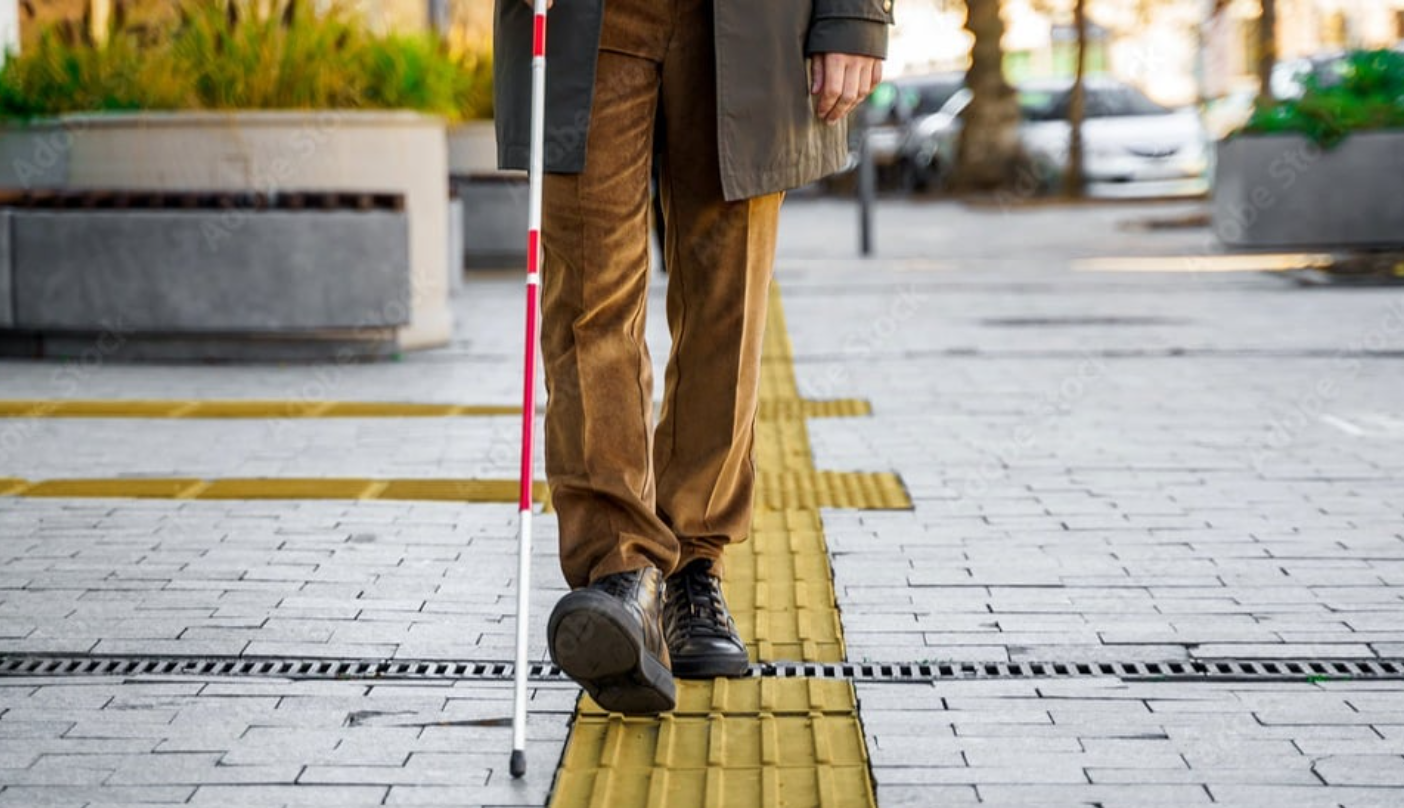

A seventh-grade student in Karachi has developed an innovative smart stick designed to help visually impaired individuals move more safely. The device uses sound and vibration alerts to detect obstacles, offering greater awareness and improved accessibility for users.
A Student’s Idea Turns Into a Functional Device
The young inventor, Radhe Krishna, presented his project at the Bachaapreneur competition held at the National Incubation Centre. His creation gained significant attention because of its practical design and its value for visually impaired individuals.
Radhe shared that the idea came to him after watching a video that inspired him to create something meaningful. He has been learning robotics since Grade 5, and his passion motivated him to build several prototypes before reaching the final design.
How the Smart Stick Works
The smart stick can detect obstacles within three feet. It produces a beeping sound that increases as the object gets closer. A vibration feature has also been added to help users who may rely more on tactile alerts.
Radhe designed the internal system himself. The buzzer, vibrator, and wiring were assembled without external support. His approach shows a deep understanding of basic electronics and creative problem-solving.
The device is rechargeable and can be powered with a standard plug-in charger. It is priced at Rs. 15,000, which is higher than a regular white cane but offers many additional safety functions.
A Young Mind With Bigger Plans
Radhe is not stopping here. He aims to add GPS-based audio navigation so users can hear directional guidance. He also wants to improve the device’s balance by reducing the size of the control box.
Another major upgrade he is working on is enhancing the stick’s ability to detect ground-level obstacles. This improvement could offer more complete protection for users navigating uneven surfaces or lower objects.
Encouraging Youth Innovation in Pakistan
This project highlights how young students in Pakistan are using their interest in technology to address real-world problems. Radhe’s work demonstrates the potential of early exposure to robotics and electronics, especially when paired with curiosity and determination.
His smart stick not only showcases his talent but also offers a practical solution that could support many visually impaired individuals. With further development, the device may become even more efficient and accessible.
