

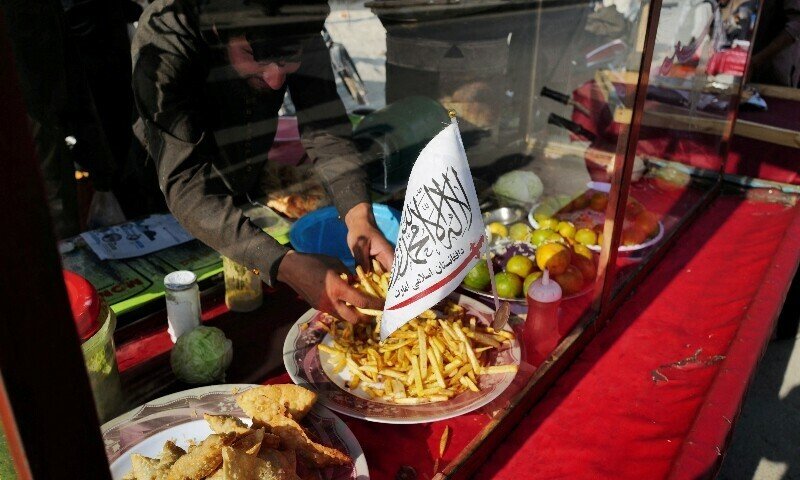

Food Supplies
Amid rising regional tensions due to the ongoing Israel-Iran conflict, Afghanistan is exploring alternative sources for its essential food imports and has turned to Russia as a potential supplier. The development comes at a time when Iran — one of Afghanistan’s key trading partners — faces growing instability that could disrupt critical trade flows.
Afghanistan’s Minister of Agriculture, Irrigation and Livestock, Ataullah Omari, confirmed in an interview with Reuters that the Afghan government is in active discussions with Moscow to secure food supplies.
Omari is currently leading a delegation attending the St. Petersburg International Economic Forum (SPIEF) — Russia’s premier business conference — where Afghan officials are holding meetings with Russian agriculture counterparts.
“Afghanistan is definitely aiming for self-sufficiency in its agricultural products,” Omari stated, “but we still rely on some food items that come from Iran, and if problems arise there, it will undoubtedly have its effects.” He cited dairy and other key imports from Iran as areas of concern, especially in light of fears that the conflict with Israel may damage Iranian infrastructure or disrupt border trade.
Russia, already a major supplier of wheat and flour to Afghanistan, is being asked to increase its direct wheat exports. Omari said Afghanistan has specifically requested wheat rather than flour, as Kabul pushes to strengthen its domestic milling capacity.
Afghanistan was the top buyer of Russian flour in 2024, but is working to shift toward local processing. In 2023, Afghanistan increased its wheat output by 10 percent, reaching 4.83 million metric tonnes. However, with annual national consumption at approximately 6.8 million metric tonnes, the country still faces a significant shortfall.
Omari emphasized that since the withdrawal of U.S. forces in 2021, Afghanistan has taken serious steps to build resilience in food security, including increasing domestic production and diversifying trade partnerships. “For the past four years, we have been making efforts to provide our essential food supplies ourselves. The remaining amount, including flour and wheat, is supplied annually by Russia,” he said.
Beyond wheat, Afghanistan also imports sugar and vegetable oil from Russia. According to Omari, these imports have continued to flow without major disruptions, and the country hopes to expand this cooperation in the near future.
In April, Russia took a major diplomatic step by removing the Taliban from its list of banned terrorist organisations, effectively opening the door to formalising economic and political ties. This normalization, Omari noted, has accelerated bilateral trade and cooperation, particularly in the fields of energy and agriculture.
Since 2022, Russia has supplied Afghanistan with oil, gas, and grain — marking some of the Taliban-led government’s first international economic agreements after returning to power.
Omari also expressed concern for the millions of Afghan refugees residing in Iran, many of whom may be caught in the crossfire if the conflict with Israel escalates further.
According to UNHCR estimates, there are approximately 4.5 million Afghan nationals currently living in Iran. “Any kind of damage that occurs there is absolutely unsatisfactory for our nation and our people, especially for many of our refugees who live there and are our brothers,” Omari said, calling for peace and stability in the region to protect vulnerable populations.
As the Iran-Israel war continues into its second week, Afghanistan’s move to secure alternate trade routes and supplies underscores the fragility of the regional food supply chain and the urgency with which governments must act to avoid economic and humanitarian fallout.
