

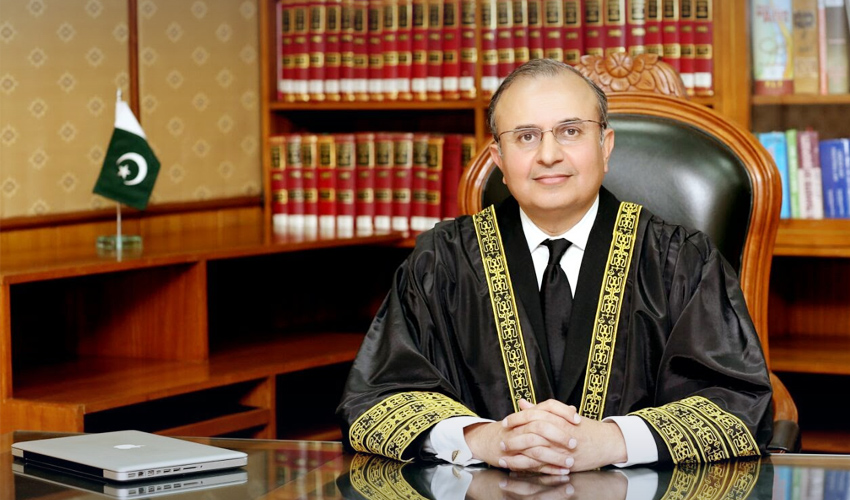

Justice Mansoor Ali Shah, a senior judge of the Supreme Court, has raised concerns over the extension of the constitutional bench’s term, warning that such a move—prior to a verdict on the 26th Amendment—could further erode public trust and deepen the ongoing judicial crisis.
In a letter addressed to members of the Judicial Commission ahead of its June 19 meeting, Justice Shah voiced strong opposition to extending the tenure of judges on the constitutional bench. He highlighted that he had informed the Commission in advance of his unavailability due to being abroad but expressed disappointment that the meeting proceeded despite his absence. He pointed out that similar meetings had previously been postponed for the unavailability of executive members, hinting that the judiciary—now in the minority—may lack the influence to delay such decisions.
Justice Shah cautioned the Commission that pushing ahead with judicial reappointments before resolving the constitutionality of the 26th Amendment would send a troubling message to the public and jeopardize the court’s institutional integrity.
“Reconstituting or extending the tenure of a bench whose legality is under question only worsens the crisis and undermines the judiciary’s credibility,” he wrote, further adding that delays in resolving such a fundamental constitutional matter are steadily eroding public confidence in the judiciary.
He also called for the inclusion of all Supreme Court judges on the constitutional bench until the 26th Amendment case is decided. This, he argued, would help eliminate perceptions of bias and prevent selective inclusion that could damage institutional harmony.
“Including specific judges without a clear and established process undermines impartiality and disrupts unity within the judiciary,” he observed.
Justice Shah strongly advocated for a transparent and formal process to determine the composition of future constitutional benches, warning that the current approach appears arbitrary and may lead to allegations of “cherry-picking.” He noted that the exclusion of senior judges without justification has already raised questions about the bench’s legitimacy.
Addressing the second item on the meeting’s agenda—rules formulation under Article 175A(20) of the Constitution—Justice Shah advised that all policy decisions be postponed until the Supreme Court delivers its verdict on the 26th Amendment case.
In his concluding remarks, he emphasized that the judiciary’s strength lies in its integrity, transparency, and adherence to constitutional principles, not in short-term gains or executive preferences.
The release of his letter has further fueled the ongoing debate about judicial independence and the perceived encroachment of the executive into constitutional matters. The 26th Amendment, currently under review, deals with significant structural reforms within the judiciary and has become a key point of contention amid broader institutional tensions.
