

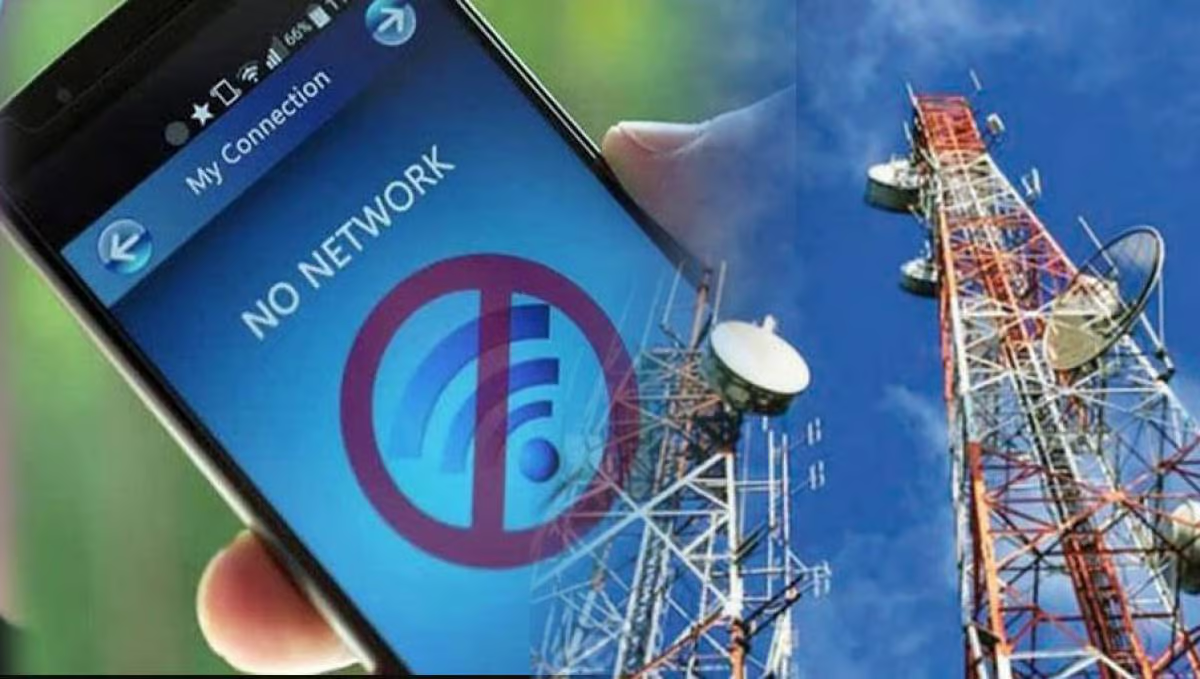

Residents of Islamabad’s newly developed Sectors I-14 and I-16 continue to experience poor mobile coverage and unstable data connectivity, despite official claims of progress in improving communication infrastructure. The government has finally acknowledged these persistent issues, marking a rare admission regarding the challenges faced by citizens in these localities.
Government Acknowledges Network Problems in I-14 and I-16
Responding to a question in the National Assembly, the Minister overseeing the Cabinet Division confirmed that both sectors still suffer from signal distortion, weak connectivity, and limited coverage. The issues, according to the official statement, stem from sparse population density and minimal commercial interest from telecom companies, which makes these areas less attractive for network expansion.
The Pakistan Telecommunication Authority (PTA), in its official report, noted that nine mobile towers currently operate across both sectors. While several new towers have been deployed and a few existing ones upgraded in the past two years, the improvements have not fully resolved the connectivity problems.
Network Upgrades Have Shown Limited Impact
In Sector I-14, two new towers were installed and one existing site was upgraded earlier this year. Meanwhile, Sector I-16 saw the deployment of two additional mobile sites. PTA stated that its independent quality survey indicated a “significant improvement” in network performance after these upgrades.
However, the same report also revealed that one tower still records network downtime above acceptable limits, leading to unreliable connectivity. Voice services remain inconsistent, and call drops continue to frustrate residents. Although the average internet speed now exceeds the 4 Mbps minimum threshold, users still report frequent data interruptions and unstable signals. PTA has referred these persistent issues back to the concerned telecom operator for rectification.
Low Population and Weak Revenue Discourage Telecom Investment
In a detailed statement, the Cabinet Division admitted that low population density and limited commercial potential are key factors discouraging telecom operators from investing in these areas. Both I-14 and I-16 are still classified as “low priority” zones for infrastructure development, as telecom companies focus their resources on high-demand, revenue-generating regions.
The government acknowledged that the financial viability of expanding telecom infrastructure in newly developed residential sectors remains a major hurdle. Consequently, residents have been left with no immediate relief despite the installation of new towers and system upgrades.
Residents Continue to Demand Reliable Connectivity
Frustrated by years of unstable coverage, residents of I-14 and I-16 have repeatedly urged the authorities to ensure consistent mobile signals and faster data speeds. Many rely on mobile networks for work, education, and essential communication, making the lack of dependable service a major inconvenience.
Experts suggest that the government must introduce incentives or infrastructure-sharing policies to encourage telecom companies to invest in underdeveloped areas. Without such initiatives, the connectivity gap between Islamabad’s central sectors and its newly developed zones may continue to widen.
The Path Forward for Digital Inclusion
While the installation of new towers marks progress, true digital inclusion in Islamabad’s expanding residential areas requires sustained policy efforts and investment. The government’s acknowledgment of ongoing issues is a positive first step, but ensuring reliable network coverage for all citizens demands long-term commitment.
Until telecom operators see greater commercial incentive or government-backed support, residents of Sectors I-14 and I-16 may continue facing dropped calls, weak signals, and inconsistent data connectivity, underscoring the need for urgent action in Pakistan’s capital.
